Ford is retreating from its ambitious electric vehicle plans due to unprofitability and shifting focus towards hybrids and region-specific models, reflecting broader industry challenges with EV economics and changing government policies, especially in the US.
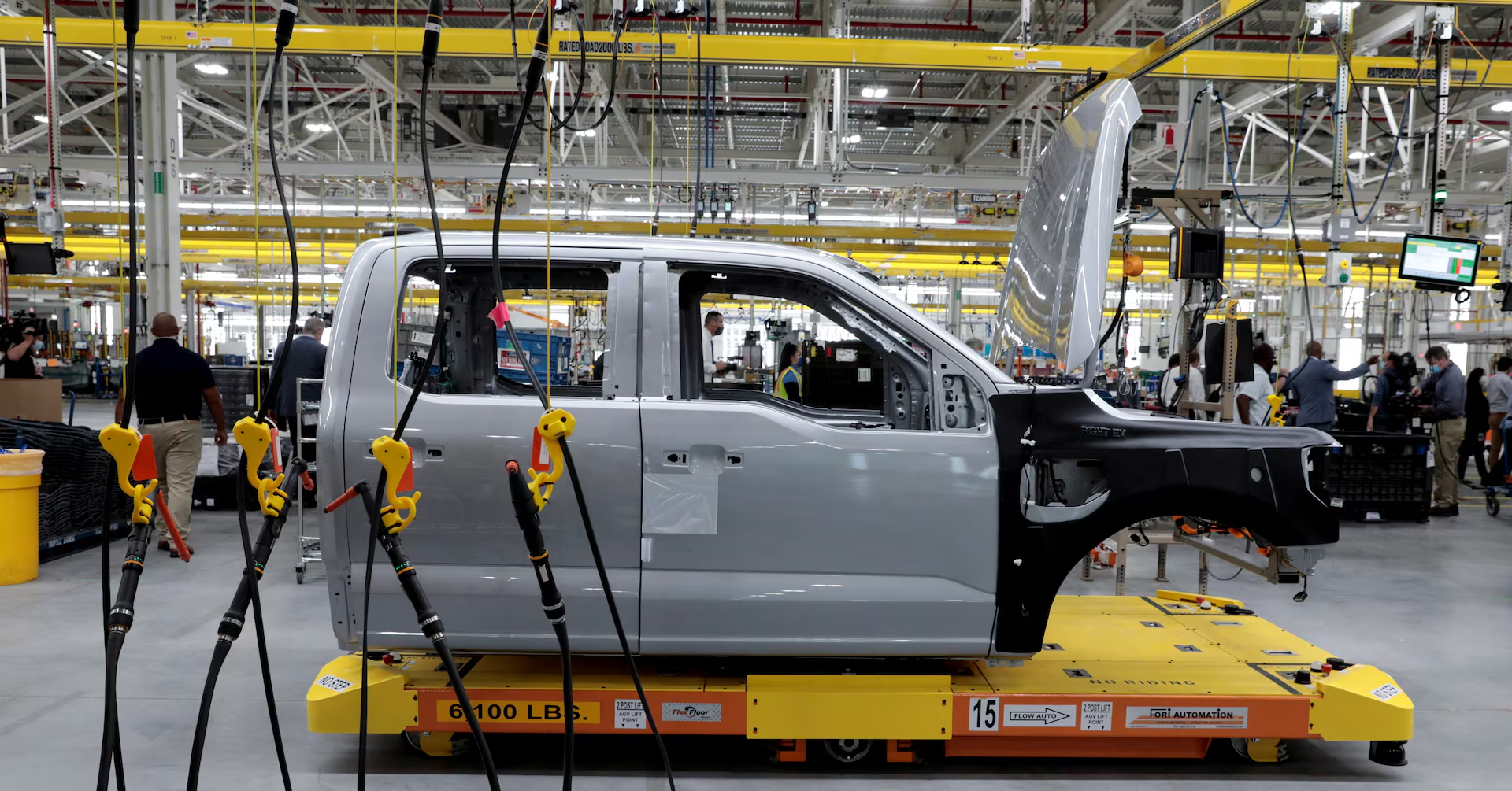
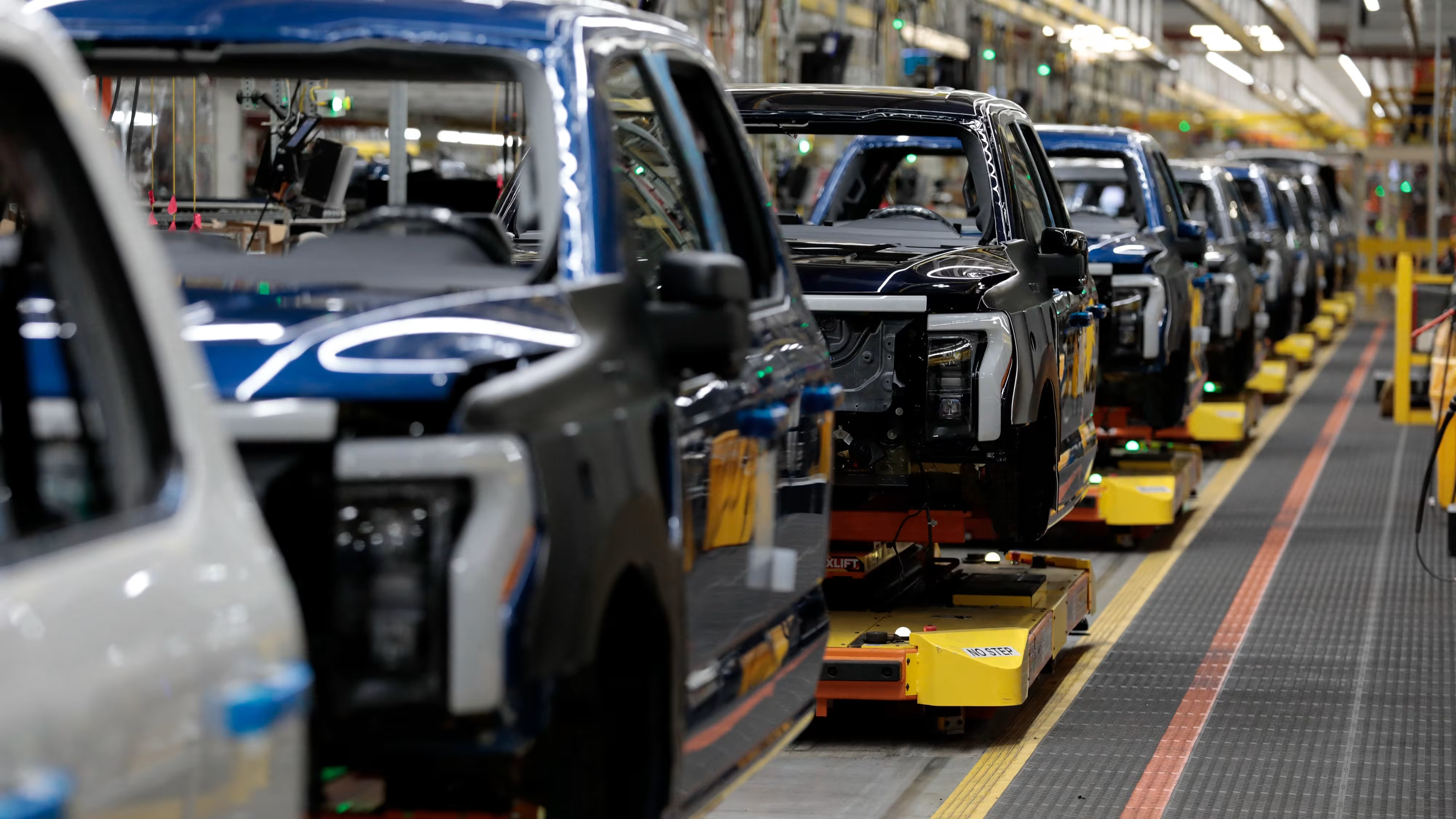
Ford is discontinuing its all-electric F-150 Lightning and other large EVs to focus on developing smaller, more affordable vehicles and hybrids, amid declining EV demand and high battery costs. The company plans to retool factories, invest $19.5 billion in restructuring, and aims for 50% of its global vehicle sales to be hybrids or EVs by 2030, with profitability expected by 2029.
Ford is expected to incur a $19.5 billion loss as it overhauls its electric vehicle strategy, reflecting significant changes and investments in its EV plans.
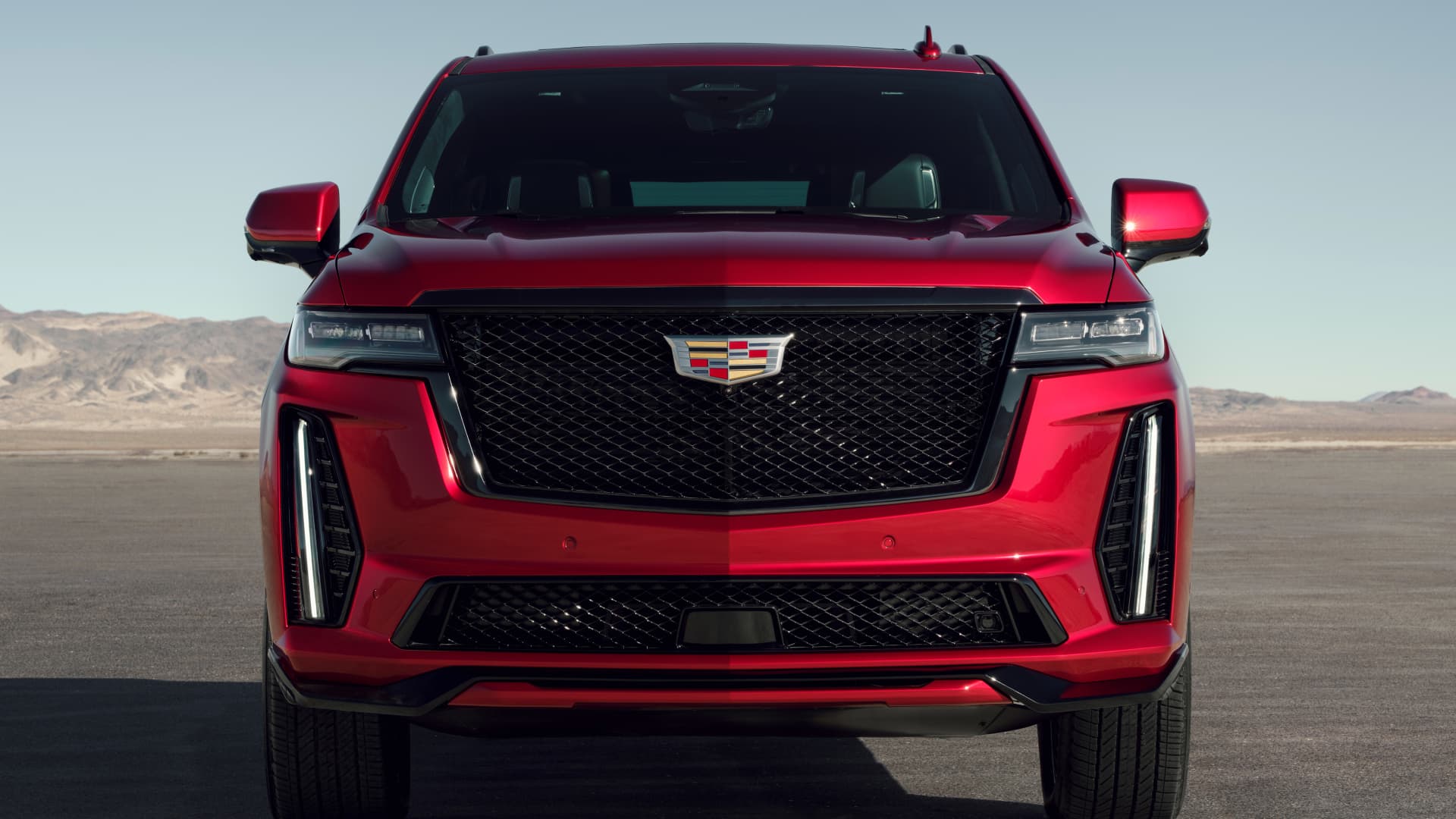
General Motors is taking a $1.6 billion charge in Q3 due to revisions in its EV strategy following US policy changes that reduce incentives and relax emissions regulations, leading to lower EV demand and production adjustments, including halting some Cadillac SUV models.
Ram has canceled its fully electric Ram 1500 REV project due to declining demand for full-size electric trucks in North America, but will rebrand its hybrid Ramcharger as the new Ram 1500 REV, while also reintroducing the V-8 engine in its trucks amid shifting EV strategies across automakers.
Ford Motor Co. plans to tackle its electric vehicle losses by focusing on developing inexpensive, small electric vehicles to compete with Tesla Inc. and Chinese automakers. The company's current battery-powered models lost $4.7 billion last year, and it projects losses to grow to as much as $5.5 billion this year. Ford is recalibrating its EV strategy to move away from large, expensive EVs and is aiming to generate profits with a new low-cost EV platform. The automaker also plans to scale back EV spending by $12 billion while increasing output of traditional internal combustion engine models to fund future growth.
Ford announced during its Q4 2023 earnings call that it is rethinking its EV strategy and reassessing its EV battery strategy due to significant losses in its EV division, Model e. The company is adjusting installed capacity, scrutinizing spending, and delaying the rollout of its second generation of EVs in response to market dynamics and the challenge of making EVs profitable. Despite the setbacks, Ford remains committed to EVs and expects growth in its Model e business in 2024, while also pinning short-term hopes on the growth of hybrid electric vehicles.
Ford Motor Co. plans to develop small, affordable electric vehicles to address its EV losses and compete with Tesla and Chinese automakers. The company's CEO revealed the strategy after reporting better-than-expected earnings, with adjusted earnings per share of 29 cents and fourth quarter revenue of $46 billion. Ford aims to shift focus to smaller EV products and is working on a low-cost EV platform led by a team including former Tesla developers. The company forecasts earnings of $10 billion to $12 billion before interest and taxes for the current year and plans $2 billion in cost cuts.
General Motors is reversing its all-in electric vehicle strategy by reintroducing plug-in hybrids (PHEVs) to its lineup after previously dismissing their potential. CEO Mary Barra announced the company's plans to bring PHEV technology to select vehicles in North America to help meet emissions targets. This shift marks a significant change from GM's previous focus on electric vehicles, reflecting a broader trend among automakers as they seek alternative ways to reduce fleet emissions amidst potential plateauing EV demand.
General Motors is set to reveal an all-electric version of the Cadillac Escalade, testing the luxury SUV's prestige and GM's strategy to turn its most lucrative vehicles into profitable EVs. The electric Escalade, known as the Escalade IQ, will be an important proof point for investors as GM aims to achieve profitability comparable to gas-powered models by mid-decade and annual EV revenue of $90 billion by 2030. The Escalade IQ is expected to replace the current gas- and diesel-powered models and will be priced toward the upper end of the current range, which starts from about $81,000. Cadillac plans to exclusively sell all-electric vehicles by 2030, making it GM's luxury EV brand.
Toyota's shares hit a 16-month high after shareholders voted to retain Akio Toyoda as chairman and endorsed the company's board and new EV strategy. Shareholders rejected proposals for greater disclosures on the automaker's climate lobbying and voted in favor of all 10 proposed members of the board. Toyota plans to introduce a full lineup of battery electric vehicles with "next generation" batteries from 2026 and aims to achieve sales of 1.5 million all-electric vehicles per year by 2026 and 3.5 million annually by 2030.