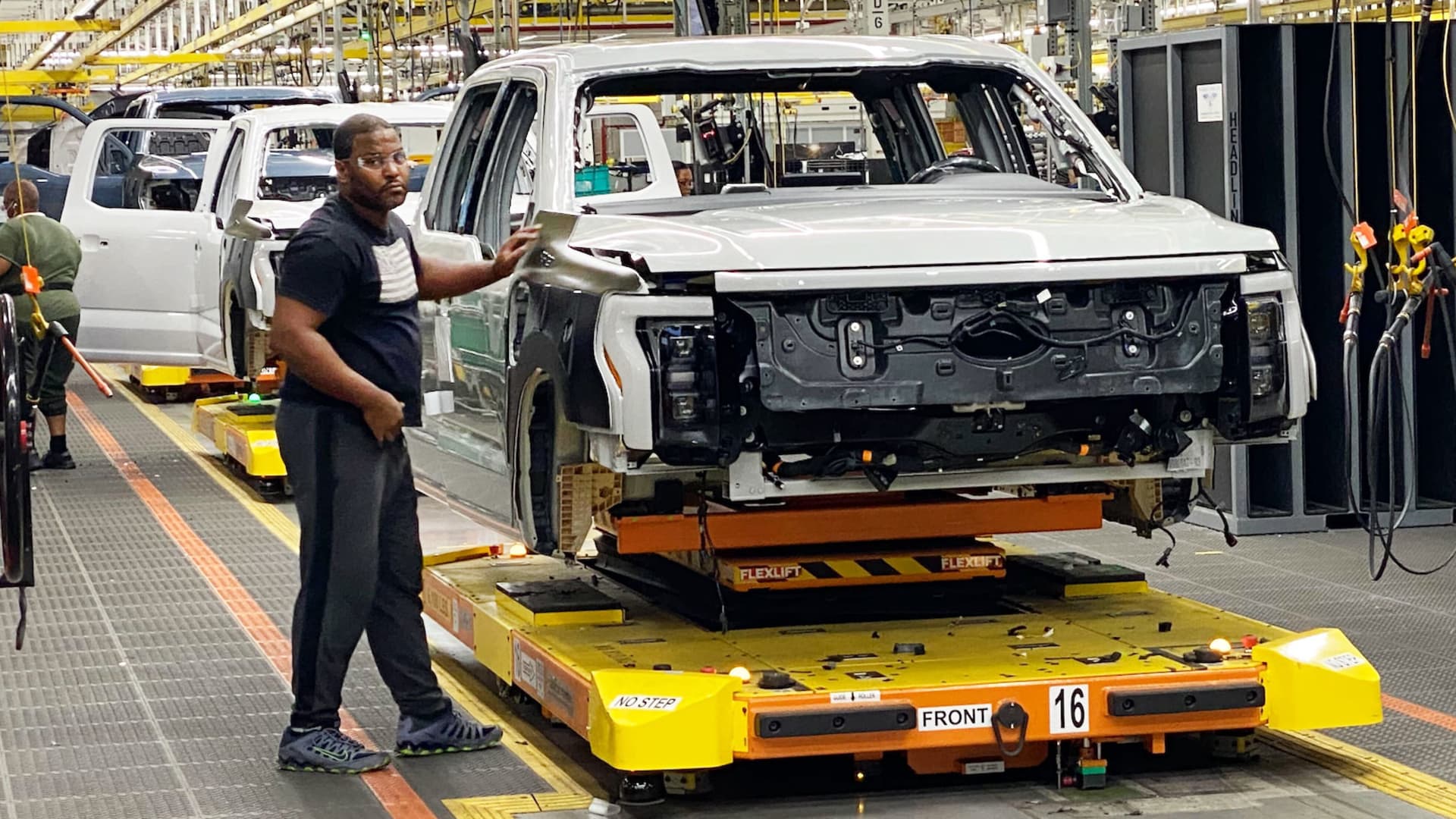
Ford is investing $5 billion in a new family of electric vehicles, including a versatile medium-sized pickup truck, to stay competitive amid rising global EV competition, Chinese imports, and industry affordability challenges. The company is also redesigning its manufacturing process to improve efficiency and reduce costs, though this involves job reductions. Ford's strategic shift aims to ensure profitability and sustainability in the evolving automotive landscape.
Ford's CEO Jim Farley announced a $2 billion investment to overhaul its Louisville assembly line, aiming to produce a $30,000 midsize EV truck by 2027, as part of a broader strategy to compete with Chinese EV maker BYD and Big Tech companies, emphasizing cost reduction and innovative manufacturing to regain market competitiveness.
Ford is postponing approximately $12 billion in planned spending on new electric vehicle (EV) manufacturing capacity due to customers' reluctance to pay a premium for EVs over internal-combustion or hybrid alternatives. While Ford's EV sales are growing, they are not meeting the company's expectations. Ford executives clarified that they are not cutting back on spending for future EV models but will gradually ramp up EV manufacturing capacity. The construction of Ford's new EV manufacturing campus in Tennessee will continue as planned, but the second battery plant in Kentucky will be postponed. Ford's electric-vehicle business unit, Ford Model e, reported a $1.3 billion operating loss in the third quarter of 2023, double the previous year's loss, despite a revenue increase.