
Diminishing Low Clouds Linked to 2023's Record Heat Surge
TL;DR Summary
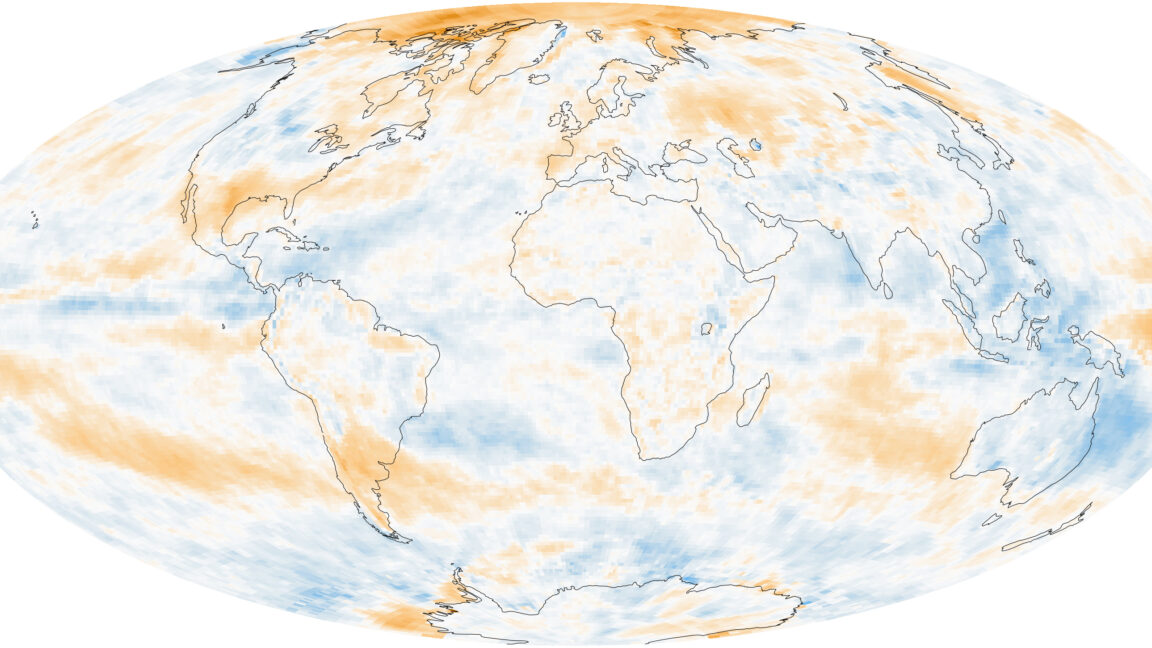
A study by German scientists suggests that the Earth is absorbing more sunlight due to reduced cloud cover, contributing to accelerated global warming. In 2023, a record energy imbalance was observed, with decreased albedo, or reflectivity, largely due to a decline in low-level clouds over northern mid-latitude and tropical oceans. This phenomenon may indicate a feedback loop where rising temperatures reduce cloud cover, further enhancing warming. The findings imply that future climate sensitivity could be higher than current estimates, emphasizing the urgency to understand these changes.
- New study blames recent spike in global warming on lack of low clouds Ars Technica
- The world has been warming faster than expected. Scientists now think they know why CNN
- Heat and high temperatures may be result of diminishing cloud cover: study NBC News
- We finally have an explanation for 2023’s record-breaking temperatures New Scientist
- Trying to account for 2023's record heat, scientists look at Earth's reflectivity CBC.ca
Reading Insights
Total Reads
0
Unique Readers
1
Time Saved
4 min
vs 5 min read
Condensed
91%
973 → 86 words
Want the full story? Read the original article
Read on Ars Technica