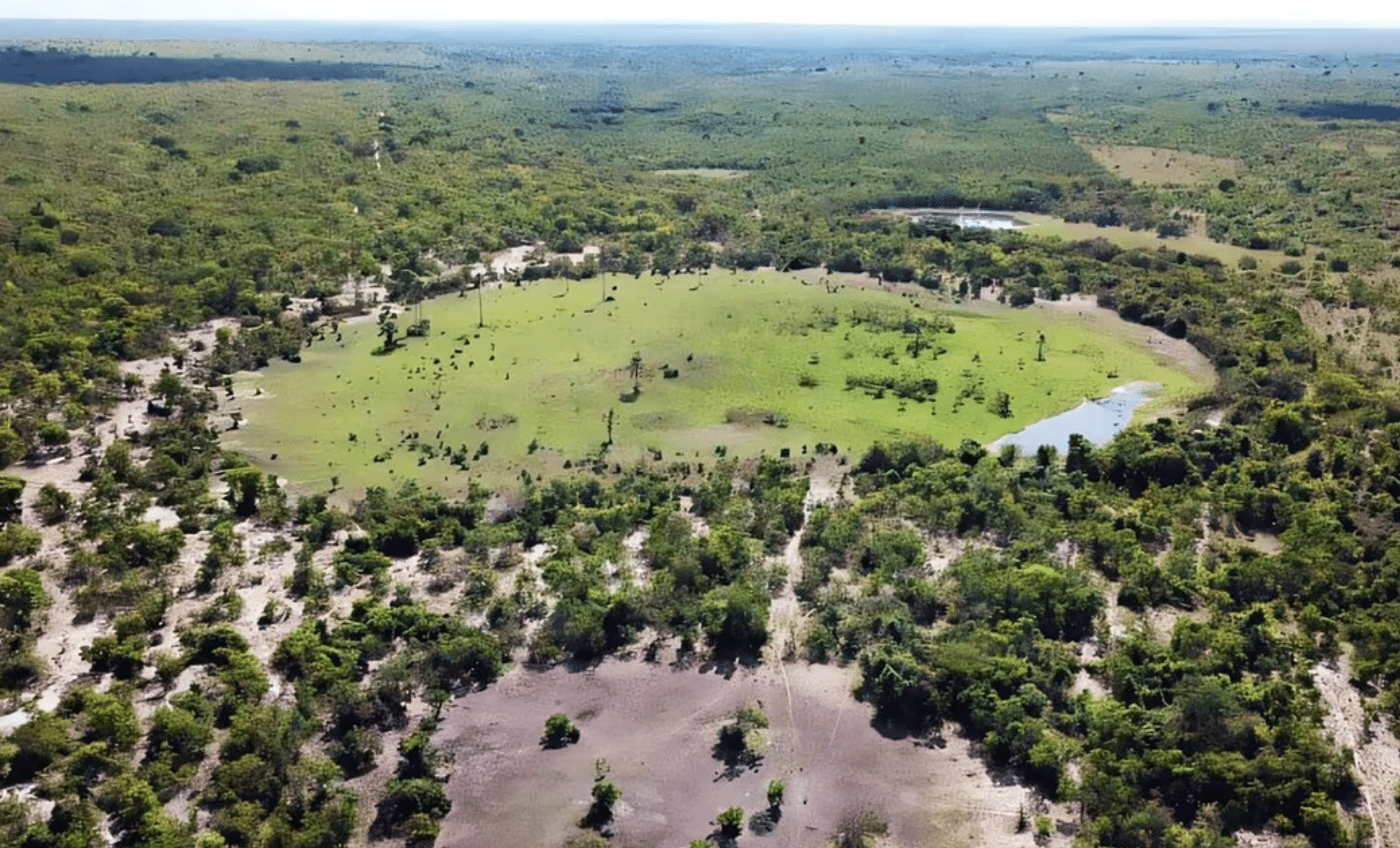
Scientists have discovered that mysterious fairy circles may indicate underground hydrogen reserves, offering a potential new method for exploring and harnessing clean, natural hydrogen as a sustainable energy source, which could revolutionize the global energy landscape.
A study suggests that fairy circles may indicate underground natural hydrogen reserves, which could revolutionize clean energy exploration by providing a low-cost, environmentally friendly energy source, potentially transforming future energy strategies.
Scientists from the University of Manchester discovered a geological anomaly in the North Sea where typical layering is reversed due to ancient seismic activity, creating 'floatites' that challenge conventional geologic understanding and could impact future energy and environmental strategies.
Philippine President Ferdinand Marcos Jr. stated that his country is working to resolve "exploration issues" in the South China Sea in order to initiate new energy exploration projects in the resource-rich waterway. The Philippines and China have resumed discussions on jointly exploring oil and gas resources in the disputed area, but little progress has been made. Marcos emphasized his country's right to exploit energy reserves in the West Philippine Sea, within its Exclusive Economic Zone (EEZ), as it aims to reduce reliance on fossil fuels and transition to liquefied natural gas. Tensions in the South China Sea have increased, with China posing a challenge to its Asian neighbors.
Gideon Powell, CEO of Cholla Inc., compares Bitcoin miners to wildcatters in the oil and gas industry, highlighting their role in pushing innovation and unlocking new power markets for data centers. Powell believes that Bitcoin could become foundational for future advancements in technology, such as artificial intelligence and augmented reality, as they require significant energy. He sees Texas, with its abundant solar and wind energy, as a hub for mining infrastructure and potential data centers. Bitcoin miners have been pioneers in cooling technology and power management, which could have applications beyond mining. Powell emphasizes the importance of connectivity, land, power, and a workforce in building data centers and supporting future AI ventures. He also discusses the value proposition of Bitcoin miners in ensuring grid reliability and the need for reliable and affordable energy to drive human prosperity and innovation.
Chinese engineers have begun drilling super deep boreholes in their search for natural resources hidden deep underground. The latest project in the Sichuan Basin aims to reach a depth of 10,520 meters, while another project in the Tarim Basin plans to go even deeper at 11,100 meters. These boreholes, if completed, would be among the deepest in the world. The drilling is not only aimed at understanding the Earth's formation but also tapping into potentially lucrative energy reserves. China, being the world's second-largest economy and biggest carbon emitter, has a strong need for energy security.