Syria held its first parliamentary elections since Bashar Assad's ouster, using an electoral college system due to ongoing civil war and displacement, marking a significant step in its political transition despite criticisms of limited democracy and sectarian tensions.
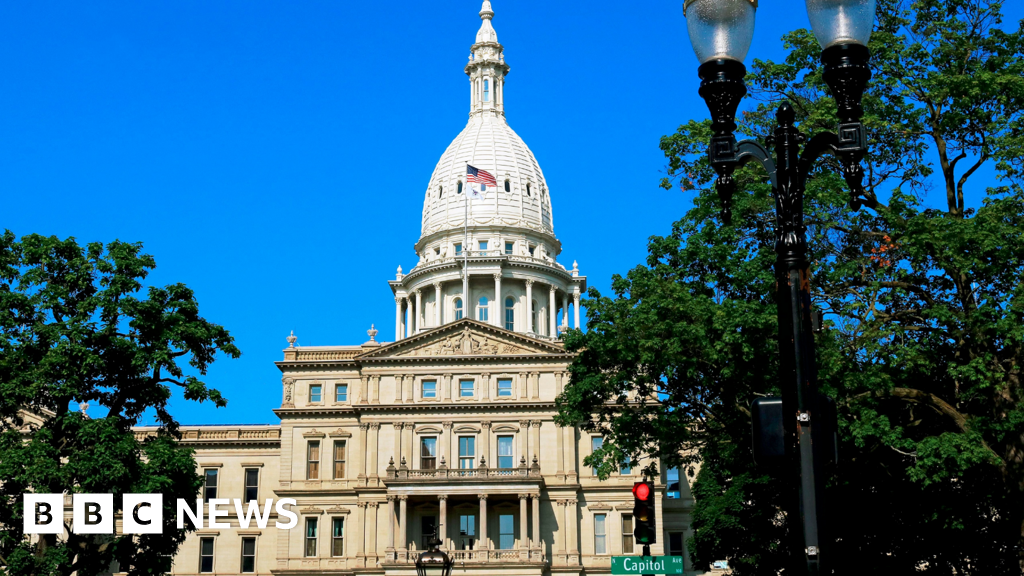
A Michigan judge dismissed charges against 15 Republicans who falsely claimed electoral votes in 2020, citing their sincere belief in election irregularities and lack of sophistication, amidst ongoing investigations into attempts to overturn the election results.
Donald Trump announced plans to conduct a new US census excluding undocumented immigrants, aiming to influence congressional representation and electoral votes, despite legal and constitutional challenges and the accuracy of the current census.
The 2024 presidential election, initially perceived as a decisive victory for Donald Trump, was actually quite close. Trump won the Electoral College with a 312-226 margin, but his national popular vote lead was only 1.6 points over Kamala Harris. The election's closeness is highlighted by narrow wins in key swing states like Pennsylvania, which was the tipping-point state. Despite claims of a mandate, historical context shows Trump's victory was not a landslide, and perceptions of a mandate may influence his governance approach.
Donald Trump's 2024 election victory was clear but not a historical landslide. He won both the Electoral College and the popular vote, becoming only the second Republican to do so since 1988. While Trump secured all seven battleground states with wider margins than in 2020, his overall victory margins were modest by historical standards. Despite his success, down-ballot Republicans did not see significant gains, and the House remains narrowly divided. Political analysts suggest the election reflects mixed signals, with potential opportunities for Democrats in future elections.
Donald Trump claimed an "unprecedented and powerful" mandate after winning the 2024 US presidential election against Kamala Harris, securing victories in key swing states and both chambers of Congress. Despite his electoral college win of 312 votes, Trump's popular vote share fell below 50%, challenging his "landslide" victory narrative. His win was facilitated by the electoral college system, which amplifies narrow victories in swing states. Trump's 76.9 million votes mark the second-highest tally in US history, though he did not achieve an outright majority.
Donald Trump has won all seven key swing states in the 2024 presidential election, securing 312 electoral votes and potentially becoming the first Republican in two decades to win the popular vote. This victory highlights Trump's continued influence within the Republican Party and the institutionalization of his MAGA movement. The win also marks a significant shift in traditionally Democratic demographics, with Republicans gaining ground among Black and Latino men, young people, and independents. Trump's return to the White House would make him the second president to serve non-consecutive terms, following Grover Cleveland.
Donald Trump has won Arizona, completing a sweep of all seven battleground states and securing a decisive electoral college victory over Kamala Harris, with a final tally of 312 votes to Harris' 226. This marks Trump's second victory in Arizona since 2016, reversing Joe Biden's 2020 win in the state. Trump campaigned on border security and the economy, linking Harris to inflation and border issues. Republicans are also close to controlling both the US House and Senate, potentially enabling significant policy changes.
Donald Trump has been declared the winner in Arizona, completing a sweep of all seven battleground states in the 2024 presidential election. This victory secures him a decisive Electoral College win over Democratic Vice President Kamala Harris, with Trump receiving 312 electoral votes to Harris's 226. This marks Trump's return to the White House, making him the second U.S. president to serve two nonconsecutive terms.
Donald Trump exceeded expectations in the recent presidential election, winning key battleground states and the popular vote, despite polls predicting a close race with Vice President Harris. This outcome has further challenged the credibility of polling, which had shown a tight contest. Pollsters acknowledged the difficulty in accurately predicting voter turnout and demographics, particularly among young and Latino voters. The results highlight ongoing issues with polling accuracy, especially in the context of the Electoral College system.
In the 2024 US presidential election, former President Donald Trump defeated Vice President Kamala Harris by a significant margin, securing 295 Electoral College votes to Harris's 226, with projections suggesting he could reach 312. Harris's campaign struggled due to a late start, mixed messaging, and loss of support among key demographics, including Arab, Muslim, Black, and Latino voters. The traditionally Democratic 'blue wall' states of Michigan, Pennsylvania, and Wisconsin shifted to Republican control, contributing to Trump's victory.
Donald Trump has been projected by NBC News to win the 2024 U.S. presidential election, defeating Kamala Harris. This marks a significant political comeback for Trump, who previously lost the presidency in 2020. His campaign focused on economic promises and immigration policies, while overcoming numerous legal challenges and a crowded Republican primary field. Trump's victory reflects a deeply divided American electorate and extends a volatile political era. His return to power is reminiscent of Grover Cleveland's non-consecutive terms, highlighting ongoing dissatisfaction with political leadership.
Donald Trump, having won the 2024 presidential election, cannot run for president again in 2028 due to the 22nd Amendment, which limits a person to two terms as U.S. president. This amendment was ratified in 1951 following Franklin D. Roosevelt's four-term presidency. Trump's victory over Kamala Harris in the electoral college with 277 votes marks his second term, which will begin on January 20, 2025.
The recent election results show Trump projected to win the presidency with 292 electoral college votes, while Harris has secured 224. In the Senate, Republicans are projected to maintain control with 52 seats, while Democrats hold 44. The House of Representatives remains undecided, with Republicans holding 200 seats and Democrats 183, leaving the control of the House still uncertain.
Donald Trump is projected to win the 2024 U.S. presidential election, defeating Kamala Harris, according to the Associated Press. Trump secured key swing states, including Wisconsin and Pennsylvania, surpassing the 270 electoral votes needed for victory. Stock futures surged in response to his apparent win. Despite some outstanding votes in Democratic strongholds, Trump's lead in crucial states makes a Harris victory unlikely. Republicans are also projected to regain control of the Senate.