Africa is slowly splitting into two due to the East African Rift System, which could eventually lead to the formation of a new ocean and the separation of East Africa from the rest of the continent over the next 5 to 10 million years, highlighting Earth's ongoing geological evolution.
A new study provides evidence that a massive superplume of hot mantle rock beneath Africa is driving the continent's volcanic activity and rifting, originating from the core-mantle boundary and causing widespread geological fractures.
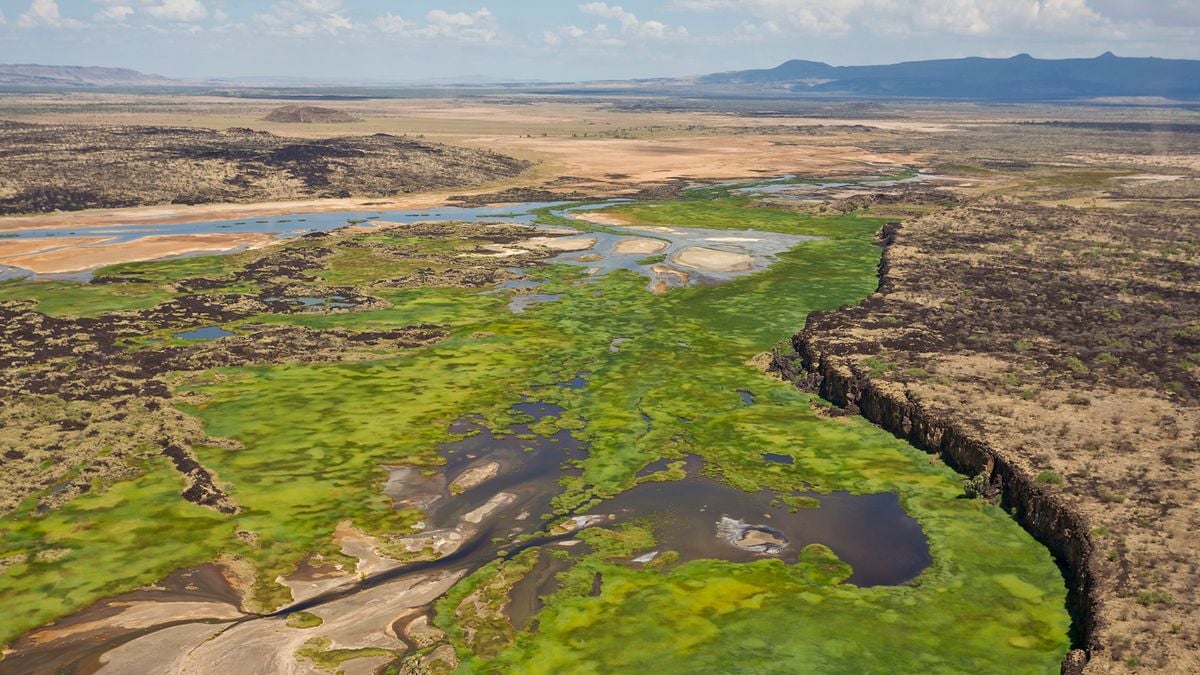
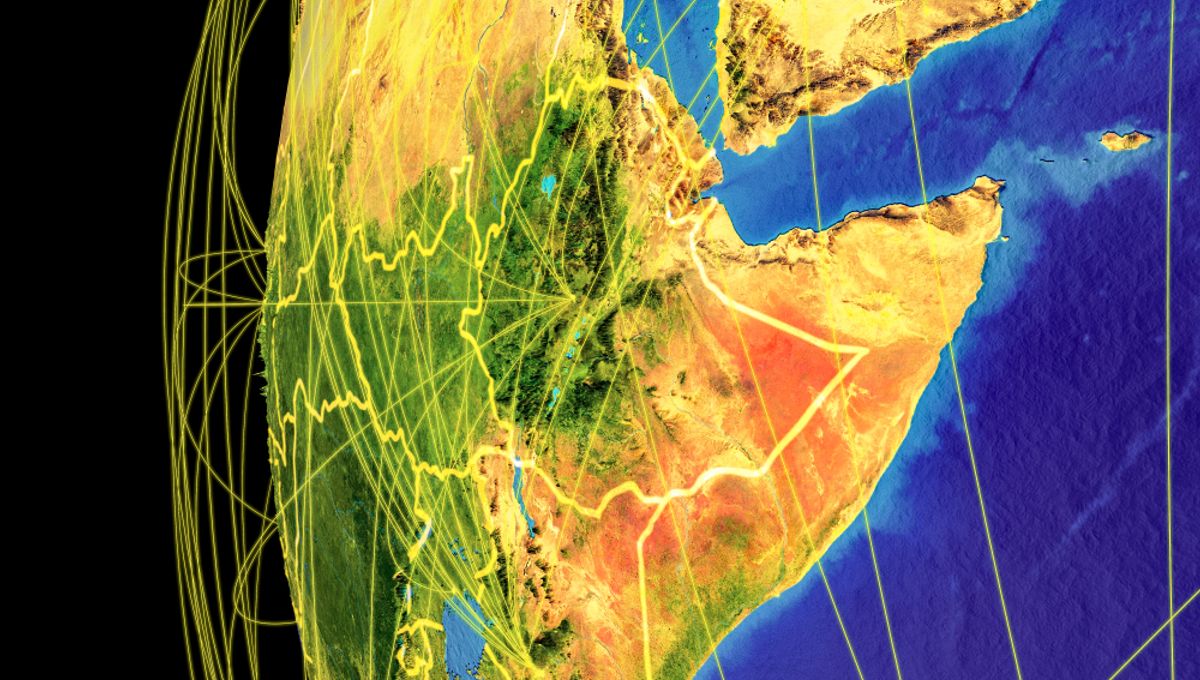
The Great Rift Valley in East Africa is undergoing a real and ongoing process of splitting, potentially leading to the birth of a new ocean over millions of years. The East African Rift System is causing the African continent to slowly tear apart, with the Somali and Nubian plates moving in opposite directions. Recent evidence confirms the active splitting, with the rift gradually widening at an average rate of 0.2 inches per year. This transformation could significantly impact the region's environment, climate, biodiversity, water resources, and geopolitical landscape, while also creating new opportunities for trade and communication. The rift is caused by a superplume upwelling along the eastern edge of Africa, and the sudden appearance of a crack may be due to heavy rainfall in the area.
New research using GPS mapping and computer models has shed light on the movement of the East African Rift System (EARS), a crack in the African plate that could eventually split the continent into two plates. The EARS is being driven by both shallow lithospheric buoyancy forces and deeper mantle forces, with the northward flow of mantle material contributing to the vertical crack while the rift is being split open from east to west. Although the split is occurring at a slow pace, the EARS is already seismically active, causing earthquakes and forming giant cracks in the ground.
Scientists have used 3D thermomechanical modeling to uncover that the African Superplume, a massive mantle upwelling, is responsible for the unusual rift-parallel deformations observed in the East African Rift System. This adds complexity to the debate on the primary forces driving the rifting, suggesting a combination of lithospheric buoyancy forces and mantle traction forces. The research findings provide new insights into the processes involved in continental rifting and may help scientists better understand the breaking of continents.
Computer models confirm that the African Superplume is responsible for the unusual, rift-parallel deformation observed beneath the Earth's largest continental rift system, the East African Rift System. The deformation that comes with continental rifting usually follows predictable directional patterns in relation to the rift, but the East African Rift System has both rift-perpendicular and rift-parallel deformations. The study's findings could help clear up scientific debate on which plate-driving forces dominate the rift system, accounting for both its rift-perpendicular and rift-parallel deformation: lithospheric buoyancy forces, mantle traction forces, or both.