A fisherman off the northeast coast of Canada discovered a rare black iceberg, sparking scientific interest due to its unusual color, size, and formation, which may provide insights into Earth's climatic history and glacial processes.
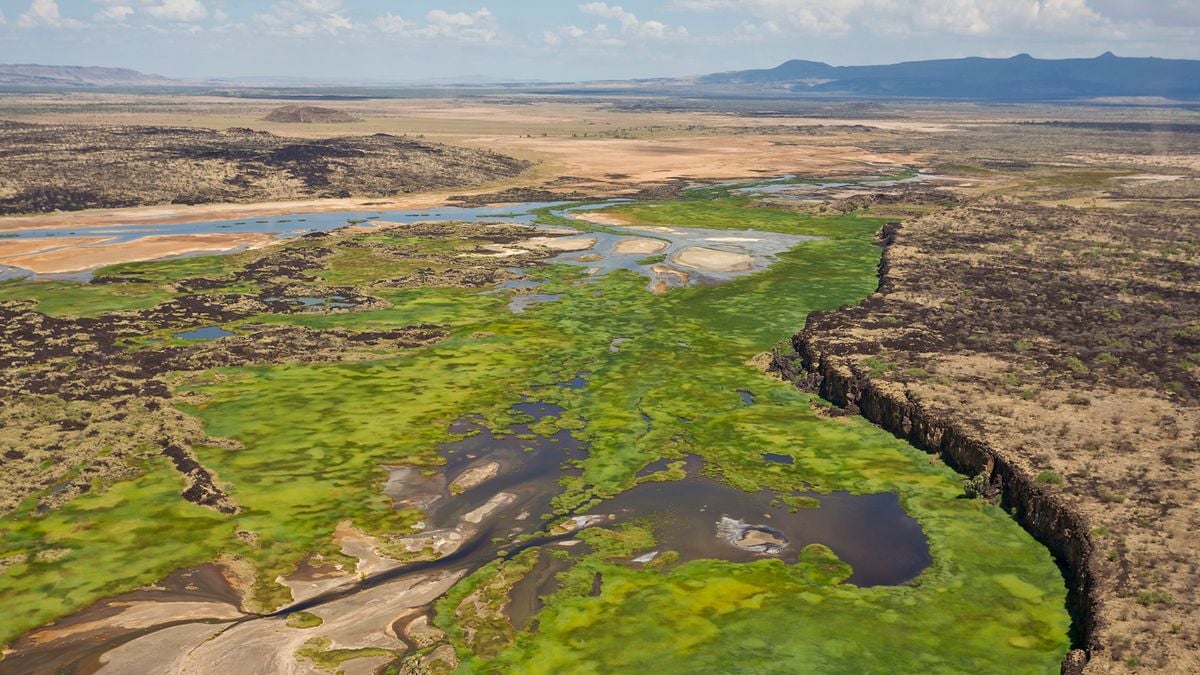
A new ocean is forming in East Africa due to tectonic movements splitting the African continent, specifically the separation of the Somali Plate from the Nubian Plate in the Great Rift Valley. This process, expected to take five to ten million years, will create a sixth ocean as the Indian Ocean floods the area. The region is geologically active, with volcanic and seismic activity indicating ongoing tectonic shifts. This event highlights Earth's dynamic nature and the potential for significant geographical changes over millions of years.
The Great Rift Valley in East Africa is undergoing a real and ongoing process of splitting, potentially leading to the birth of a new ocean over millions of years. The East African Rift System is causing the African continent to slowly tear apart, with the Somali and Nubian plates moving in opposite directions. Recent evidence confirms the active splitting, with the rift gradually widening at an average rate of 0.2 inches per year. This transformation could significantly impact the region's environment, climate, biodiversity, water resources, and geopolitical landscape, while also creating new opportunities for trade and communication. The rift is caused by a superplume upwelling along the eastern edge of Africa, and the sudden appearance of a crack may be due to heavy rainfall in the area.