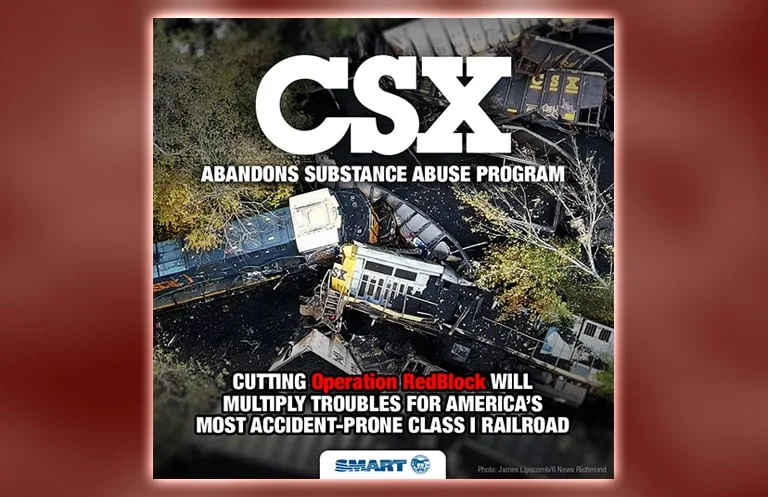
CSX has announced the dismantling of Operation RedBlock, a 41-year-old union-led program that significantly contributed to rail safety by preventing substance abuse and promoting trust among workers. The program's removal raises concerns about safety and industry commitment, echoing past industry shifts that led to diminished safety programs. SMART-TD and rail labor leaders vow to continue advocating for worker safety and support despite the loss of this historic program.
CSX announced Steve Angel as the new CEO, succeeding Joe Hinrichs, with Angel bringing extensive experience from Linde and Praxair to drive growth and operational excellence, while the company maintains strong performance and growth expectations.
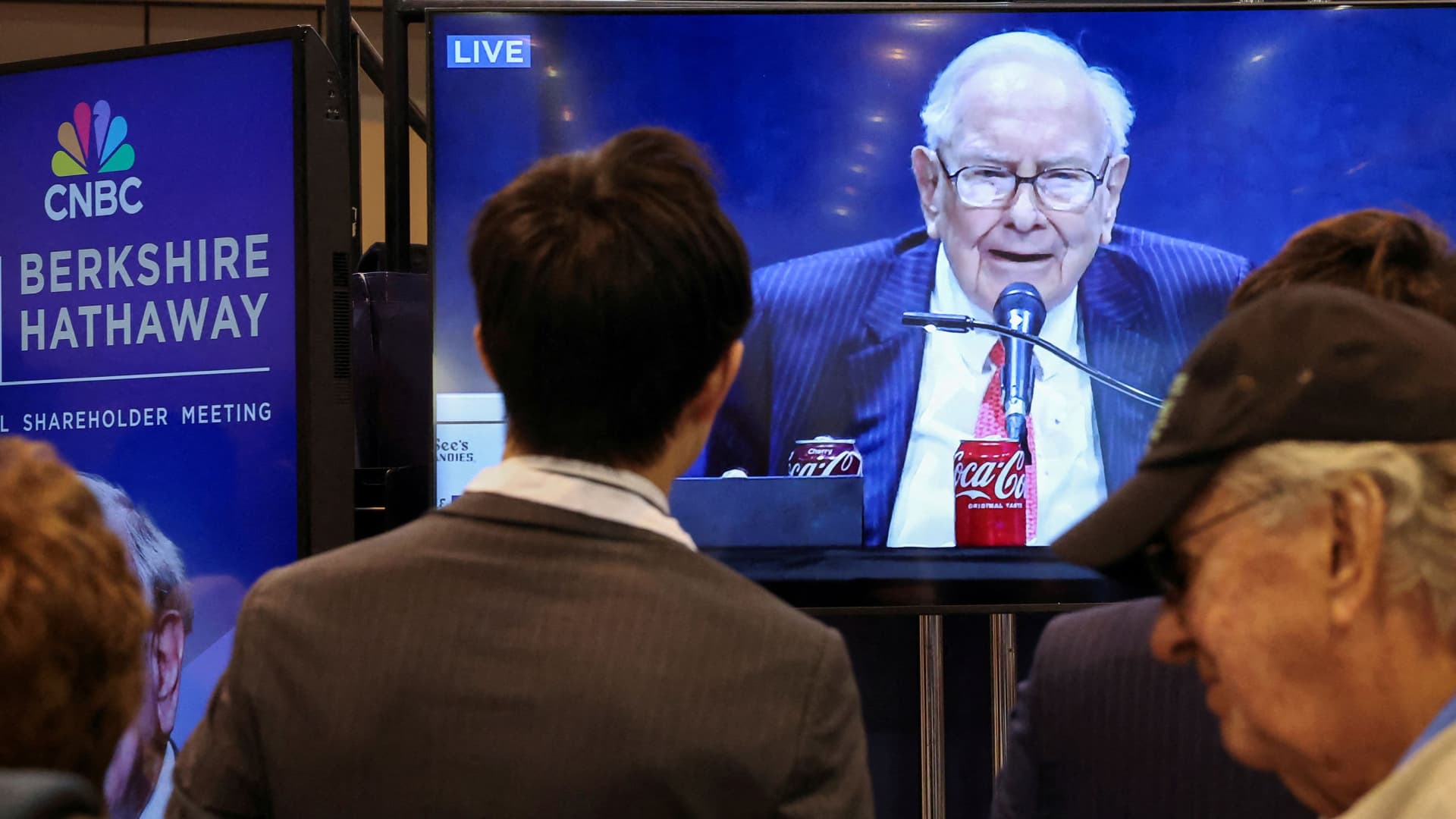
Warren Buffett revealed he is not interested in acquiring CSX but discussed potential cooperation to improve freight rail efficiency, leading to a decline in railroad stocks and a recent partnership between Berkshire Hathaway's BNSF Railway and CSX to enhance coast-to-coast rail services.
Hedge fund Toms Capital has acquired a stake in CSX and requested a meeting with its board, fueling speculation about potential merger efforts amid a backdrop of recent railroad industry consolidation and activist investor activity.
A potential merger between Union Pacific and Norfolk Southern could prompt Berkshire Hathaway to bid for CSX as a strategic move to prevent a transcontinental railroad monopoly, leveraging its substantial cash reserves for a significant acquisition, which could be a capstone deal for Warren Buffett's career.
Union Pacific is considering acquiring either CSX or Norfolk Southern to create a transcontinental railroad line, which could increase competition for trucking and benefit under President Trump's policies. CSX and Norfolk Southern stocks rose on reports of the potential deal, while Union Pacific's stock slipped. BofA analysts upgraded CSX and maintained a buy on Norfolk Southern, citing strategic improvements and market potential.
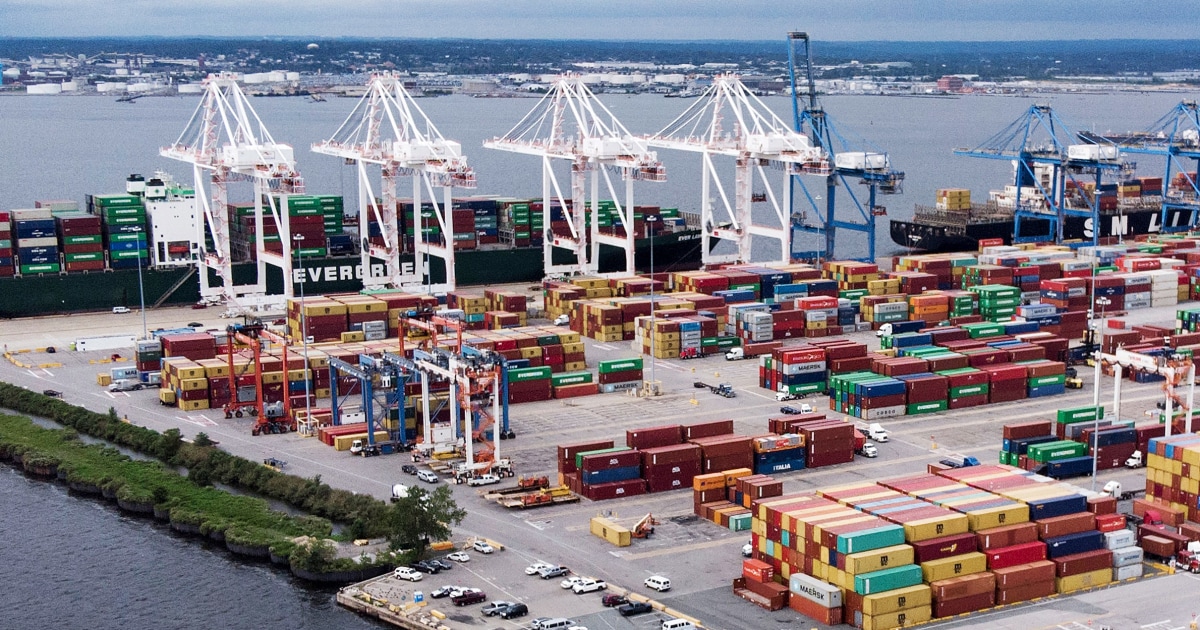
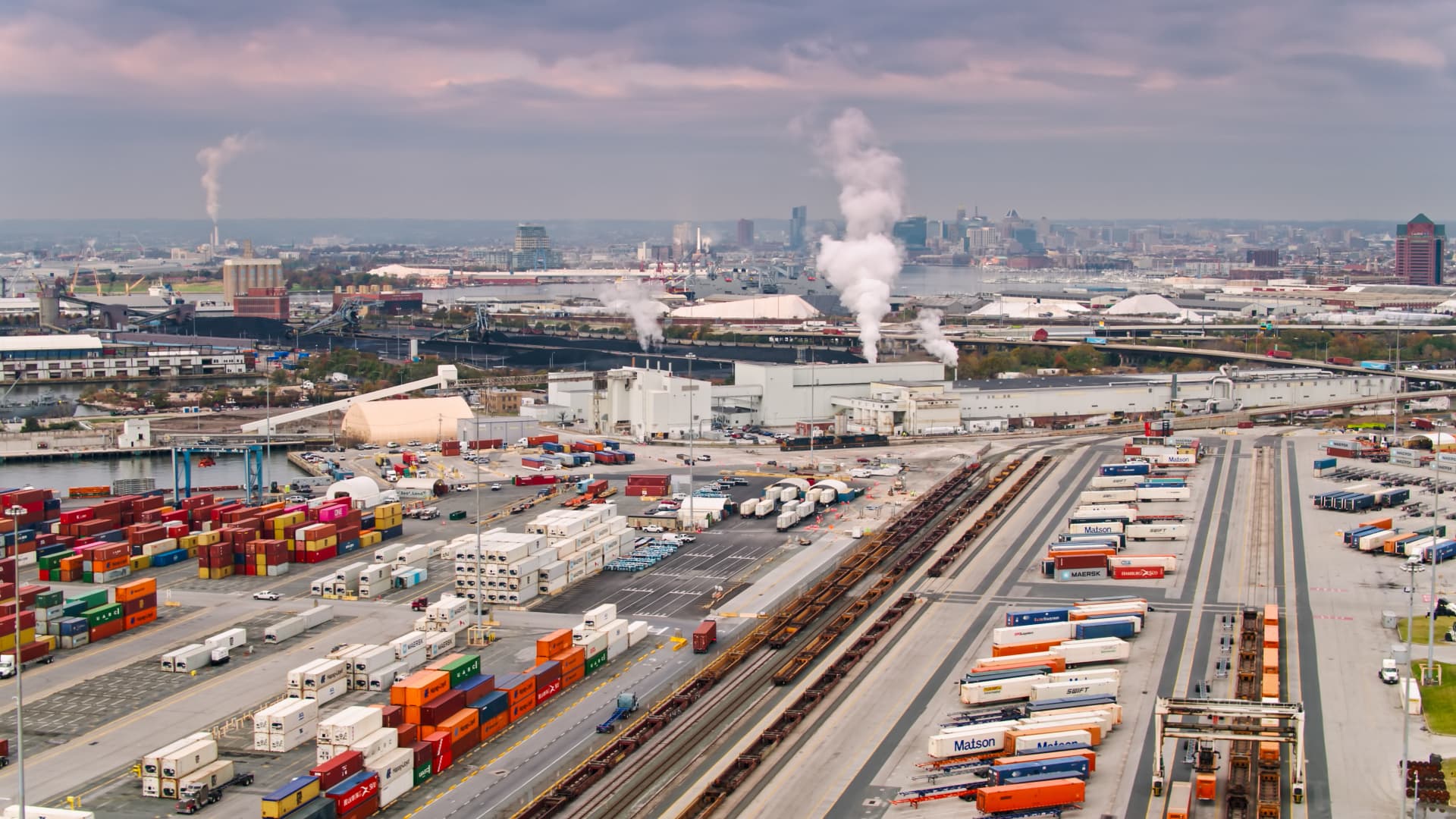
CSX completes the first diverted cargo shipments on a new rail line for the Port of Baltimore, with containers being unloaded in Baltimore after being diverted to the Port of New York and New Jersey. Norfolk Southern is launching a dedicated service to facilitate the flow of diverted freight between the two ports. The closure of the Port of Baltimore has led to significant supply chain disruptions, impacting trade, inventories, and inflation, with an estimated monthly indirect impact of $6.6 billion.
CSX has completed the first diverted cargo shipments on a new rail line for the Port of Baltimore, with containers being unloaded in Baltimore after being diverted to the Port of New York and New Jersey. Norfolk Southern is launching a dedicated service to facilitate the flow of diverted freight between the two ports. The closure of the Port of Baltimore has led to significant impacts on the supply chain, with major ocean carriers invoking contract clauses and the port facing an estimated $6.6 billion per month in indirect economic impact due to disruption in the cross-border flow of goods.
A train derailed in the Latonia neighborhood of Covington, Kentucky, with four empty rail cars affected, causing blockages on Lincoln Ave. and 33rd Street. CSX reported no injuries, leaks, or spills, and stated that the process of removing the derailed cars from the tracks should be completed between 11 a.m. and noon on Tuesday.
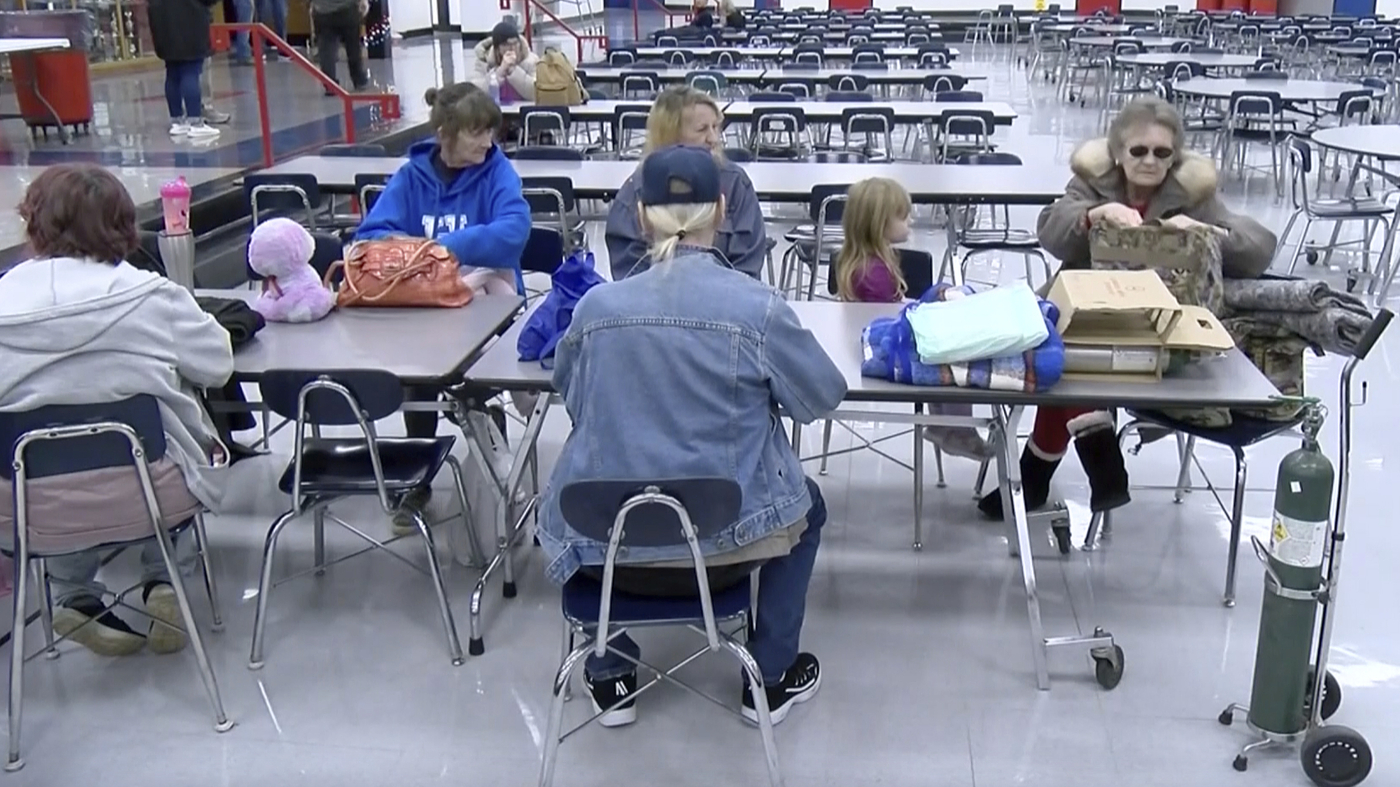
A chemical fire caused by a train derailment in Livingston, Kentucky, has been extinguished, allowing residents to return home. The CSX train derailed on Wednesday, with two of the cars carrying molten sulfur catching fire. Although the potentially harmful gas sulfur dioxide was released, air monitoring data deemed it safe for residents to return. The cleanup process is underway, and CSX has promised to cover the costs of those affected, including providing Thanksgiving dinner. Kentucky Governor Andy Beshear declared a state of emergency in the county and expressed gratitude to the first responders.
A chemical fire caused by a train derailment in Livingston, Kentucky, has been extinguished, allowing residents to return home. The CSX train derailed near the remote town, prompting evacuations. Two of the derailed cars carried molten sulfur, which caught fire. Although the potentially harmful gas sulfur dioxide was released, air monitoring data deemed it safe for residents to return. Cleanup efforts are underway, and CSX has promised to cover the costs of those affected, including Thanksgiving dinner.
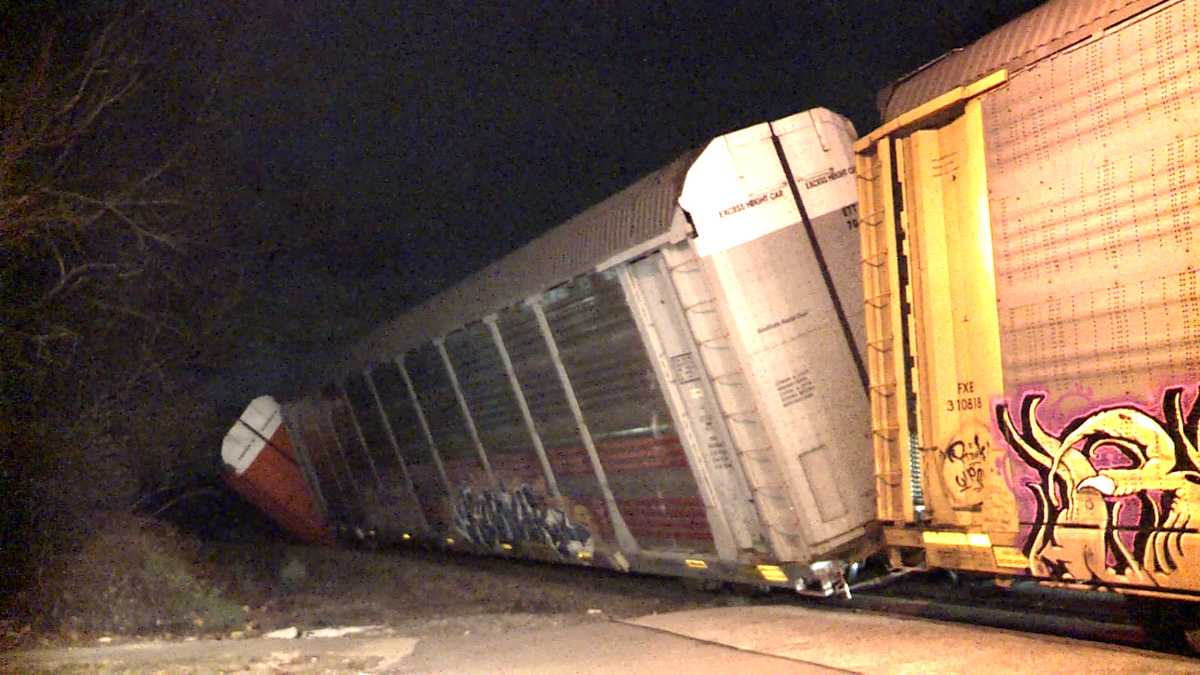
A train derailment in Kentucky has caused a molten sulphur fire, leading to a state of emergency being declared by the governor. At least 16 cars derailed, with two carrying molten sulphur and two carrying magnesium hydroxide. The fire continues to burn, and specialized equipment has been deployed to monitor air quality. Local authorities are recommending the evacuation of residents in the affected area. This incident is the latest in a series of train derailments across the country this year.
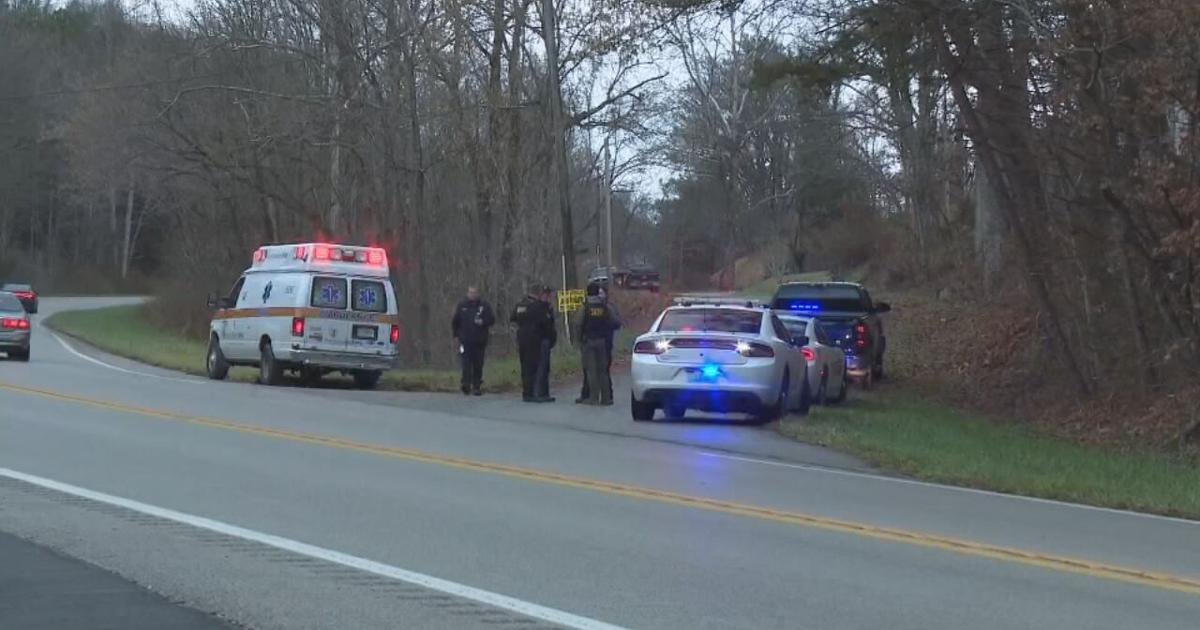
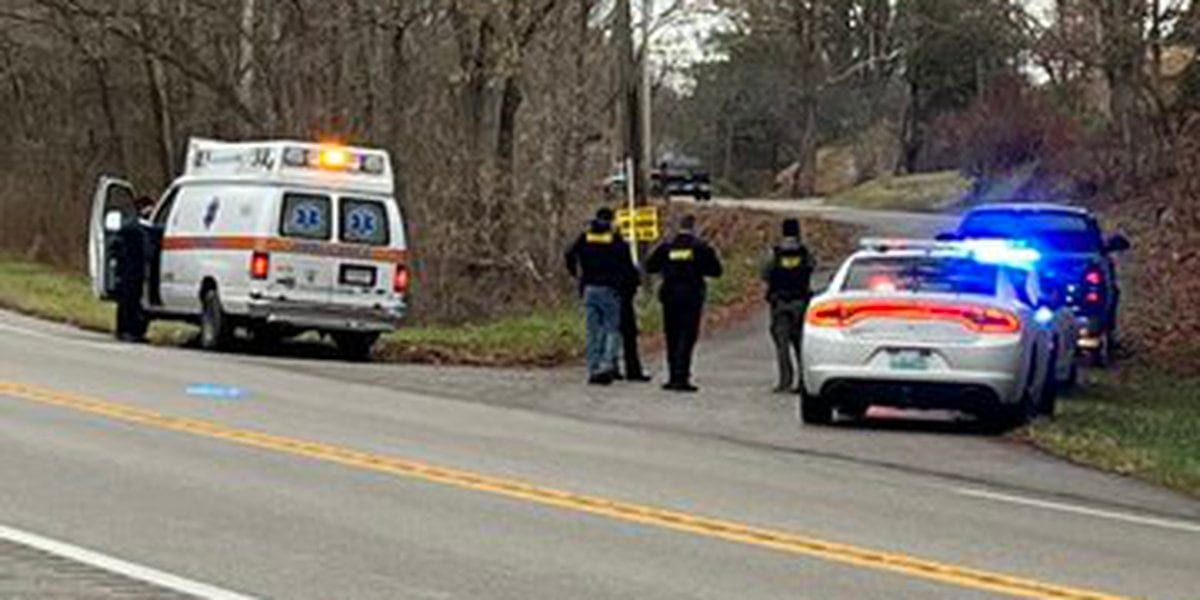
Two small towns in Kentucky, Livingston and Piney Branch, are being evacuated after a train derailment on a CSX line between Mullins Station and Livingston. At least 15 cars were involved, including two sulphur cars that leaked some of their contents. One crew member sustained minor injuries, but no one was hospitalized. Emergency management officials are monitoring the situation, and updates will be provided as more information becomes available.
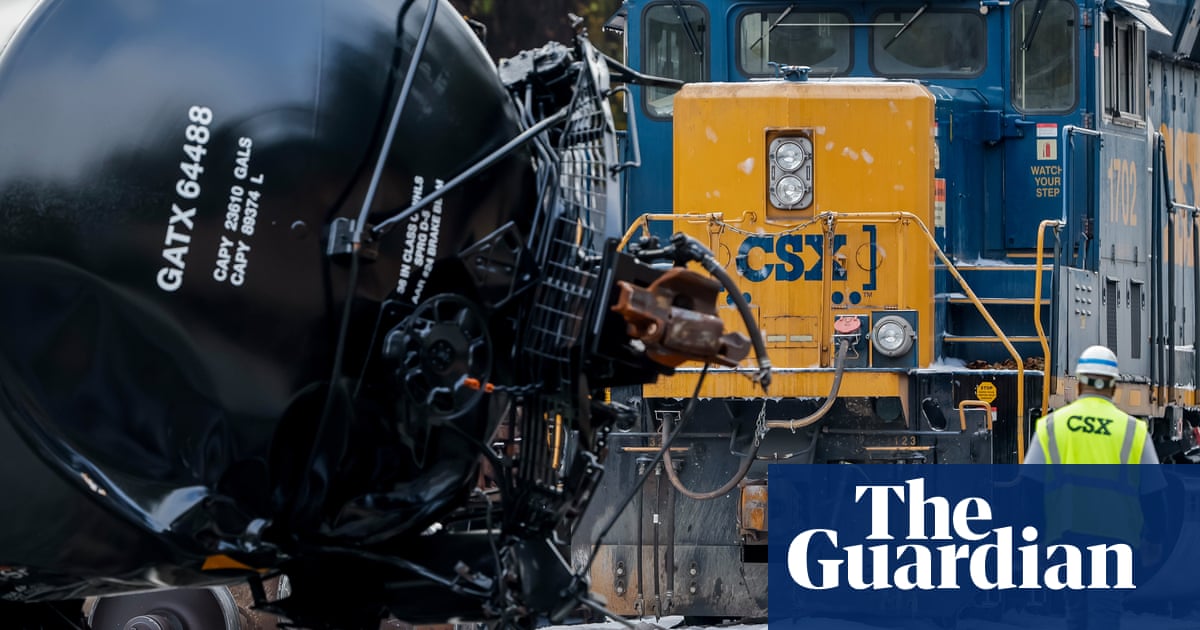
Eight train cars derailed in northwest Atlanta, causing a diesel fuel fire that has since been extinguished. The incident occurred when a Norfolk Southern train made contact with a standing CSX train, rupturing the fuel tank on a CSX locomotive and causing some cars carrying plastic pellets to overturn. No injuries or evacuations were reported, and CSX and Norfolk Southern are working together to investigate the cause of the collision. Cleanup efforts include removing derailed cars, repairing track infrastructure, and addressing the spillage of plastic pellets and remaining diesel fuel.
A railroad worker with CSX in Ohio was killed after being struck by a train while working in a railyard. The worker, identified as Frederick Anderson, was a carman for CSX, and his death is believed to have involved a remote-controlled locomotive. The incident has prompted calls for a review of the use of remote-control locomotives in the industry. CSX is cooperating with officials to determine the exact cause of the accident.