A computer simulation model predicts that the Commanders will beat the Falcons 29-20 in Week 4, covering the spread and going over the total points, with the model offering detailed betting picks for all NFL games.
The article discusses Week 4 NFL survivor pool strategies, highlighting the importance of using a highly accurate computer model that simulates games 10,000 times to identify the most reliable picks, which are expected to give players the best chance to advance and win.
The article discusses Week 3 NFL survivor pool picks, highlighting the challenges of selecting teams due to an evolving schedule and matchups. It emphasizes the importance of using the SportsLine Projection Model, which simulates games to identify the most probable winners, and notes that the model has a strong track record of success, including recent wins with the Ravens and Commanders. The model favors a team that wins outright in over 80% of simulations, guiding players to make informed decisions before locking in their picks.
A computer simulation model predicts NFL Week 2 outcomes, including a strong recommendation for the Ravens to cover as 12.5-point favorites against the Browns, based on extensive game analysis and historical success, urging bettors to consider these insights before placing bets.
The Boston Red Sox's reliance on a computer model to decide Rafael Devers' position led to internal conflict and a poor season start, highlighting the risks of overdependence on analytics over human communication.
Scientists have developed a computer model that can identify the Bordeaux estate that produced a wine and predict its vintage based solely on its chemical composition. The model, created by computational neuroscientist Alex Pouget and his colleagues, aims to bring chemical precision to the concept of terroir, which refers to the unique combination of soil, climate, and traditional methods that contribute to a wine's character. This research could also help in detecting wine fraud.
Dartmouth scientists have used an innovative computer model to suggest that volcanic activity, rather than an asteroid impact, was the primary cause of the mass extinction that ended the age of the dinosaurs. By analyzing the fossil record in reverse, the model identified the events and conditions that led to the extinction event. The researchers found that the emissions from the Deccan Traps volcanic eruptions alone could have triggered the global extinction. The model also revealed a decrease in organic carbon accumulation in the deep ocean around the time of the asteroid impact, suggesting the demise of numerous species. This groundbreaking approach opens new avenues for investigating other geological events.
The SportsLine Projection Model has made its predictions for Week 1 of the 2023 college football season. It recommends Purdue (-3.5) to cover against Fresno State and Western Kentucky (-11.5) to cruise to a blowout win against South Florida. The model also predicts several underdogs to win outright. For a full list of picks and predictions, visit SportsLine.
Scientists have made progress in understanding the mind-bending secrets of optical illusions that deceive the brain into perceiving incorrect colors. These "simultaneous contrast illusions" manipulate our perception by altering the brightness or color of the background, tricking us into seeing different colors in the foreground. A new computer model called the "spatiochromatic bandwidth limited model" was used to mimic human vision and analyze over 50 illusions. The model consistently identified the wrong colors, suggesting that these illusions rely on basic-level neural processing rather than higher-order visual processing or past experiences. This supports the bottom-up hypothesis and confirms that illusions can be explained by a single layer of neurons.
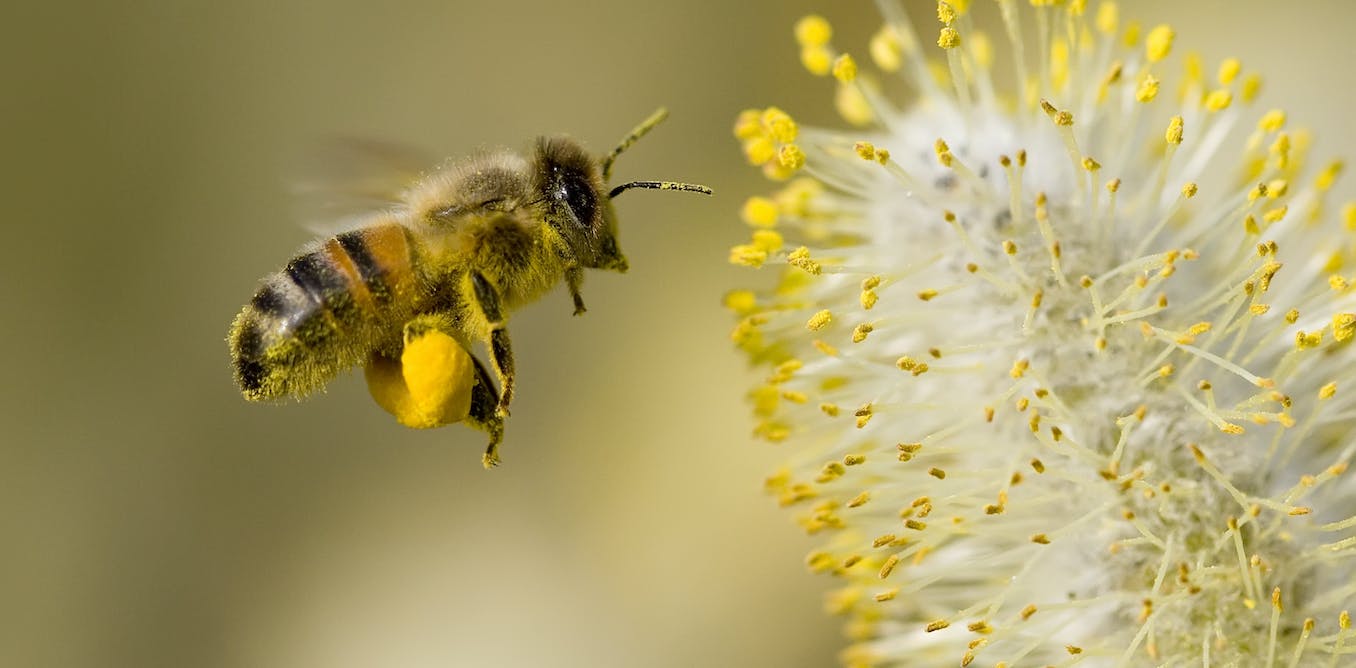
Researchers have developed a computer model to explain how bees make complex decisions when choosing flowers. By challenging bees with a field of artificial flowers and using computer vision and machine learning, the researchers found that bees quickly learned to identify the most rewarding flowers. Surprisingly, the bees' correct choices were faster than their incorrect choices, contrary to the speed-accuracy tradeoff observed in other animals. The researchers discovered that bees employ a risk-averse strategy, accepting only flowers they are certain are rewarding, which allows them to make fast and accurate decisions. The findings provide insights into the remarkable decision-making abilities of bees and offer a template for building autonomous systems with similar features.