Copper prices hit record highs in China and New York due to supply concerns and a weaker US dollar, with global markets rallying as investors anticipate tighter supplies in 2026 amid a year of geopolitical and supply shocks, and copper benefiting from the energy transition.
Coffee prices have surged to a record high due to adverse weather conditions affecting major producers Brazil and Vietnam, leading to an 80% increase in Arabica bean prices this year. As a result, coffee brands like Nestlé and Lavazza are considering raising prices to cope with the increased costs. The coffee industry faces challenges as demand remains high, but inventories are low, and the trend of rising prices is expected to continue.
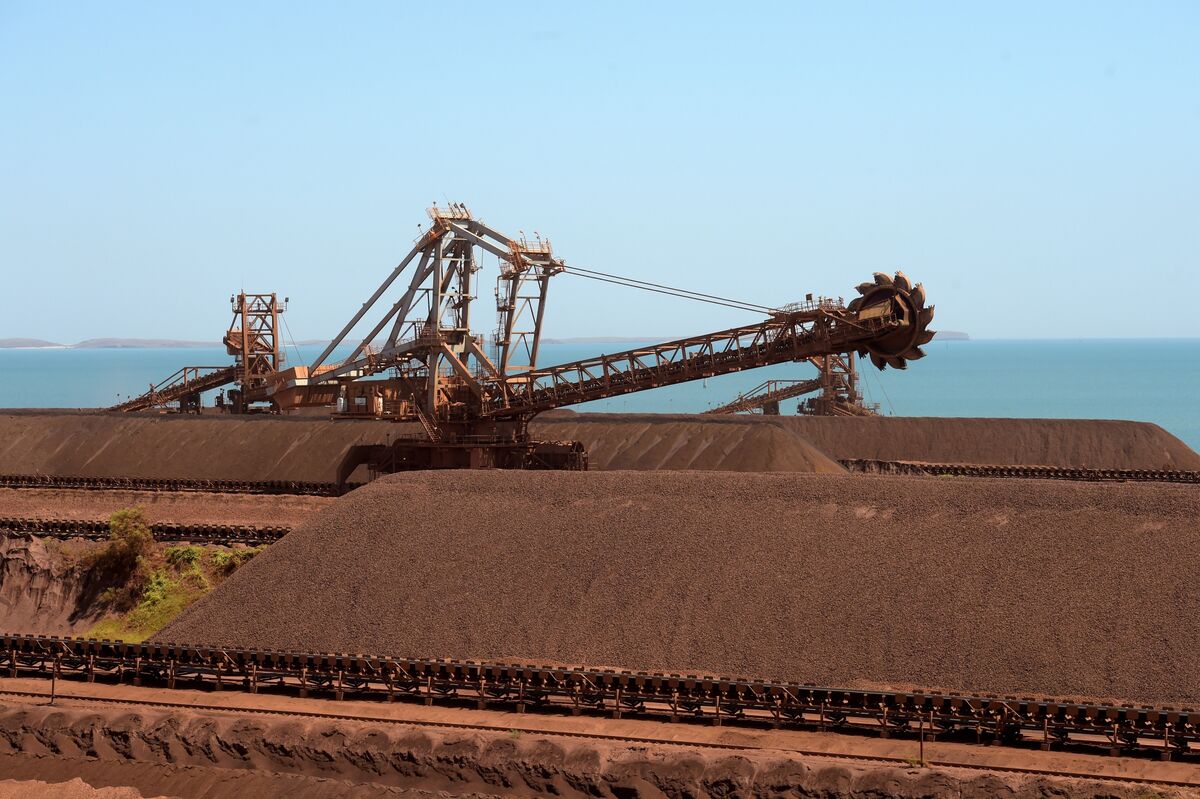
Iron ore prices hit a 10-month low due to concerns over China's property crisis, but rebounded as optimism about the country's economic recovery outweighed steel market weakness, with futures in Singapore rising 2% to above $102 a ton. Government data showed manufacturing PMI in March rose to the highest in a year, snapping a five-month contraction and beating market expectations.
Cocoa prices surged to a record-breaking $10,030 per metric ton, driven by supply constraints including hotter temperatures in Ivory Coast, the world's largest cocoa producer, and an outbreak of cacao swollen shoot virus. The commodity has soared nearly 138% this year, with strong chocolate demand in countries like the U.S. contributing to the price hike.
Spot gold prices fell below $2,000/oz for the first time in two months after higher than expected U.S. inflation data dimmed hopes for an early interest rate cut from the Federal Reserve, pushing yields and the U.S. dollar to two-month highs. Precious metals miners traded broadly lower, and the gold price is expected to fall further in the short term, but significant cuts could come later in the year. The data showing consumer prices in January rose by a higher than expected 3.1% Y/Y, leading to a decline in gold prices, while the rise in the dollar and concerns about global economic conditions also impacted commodity markets.
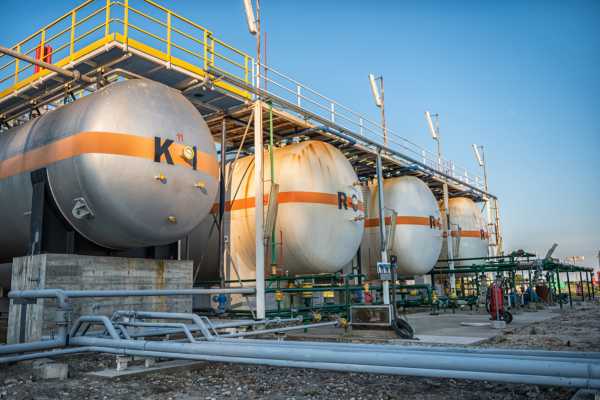
The natural gas market is experiencing downward pressure, with prices falling significantly in recent weeks. Technical analysis suggests that the market may be close to the bottom, with potential for a turnaround if it can surpass the $2 level. However, the market's long-term outlook will likely depend on weather patterns and supply dynamics, as the end of winter approaches. While a rally from current levels may require significant momentum and a catalyst, longer-term swing traders may find buying opportunities with caution.
The natural gas market has shown some resilience around the $2 level, with potential for a recovery towards the $2.80 level, but caution is advised due to the market's noise and historical lows. A break below $2 could signal further downside towards $1.80, but profit-taking from short selling may prompt a bounce. Overall, the market is expected to remain volatile, and traders are advised to approach with caution and consider smaller position sizes.
Natural gas markets continue to struggle around the $2 level, with little momentum due to disappointing winter demand and an abundance of supply. Traders are advised to be cautious and look for short-term trading opportunities, with $2 seen as a crucial support level. While a potential rally to $2.50 is possible, sustained momentum is lacking, and the focus is now shifting to spring, leading to a bleak outlook for the market.
Natural gas markets have drifted lower with lackluster price action, with the $2 level likely to attract buyers. The $2.50 level is expected to act as a price magnet, while $3 presents a significant resistance barrier. The market's momentum has waned, and it is highly dependent on weather forecasts in the northeastern United States. Currently, there is no clear indication for buying or shorting, leaving the market in a state of limbo as it awaits potential bounce and follow-through.
Natural gas markets rallied initially but showed signs of exhaustion due to technical and fundamental headwinds, with prices likely to slow down to the $2.50 level. The $2 level is significant support, while the $3 level is significant resistance, with potential resistance extending to $3.33. As winter nears its end, futures markets are pricing in March, putting downward pressure on natural gas due to decreasing heating demand. The market is expected to trade within a range for most of the year, with $2 as support and $3.33 as the ceiling, presenting a neutral outlook.
Oil markets are testing weekly highs as natural gas faces pressure due to anticipated warm weather, while WTI oil attempts to settle above $75.00 following claims by Houthis of an attack on a U.S. military cargo ship, and Brent oil tests the $80.00 level amidst escalating tensions in the Middle East. If natural gas remains below $2.45, it may head towards support at $2.10 - $2.15, while WTI oil could move towards the $79.00 - $80.00 resistance if it settles above $75.00. Brent oil's RSI indicates potential for additional momentum if the right catalysts emerge.
Natural gas prices fell during the trading week as concerns about oversupply and the fading impact of winter storms in the United States weighed on the market. Technical analysis suggests a potential drop towards the $2 level, with traders pricing in the upcoming March contract and its typical decrease in demand. The market is likely to carve out a range between $2 and $3.33 for the year, with the $2 level being a major floor.
Natural gas markets plunged from the top of the overall consolidation range, indicating a potential selling opportunity as the market pulls back. With temperatures expected to normalize, demand is likely to decrease, highlighting the oversupply of natural gas and leading to a focus on pricing reflecting this concern. The market is anticipated to trade within a range for the rest of the year, with $3.33 as the top and $2 as the bottom, and a potential move towards the middle of the range in the near term.
WTI oil rose above $72 as tensions in the Middle East escalated due to a Houthi attack on a U.S.-owned vessel, while natural gas prices retreated on bearish weather forecasts. Brent oil also moved above $78 amid concerns about potential disruptions in Middle East oil supply, with technical analysis indicating key resistance levels for each commodity.
Natural gas markets show volatility as prices pull back due to reliance on winter weather forecasts, with hesitation to break above previous resistance. Despite potential for further price increases, momentum is expected to dwindle, leading to a possible downturn. Plentiful natural gas supplies and the approaching end of winter suggest limited upward movement, with caution advised for buying at current levels.