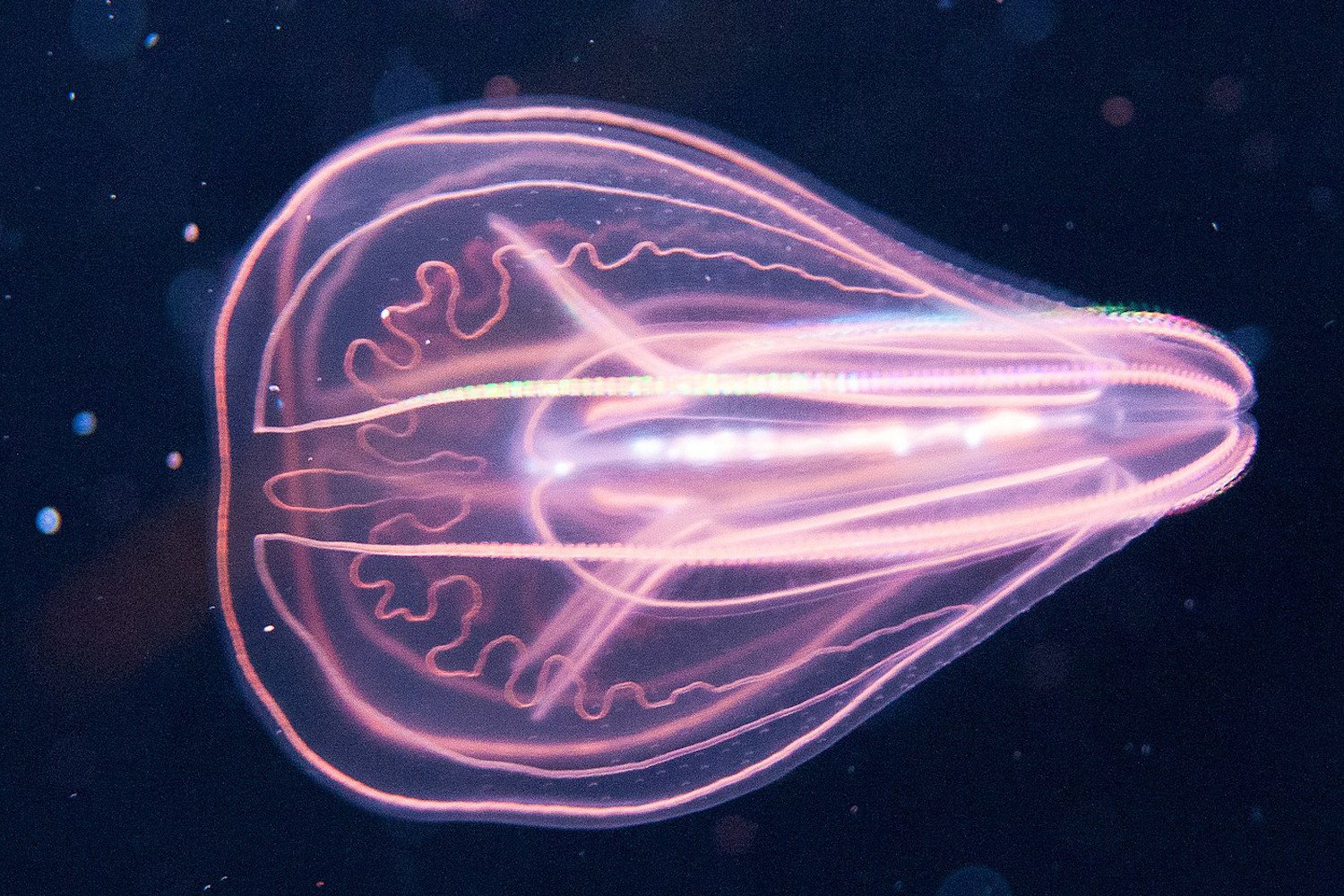
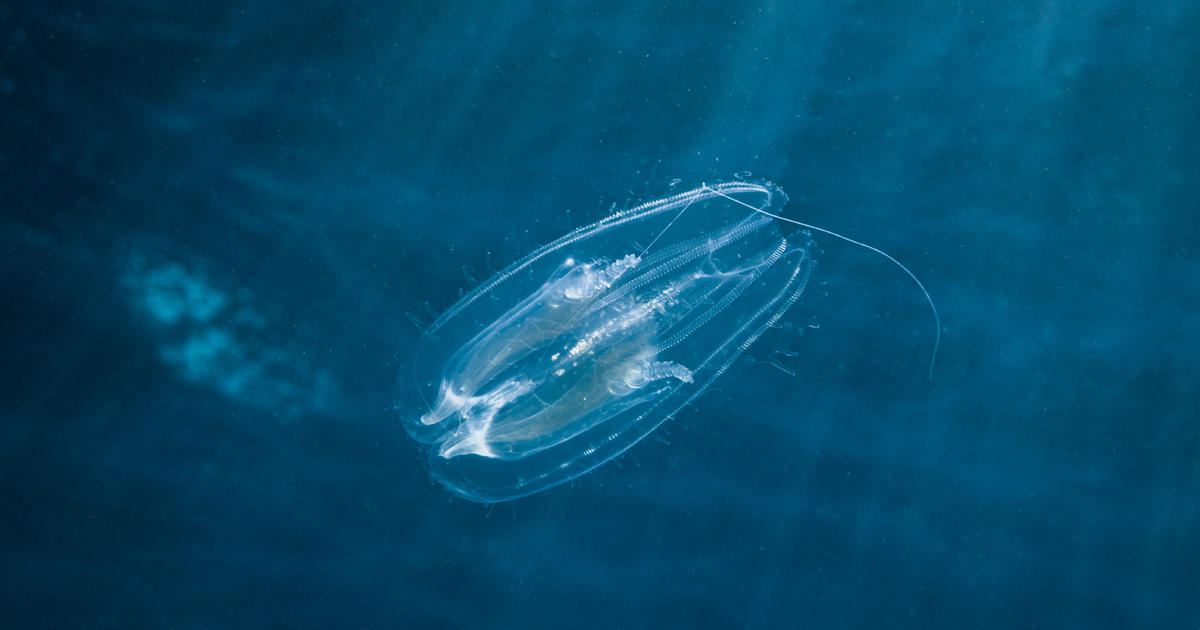
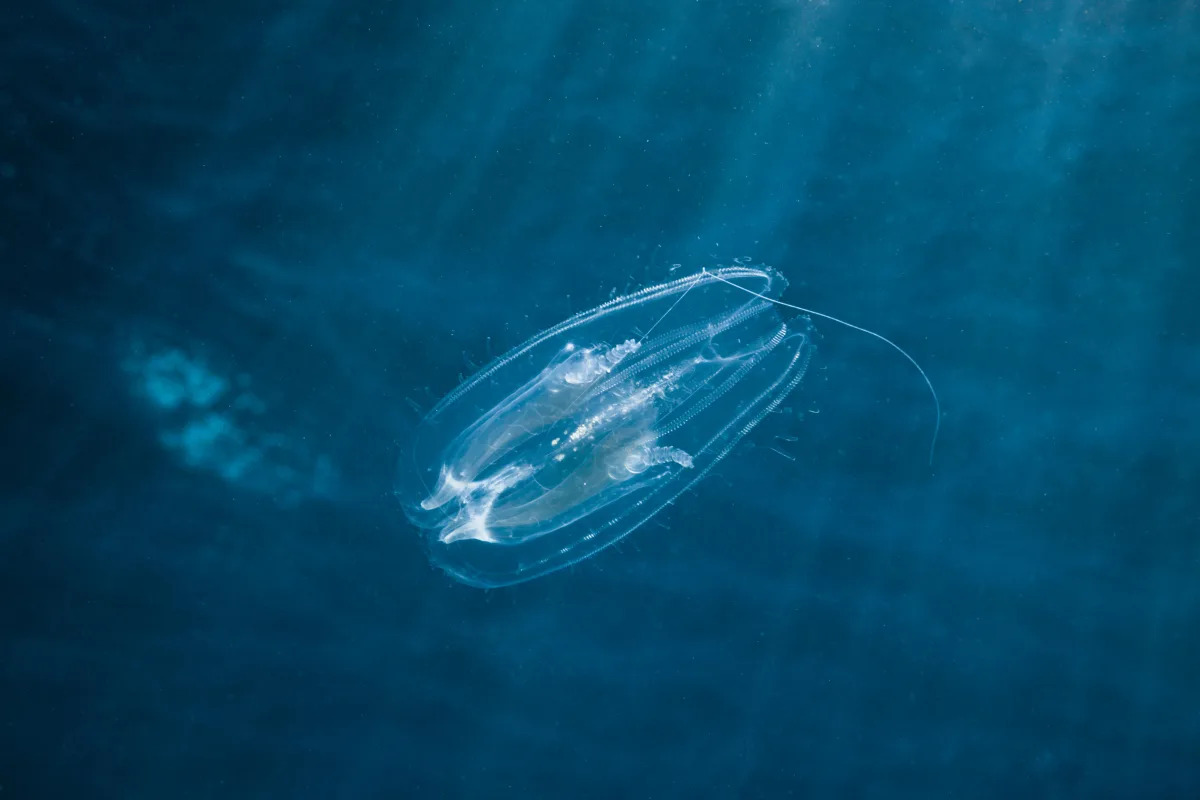
Scientists have identified the comb jelly as the first animal to branch off from the common ancestor of all animals, using new chromosomal analysis techniques that compare gene arrangements across species, resolving a long-standing debate between sponges and comb jellies.
Scientists have discovered that the comb jelly, Mnemiopsis leidyi, can reverse its aging process, reverting from an adult to a larval stage under extreme stress. This finding, published in the Proceedings of the National Academy of Sciences, challenges current understanding of animal development and suggests that life cycle plasticity might be more widespread than previously thought. The discovery opens new avenues for research into the molecular mechanisms of reverse development and its implications for aging and biology.
Scientists have used chromosomal analysis techniques to determine that the comb jelly was the first animal to branch off from the common ancestor of all animals on Earth, rather than the sea sponge. By comparing the placements of certain groups of genes in sponges and comb jellies to their closest single-cell non-animal relatives, researchers found that the comb jelly had the least reshuffling of genes on chromosomes, indicating that it split off from the original genome first. This discovery sheds light on the history of animal evolution and the mechanisms powering it.
Scientists have used chromosomal analysis techniques to determine that the comb jelly was the first animal to branch off from our common ancestor. This discovery sheds light on the history of animal evolution and the mechanisms behind it. The technique involved comparing the placements of certain groups of genes in sponges and comb jellies to their closest single-cell non-animal relatives, with the least reshuffling of genes indicating the first to evolve. The comb jelly's genetic isolation makes it the sister to all other animals and the most genetically distinct.
A new study published in Nature suggests that the first animal to have roamed the Earth about 700 million years ago was likely a comb jelly, or ctenophore. Scientists determined this by looking at the organization of genes in the chromosomes of the organisms. The chromosomes of the ctenophore look very different than the chromosomes of sponges, jellyfish and other invertebrates, alerting researchers that the ctenophore could have either come much earlier than the others, or much later. This new insight is valuable to learning about the basic functions of all animals and humans today, such as how we eat, move and sense our surrounding environment.
Scientists believe that the first animal to have roamed the Earth about 700 million years ago was likely a comb jelly, or ctenophore, according to a new study published in Nature. Researchers determined this by looking at the organization of genes in the chromosomes of the organisms. The chromosomes of the ctenophore look very different than the chromosomes of sponges, jellyfish and other invertebrates, alerting researchers that the ctenophore could have either come much earlier than the others, or much later. This new insight is valuable to learning about the basic functions of all animals and humans today, such as how we eat, move and sense our surrounding environment.
Scientists believe that the first animal to have roamed the Earth about 700 million years ago was likely a comb jelly, or ctenophore, according to a new study published in Nature. Researchers determined this by looking at the organization of genes in the chromosomes of the organisms. The chromosomes of the ctenophore look very different than the chromosomes of sponges, jellyfish and other invertebrates, alerting researchers that the ctenophore could have either come much earlier than the others, or much later. This new insight is valuable to learning about the basic functions of all animals and humans today, such as how we eat, move and sense our surrounding environment.