
Tag

Chemical Abundances

All articles tagged with #chemical abundances

astronomy2 years ago

Unveiling Surprising Discoveries: James Webb Telescope Reveals Unexpected Galaxies

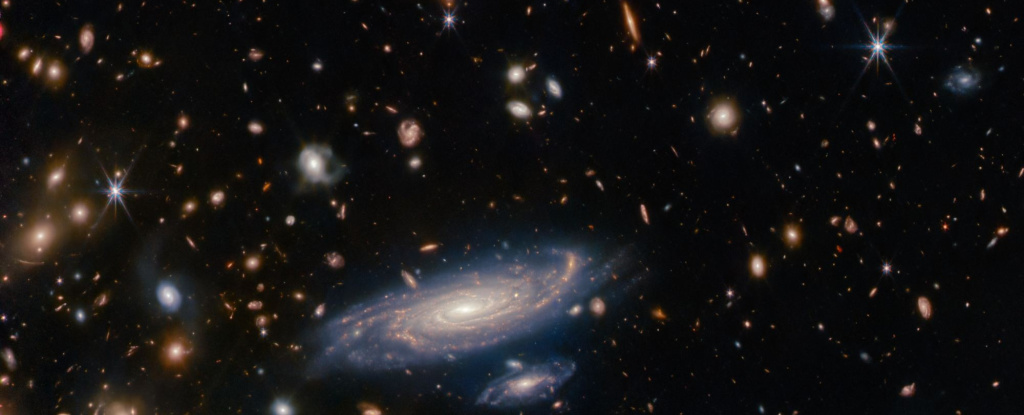
The James Webb Space Telescope (JWST) has observed some of the earliest galaxies in the universe, providing insights into their formation. These galaxies, still in the process of being formed, have significantly less heavy elements compared to later galaxies. This challenges the current model of galaxy evolution, which assumes an equilibrium between star formation and heavy element formation. The observations align with theoretical predictions and suggest that early galaxies are closely connected to the intergalactic medium and continuously receive pristine gas, diluting their metal abundances. Further data from JWST is expected to provide a clearer understanding of galaxy formation in the first billion years after the Big Bang.
astronomy2 years ago

Supermassive Black Holes Shape Galaxy Chemistry

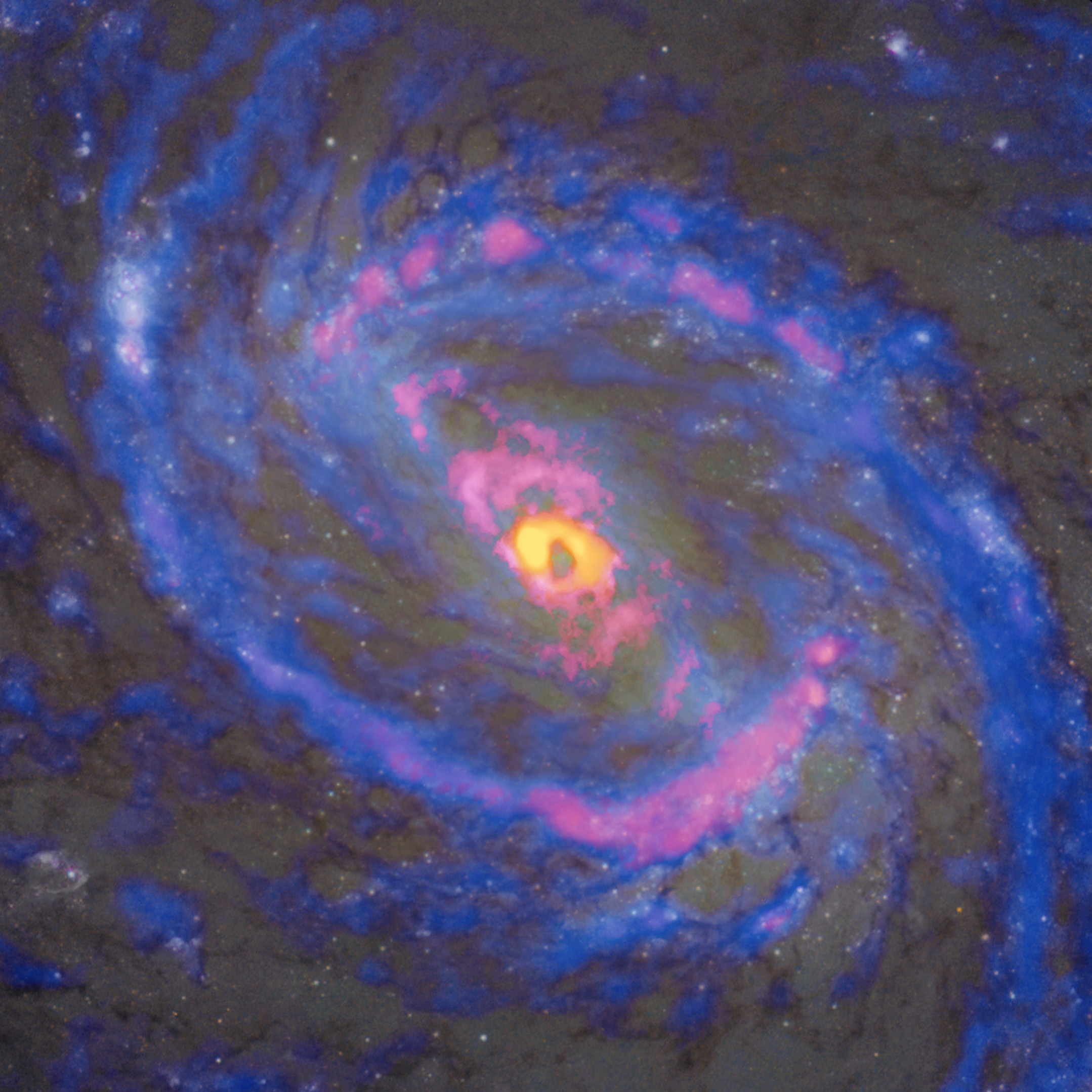
New research using the Atacama Large Millimeter/submillimeter Array (ALMA) provides strong evidence that supermassive black holes (SMBHs) alter the chemistry of their host galaxies. The study focused on the barred spiral galaxy NGC 1068 and mapped the distribution of 23 different molecules using ALMA. The researchers found different chemical distributions in the circumnuclear disk (CND) and the starburst ring (SBR) of NGC 1068, indicating the influence of SMBHs on the presence and abundance of chemicals. The study also detected unexpected concentrations of hydrogen cyanide (HCN) in the CND, possibly due to strong shocks, and observed the first detection of silicon monoxide (SiO) in NGC 1068. These findings shed light on the complex interactions between SMBHs and their host galaxies.

astronomy2 years ago

Webb Telescope Discovers Monster Stars and Ancient Galaxies at the Dawn of Time.

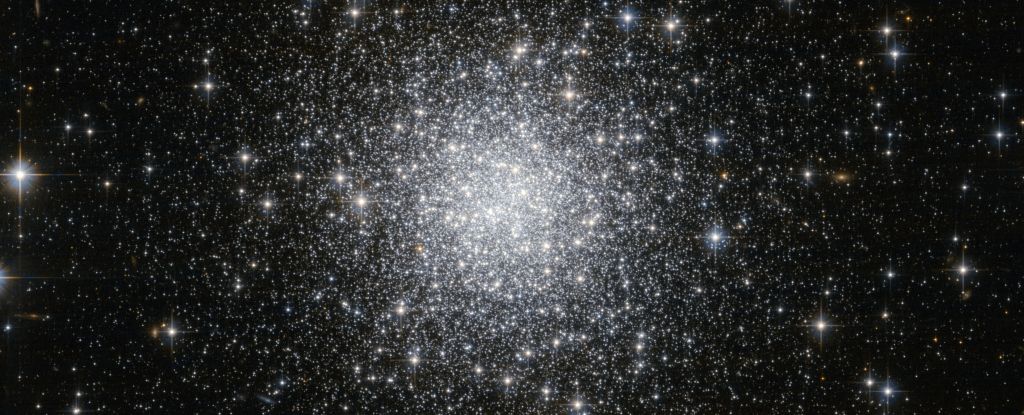
The James Webb Space Telescope has provided evidence of the presence of supermassive stars in the early Universe, with masses up to 10,000 Suns. The evidence comes from the study of globular clusters, which contain stars with similar chemical properties, suggesting they were born from the same cloud of gas. These clusters exhibit chemical abundance ratios that vary from star to star, which can be explained by hydrogen burning at extremely high temperatures in the cores of massive stars. The researchers hope to obtain more data on early galaxies from JWST to identify these early supermassive stars and resolve other mysteries, such as the formation of supermassive black holes.