
Unveiling Surprising Discoveries: James Webb Telescope Reveals Unexpected Galaxies
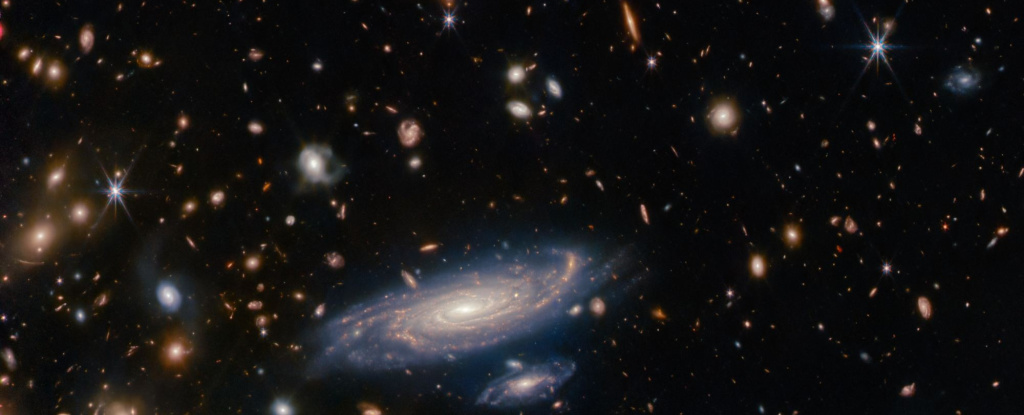
The James Webb Space Telescope (JWST) has observed some of the earliest galaxies in the universe, providing insights into their formation. These galaxies, still in the process of being formed, have significantly less heavy elements compared to later galaxies. This challenges the current model of galaxy evolution, which assumes an equilibrium between star formation and heavy element formation. The observations align with theoretical predictions and suggest that early galaxies are closely connected to the intergalactic medium and continuously receive pristine gas, diluting their metal abundances. Further data from JWST is expected to provide a clearer understanding of galaxy formation in the first billion years after the Big Bang.
- JWST Detects Earliest Galaxies to Date, And They Don't Look The Way We Expected ScienceAlert
- James Webb telescope spots thousands of Milky Way lookalikes that 'shouldn't exist' swarming across the early universe Livescience.com
- James Webb Space Telescope reveals ancient galaxies were more structured than scientists thought Space.com
- Webb Suggests Ancient Galaxies Were Metal-Poor and Full of Gas Gizmodo
- Scientists spot an unprecedented number of Milky Way-like galaxies Dazed
Reading Insights
0
7
3 min
vs 4 min read
85%
721 → 108 words
Want the full story? Read the original article
Read on ScienceAlert