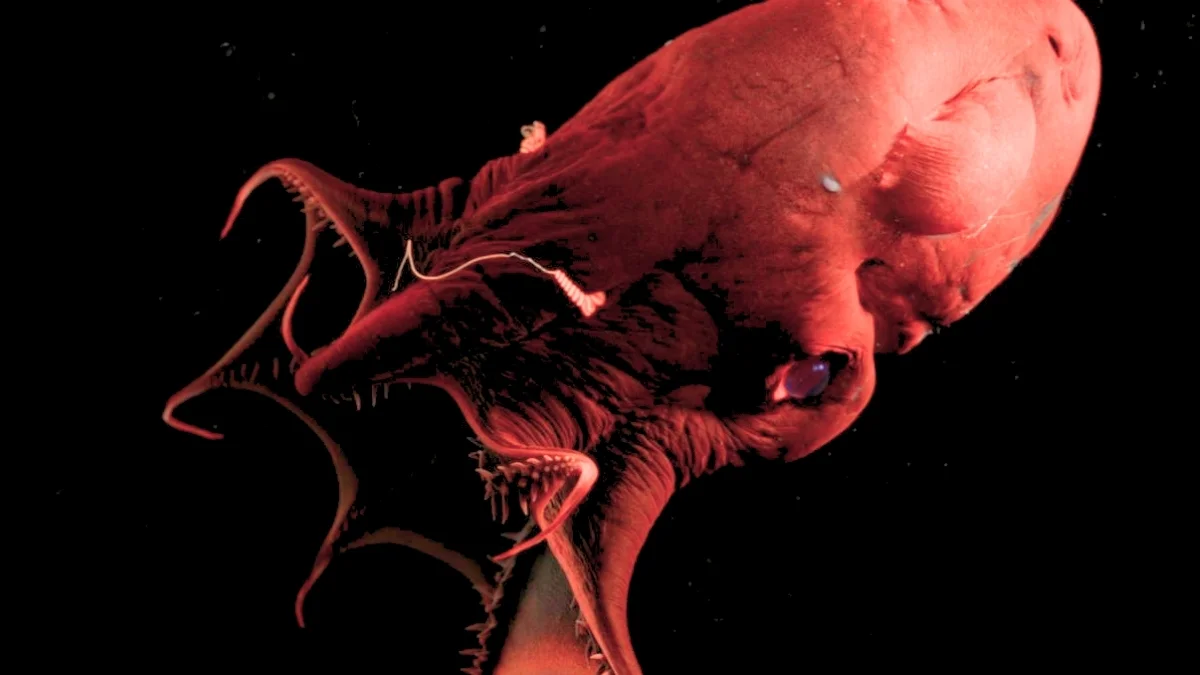
Scientists sequenced the largest cephalopod genome ever, revealing that the vampire squid, a living fossil, retains ancient genetic traits linking it to both squids and octopuses, providing insights into cephalopod evolution.
The nautilus, a cephalopod in a spiral shell, is a survivor of mass extinctions and has a unique shape that reflects galaxies. Its shell is a logarithmic spiral, growing wider with each turn, resembling the arms of galaxies like the Milky Way. Nautiluses have survived for hundreds of millions of years and can withstand extreme pressure changes in the ocean. They live in chambers within their shells, sealing off each chamber as they grow. The nautilus is a fascinating creature that continues to captivate scientists and defy easy description.
Researchers have discovered a 480-million-year-old fossil in Morocco that provides evidence of an ancient interspecies interaction. The fossil is a cephalopod that was posthumously colonized by a colony of tiny filter-feeders called pterobranchs. This discovery sheds light on the early Paleozoic era and the transitionary period between the Cambrian and Ordovician periods. It also highlights the long history of animals building their homes on top of other animals, a behavior that has persisted for millions of years.