Affinity rapidly gained over one million users in less than a week after consolidating its apps into a free platform, a move supported by Canva's business model to make professional creative tools accessible, mirroring strategies like Blackmagic's DaVinci Resolve.
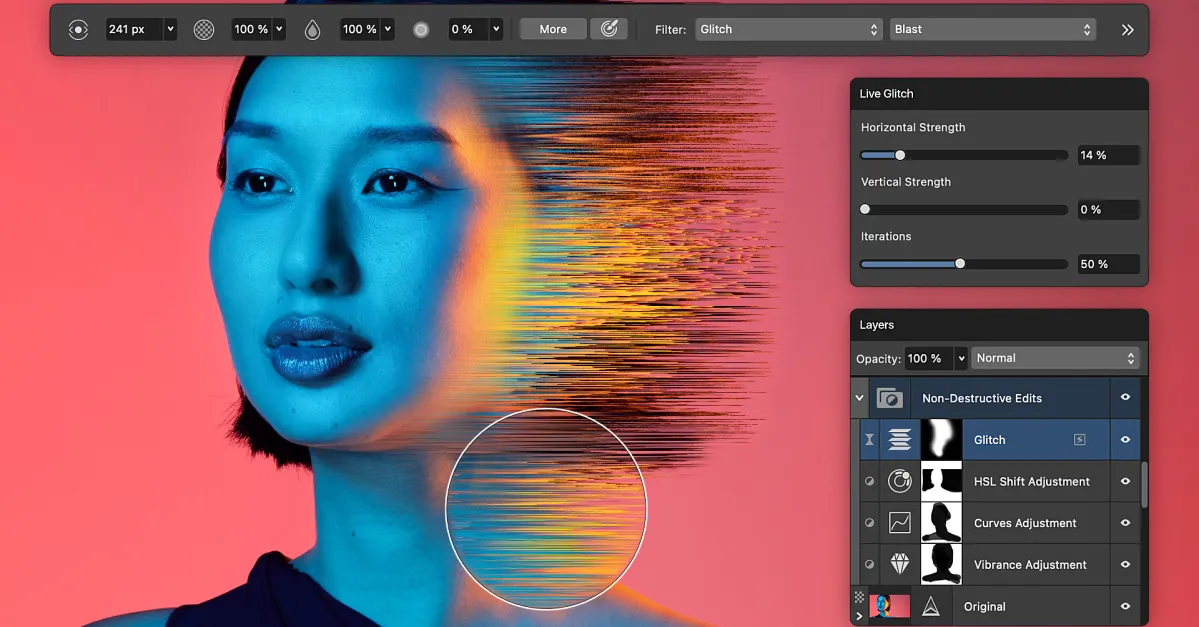
Canva has relaunched its Affinity creative suite as a free, all-in-one app for photo editing, vector illustration, and page layouts, available on Windows and Mac, with future iPad support, featuring AI-powered tools and seamless integration with Canva accounts, while maintaining support for older standalone versions.
Anthropic's Claude AI now integrates with Canva, allowing users to create and edit designs within Canva through AI chat, powered by the Model Context Protocol (MCP). This feature requires a paid Claude subscription and varies by Canva plan, with more third-party platform integrations expected to follow.
Anthropic's Claude chatbot now integrates with Canva, allowing users to create, edit, and manage designs through natural language prompts, streamlining workflows and enabling AI-assisted design tasks within Canva using the Model Context Protocol for secure access.
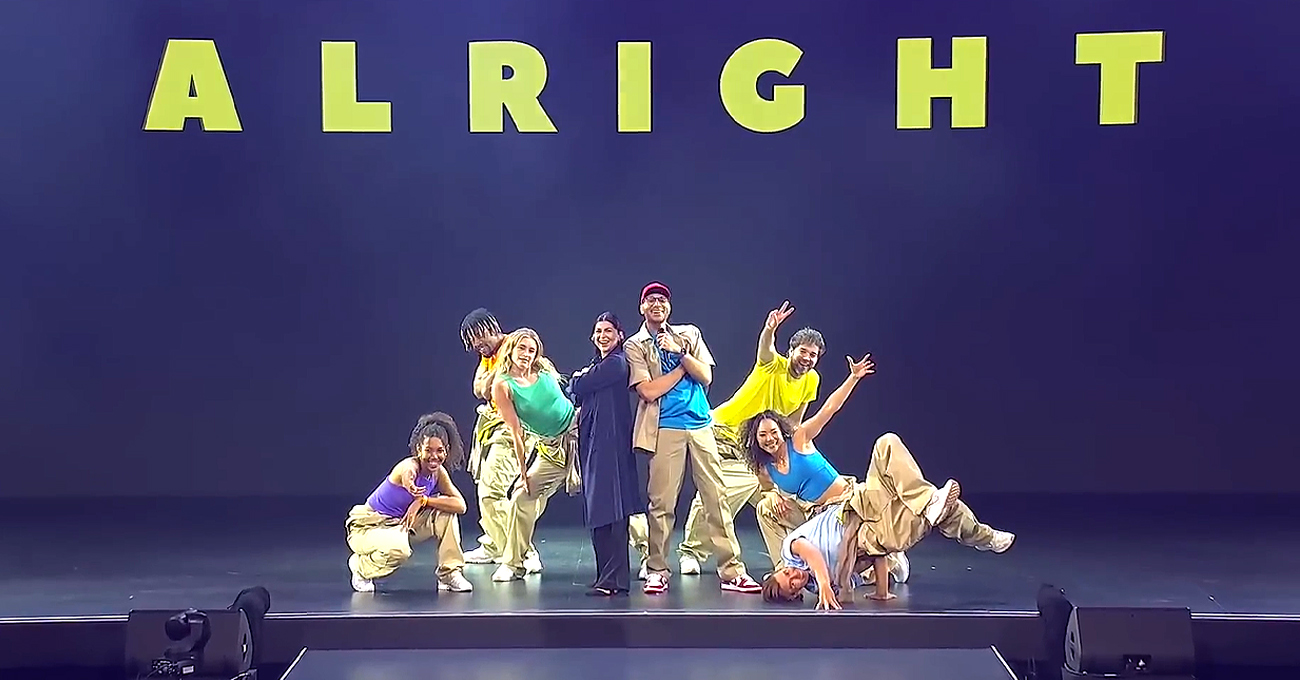
A hip hop performance at Canva's tech event in Los Angeles went viral for its cringe-worthy style reminiscent of Lin-Manuel Miranda's "Hamilton," sparking widespread mockery and calls for Miranda to answer for his influence on such presentations. Despite the backlash, some users still praised Canva's product.
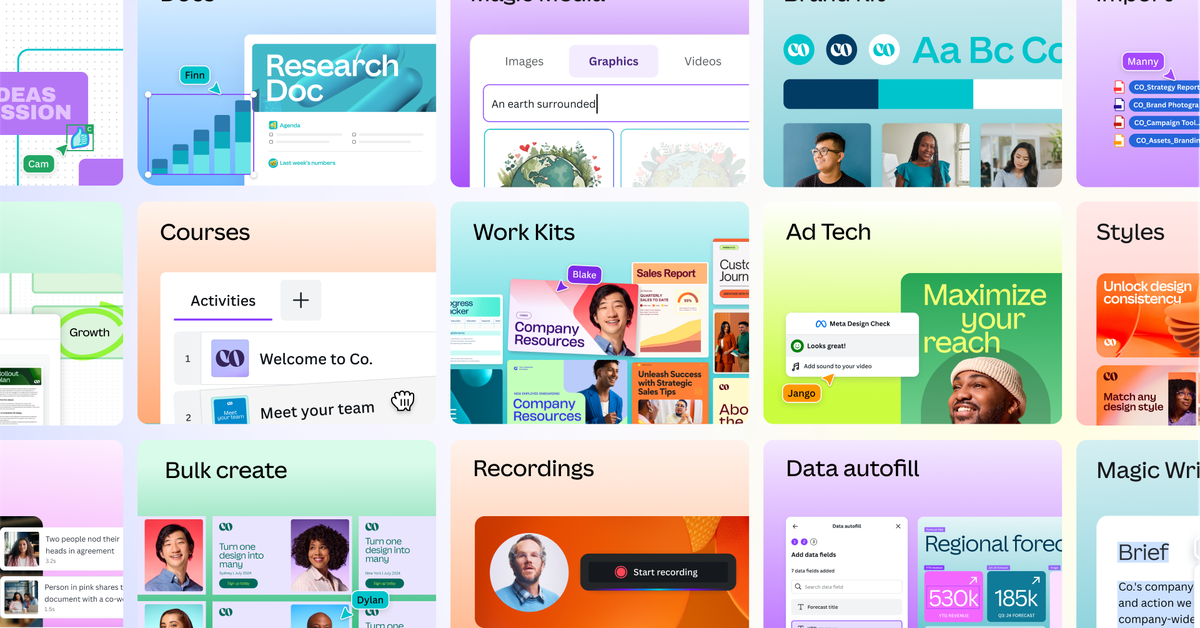
Canva is launching a series of updates aimed at professional teams and workspaces, including a redesigned platform, new AI-powered tools, and a specialized Enterprise tier for better collaboration and brand management. The updates, which include features like a suggestion mode for Canva Docs and new Magic Studio AI tools, aim to reduce organizational complexity and integrate design, AI, and workflow tools into one platform. The revamped experience will be available to the first one million users who find a hidden portal on the Canva homepage, with general availability in August.
Canva has launched a new enterprise version of its design tool, addressing the needs of larger organizations with features like single sign-on, enhanced security, centralized brand management, and dedicated support. This move comes as Canva sees increased usage by large cohorts, necessitating a product that can handle complex workflows and multiple departments. The new enterprise product aims to empower organizations and streamline design processes across various industries.
Canva, Australia's most valuable startup, has acquired the Affinity suite of creative software in a deal valued at "several hundred million pounds," marking its biggest acquisition yet as it aims to compete with Adobe. The acquisition includes the entire 90-person team of Serif, the startup behind Affinity's portfolio of photo-editing, publishing, and illustration software. Canva, known for its easy-to-use design products, has surpassed $2.1 billion in annualized revenue and has over 175 million users, with plans to double down on organic growth in Europe.
A survey by Canva and Sago reveals that nearly half of job seekers have used generative AI tools to build, update, or improve their resumes, with the highest usage in India and Brazil. The survey also shows that hiring managers are open to the use of AI in application materials, with 90% finding it acceptable. Job seekers using AI on their resumes reported higher satisfaction and interest in using AI in the future, while hiring managers believe text-only resumes will become obsolete in the next five years. Canva's global head of talent acquisition encourages job seekers to personalize their application materials to stand out in the increasingly competitive job market.
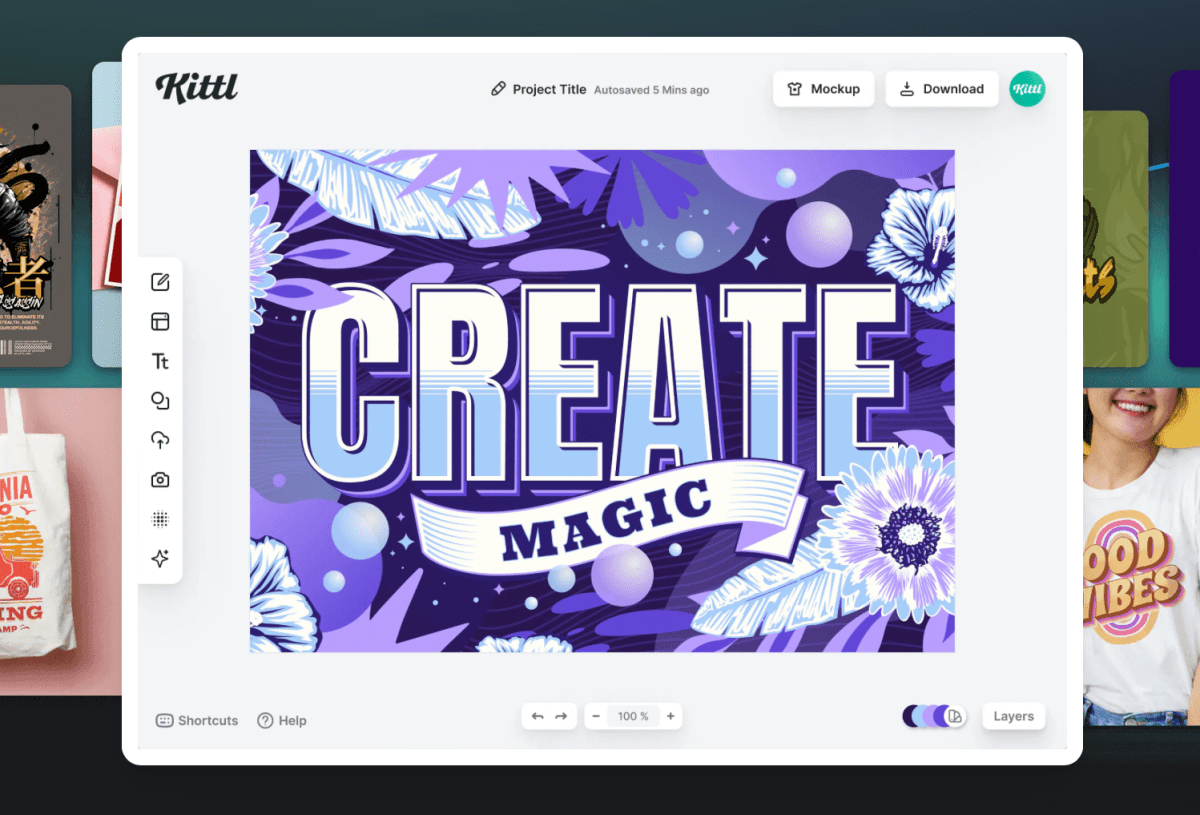
Berlin-based startup Kittl raises $36 million in Series B funding led by IVP, aiming to provide a browser-based graphic design tool that competes with Adobe and Canva by offering a broader feature set and access to the actual graphic file. With over a million users, Kittl targets the middle market, combining design, illustration, and AI-based features to streamline the design process. The company has gained traction with B2B clients like Netflix and Warner Bros., positioning itself as a contender in the creative product suite market.
AI-powered photo editing tools are becoming more advanced and accessible, allowing users to enhance their photos with generative AI. Adobe Firefly, Canva, Facetune, Lensa, and Autoenhance.ai are some of the mobile apps that utilize AI to improve photos by adding or removing content, adjusting lighting and colors, and applying makeup effects. While these tools offer benefits, they also raise ethical and psychological concerns, as they can alter our perception of reality and memories. It is important to use these tools responsibly and consider their impact on our psychology and society.
Melanie Perkins, CEO and co-founder of Canva, a rapidly-growing graphic design platform, has risen from obscurity to become a highly regarded figure in the tech industry. With a desire for worldwide domination, Perkins aims to empower every person to design anything they can imagine in every language and on every device.
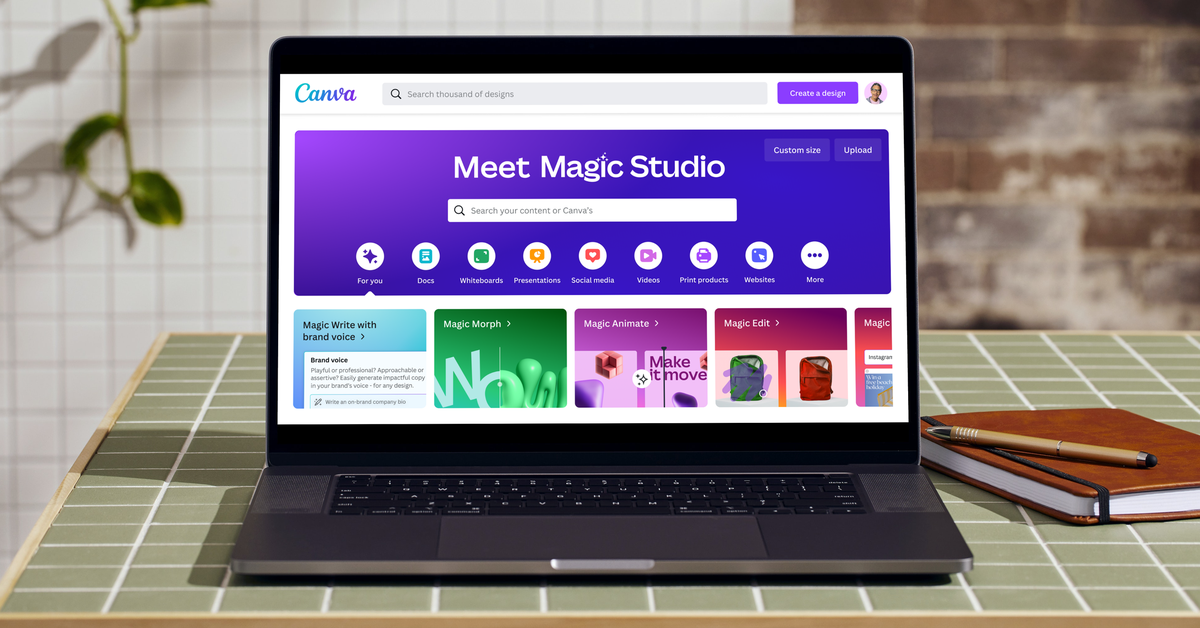
Canva, the web-based design platform, has launched Magic Studio, a suite of AI-powered design tools aimed at automating labor-intensive tasks and making content creation more accessible. The suite includes features like Magic Switch, which instantly transforms designs into different formats, and Magic Media, which generates short videos from text-based prompts or images. Canva has also introduced new photo editing tools and launched Canva Shield, a set of safety and security controls. Additionally, Canva will pay out $200 million over the next three years to designers who consent to having their content used to train the company's AI models. With 16 million paying subscribers and over 150 million users, Canva is becoming a serious rival to companies like Adobe.
Canva has launched a plugin for ChatGPT, allowing users to create professional designs quickly and easily. The plugin offers various templates for posters, flyers, and reels, and users can customize the designs with prompts. Unlike other text-to-image generators, the Canva plugin uses existing templates from Canva for faster design creation. This integration hints at OpenAI's plans to make GPT-4 multimodal in the future.
Canva has launched a suite of new branding features and AI tools, including Brand Hub, Brand Templates, and Brand Folders, to become an all-in-one visual communication platform for brand managers and creative teams. The AI-driven tools include Magic Design, Magic Edit, and Magic Eraser, as well as Canva Assistant, Beat Sync, Translate, and Magic Write. Other new and updated features include Shape Assist, layout recommendations, new fonts, Styles, layers capabilities, gradients, precision position tools, Alt Text, and Smart Design Imports. Canva aims to make it easier to take ideas from the head to the page and out into the world faster than ever before.