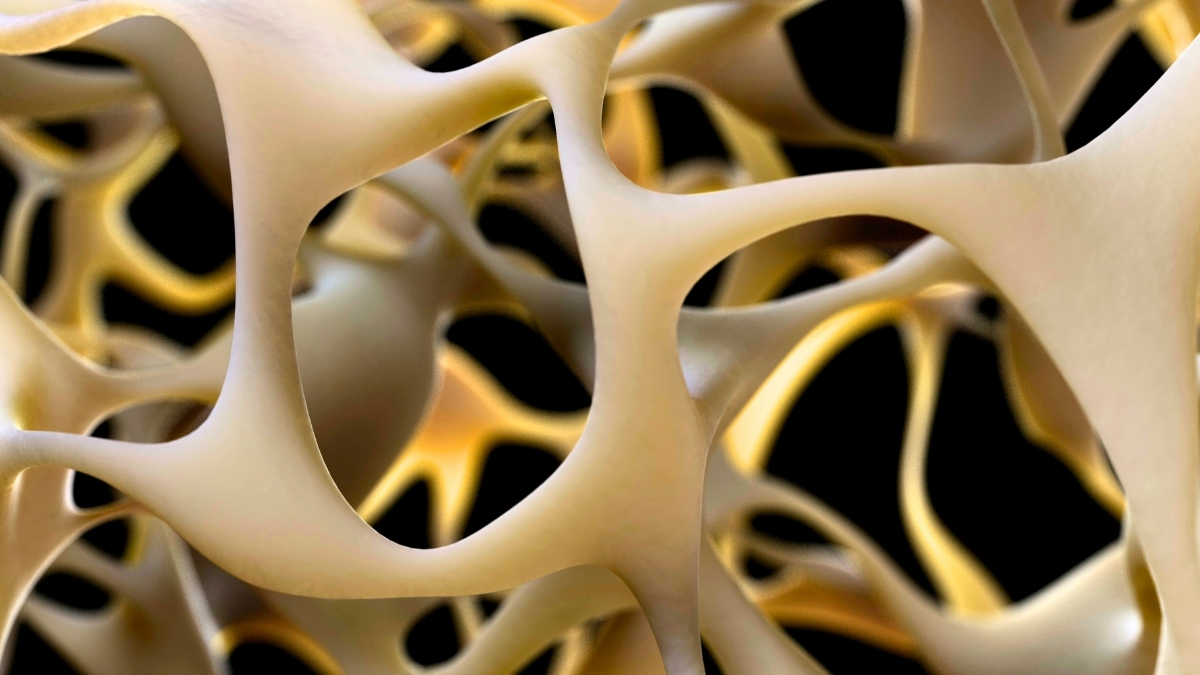
A recent study identifies the GPR133 receptor as a key to strengthening bones and potentially reversing osteoporosis, with experiments showing that activating this receptor in mice improves bone density and strength. The research also explores innovative blood-based implants for bone repair and highlights promising hormonal and molecular targets for future treatments, though most findings are still in animal models.
Taking more than the traditional 5g of creatine daily can lead to greater benefits across muscle, brain, and bone health, with recommendations suggesting around 7-10g per day depending on body weight for optimal results, especially for those seeking full-body benefits beyond muscle saturation.
New research suggests that adding impact and intensity to physical activity, such as running or brisk walking, can help maintain or improve bone strength in the femoral neck for sedentary individuals aged 70 to 85. A year-long exercise program focusing on muscle strength, endurance, balance, and flexibility training showed that more daily moderate and high-intensity physical activity was related to less decline in bone mineral density. Incorporating high-intensity activity into daily routines, even in older age, can be achieved through small bouts of brisk walks, stair climbing, and jumping-like impacts.