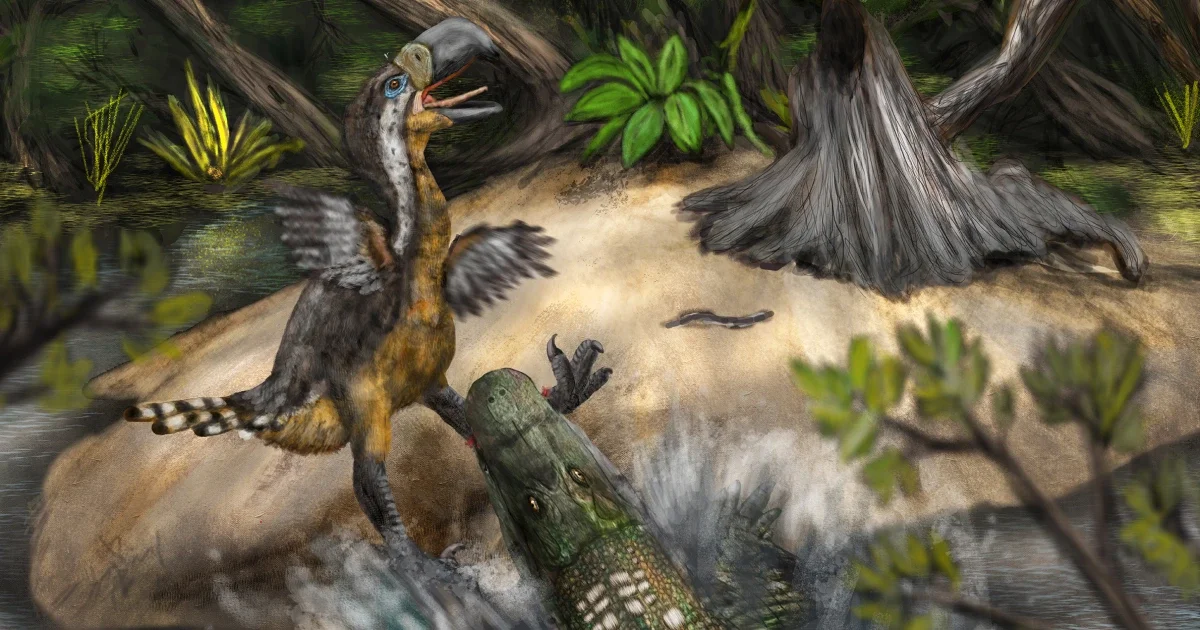
Fossil evidence suggests that a 13 million-year-old terror bird in Colombia was killed and possibly eaten or scavenged by a juvenile caiman, challenging previous assumptions about predator-prey relationships in prehistoric ecosystems.
Paleontologists studying bite marks on sauropod bones have concluded that the marks were likely made by scavenging meat-eating dinosaurs rather than predators that actively hunted and killed adult sauropods. The researchers found that the bite marks were more likely to be on the bones of old, sick, injured, or otherwise vulnerable sauropods. The study suggests that it would have been too risky for predators to try to bring down an adult sauropod, which could weigh up to 50 tons. Instead, the large theropods likely targeted and consumed young sauropods, which were more defenseless.
Paleontologists studying bite marks on sauropod bones from the Jurassic Period have concluded that the marks were likely made by scavenging meat-eating dinosaurs rather than predators that actively hunted and killed adult sauropods. The researchers found deep grooves on 68 out of 600 bones examined, suggesting that the scavengers came across the bodies of sauropods that had already died from causes like old age or infirmity. The study also revealed that adult sauropods were likely not targeted by predators due to their massive size and the potential risk involved in attacking them. Instead, predators may have focused on young sauropods, which were more vulnerable.
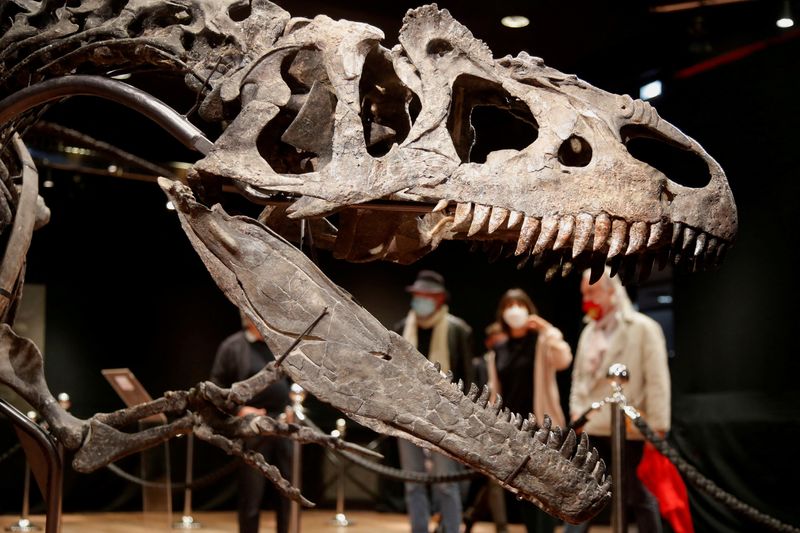
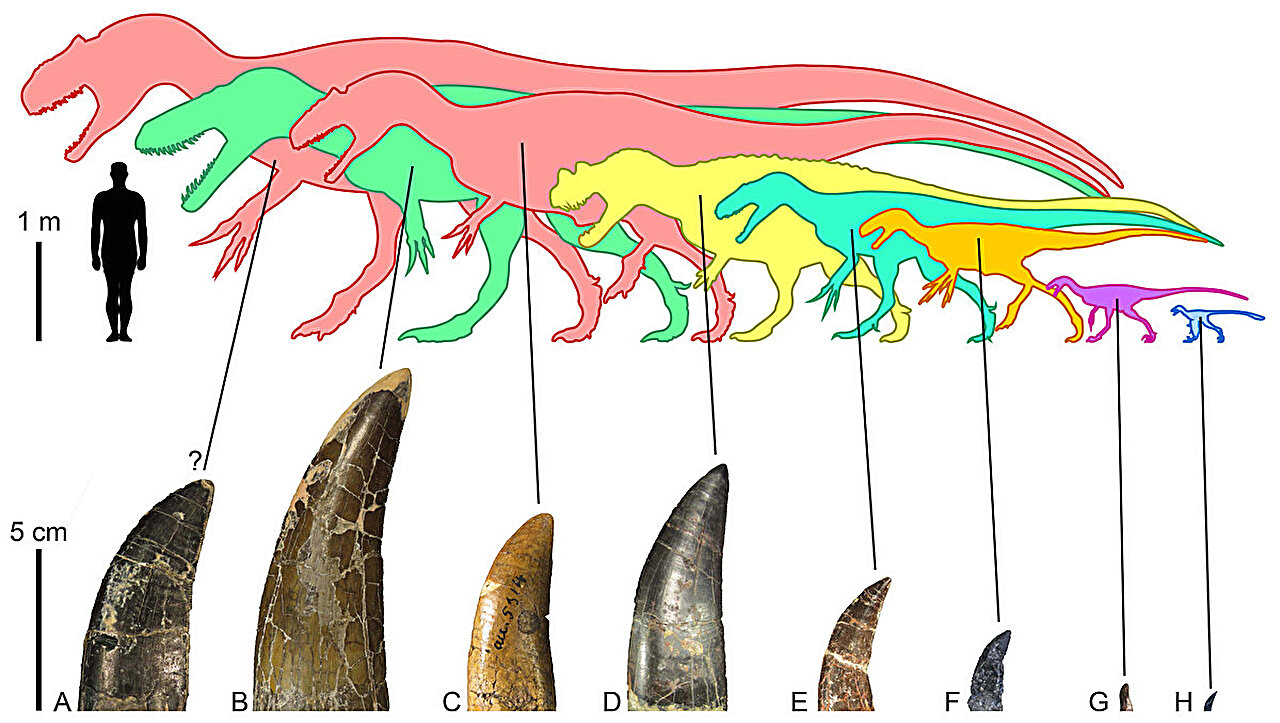
A new study published in PeerJ examines the bite marks on the bones of long-necked sauropod dinosaurs and reveals surprising insights into the feeding habits of carnivorous theropod dinosaurs in North America. The research suggests that while bite traces on large sauropods were less common than in tyrannosaur-dominated environments, they are nonetheless abundant in the Morrison Formation. The study also highlights the wear on the teeth of Morrison Formation theropods, which shows similarities to the patterns seen in large tyrannosaurs. The findings shed light on the ecological relationships between dinosaurs in the Jurassic period and provide valuable information about the behavior of these ancient animals.