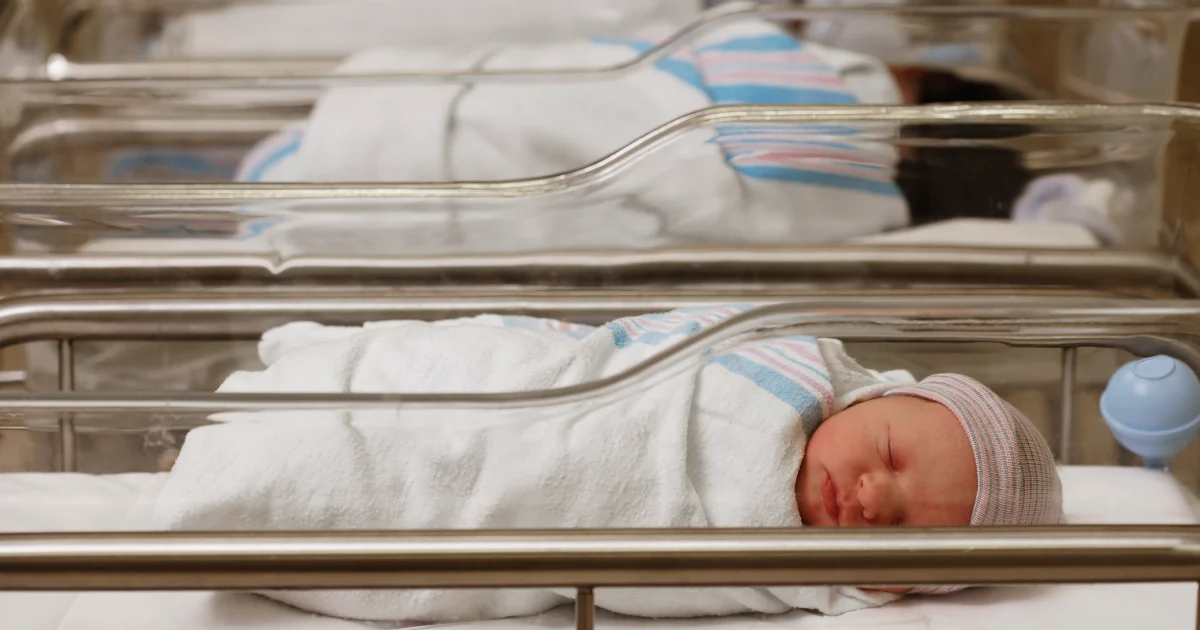
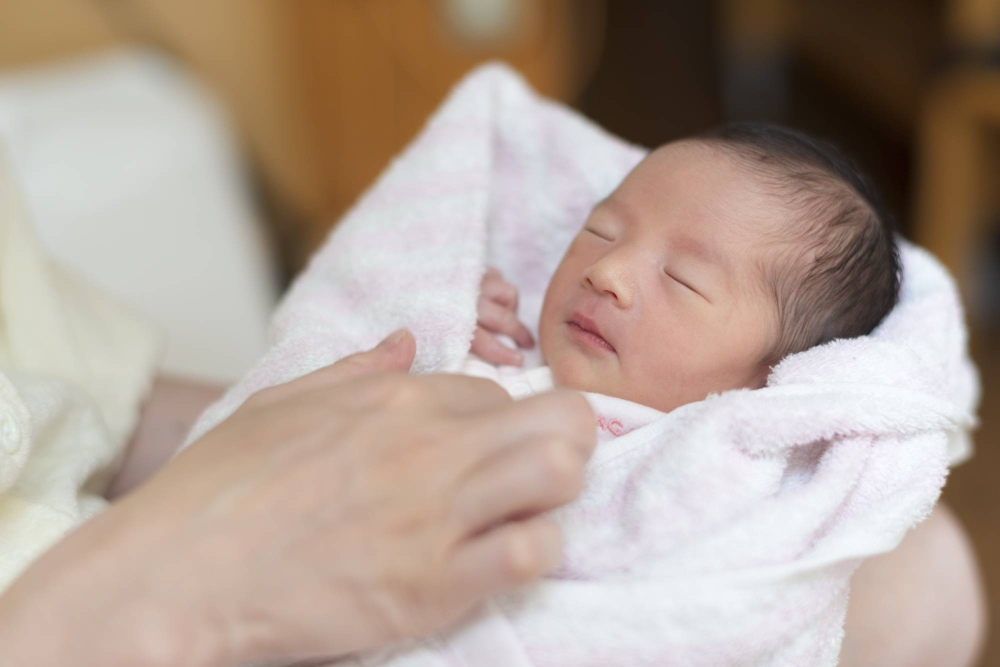
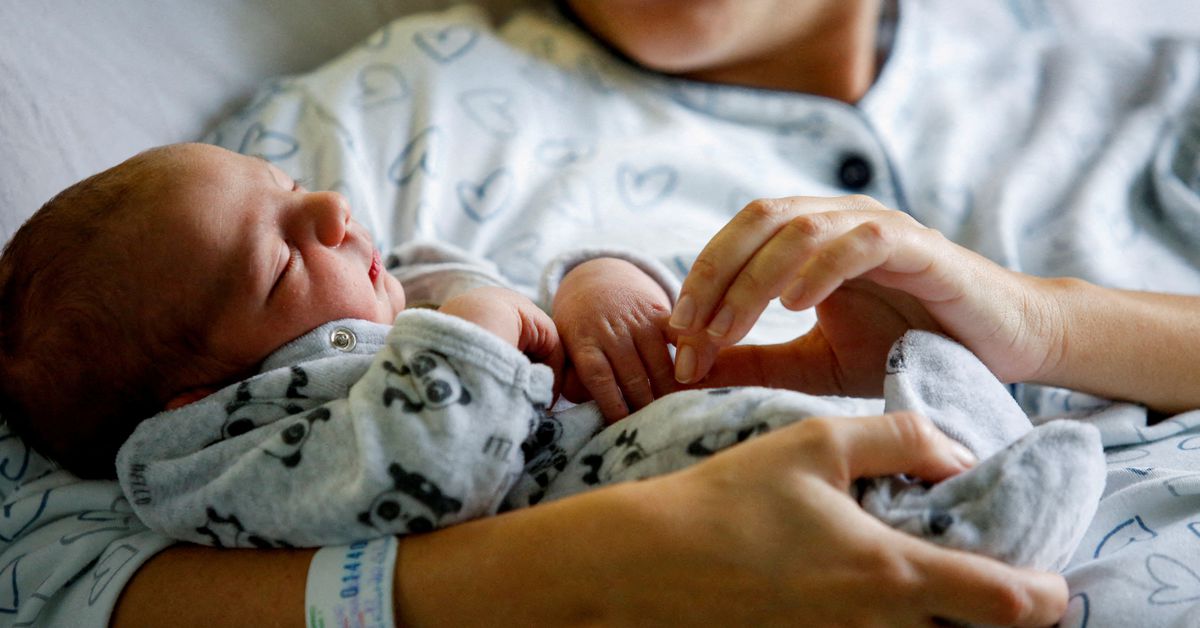
Several hospitals in Michigan welcomed their first babies of 2026, including Bentley Winston Adsit at Corewell Health’s Butterworth Hospital, Hailey Joe at Holland Hospital, Timothy Carter Kilmartin at Bronson Birthplace in Kalamazoo, and Shepherd Isaac Anderson at University of Michigan Health-West, with all families and babies doing well.
The U.S. fertility rate hit a historic low in 2024 at less than 1.6 children per woman, aligning with European levels, driven by delayed childbearing and economic concerns, though overall population growth continues due to natural increase and immigration. Despite policy efforts, experts suggest broader social support is needed to influence birth rates.
The US fertility rate hit a historic low in 2024 at less than 1.6 children per woman, aligning with European levels, driven by delayed childbearing and economic concerns, though overall population growth continues due to immigration and other factors. The Trump administration has attempted measures to boost birth rates, but experts suggest broader social support is needed. Despite the decline, the total number of births increased slightly in 2024 due to population recalculations.
Japan's birth rate hit a record low for the eighth consecutive year in 2023, with 758,631 babies born, marking a 5.1% decline from the previous year. This decline represents the largest margin of decrease ever recorded. The COVID-19 pandemic and a decrease in the number of marriages are believed to have contributed to this trend.
The first data on births since the overturning of Roe v. Wade reveals that abortion bans have led to an increase in births in every state with a ban. Researchers estimate that these laws have resulted in around 32,000 additional annual births, with one-fifth to one-fourth of women in ban states who may have sought an abortion carrying their pregnancies to term. The analysis also shows that the increase in births disproportionately affects women in their 20s, Black and Hispanic women, and those living in states with limited access to abortion clinics. The availability of online abortion pills from overseas vendors has played a role in some states. However, the data is preliminary, and further research is needed to fully understand the impact of the Dobbs decision on the fertility rate.
An analysis of birth data from states with abortion bans following the overturning of Roe v. Wade shows that births increased in every state with a ban, indicating that the bans have had their intended effect. Researchers estimate that the bans caused around 32,000 annual births, with one-fifth to one-fourth of women in ban states not obtaining abortions. The increase in births was disproportionately among women in their 20s and Black and Hispanic women, who may face greater barriers to travel. The availability of online abortion pills and the opening of new clinics in legal states have likely contributed to the steady or slightly increased number of legal abortions nationwide.
Research based on preliminary data from the US Centers for Disease Control and Prevention suggests that states with abortion bans experienced a 2.3% higher fertility rate in the first half of 2023 compared to states without restrictions, resulting in approximately 32,000 more births than expected. The study also found that abortion bans disproportionately affected Hispanic women and younger women. Experts warn that restricted access to abortion services can have wide-ranging consequences, including increased infant mortality and limited financial security for families. The research highlights the direct impact of abortion restrictions on reproductive autonomy and the persistence of unmet need for abortions.
Births in Italy are projected to reach a new record low in 2023, according to preliminary data from the national statistics bureau. The country has been facing a long-standing demographic crisis, with a 1.7% decline in births in 2022, marking the 14th consecutive drop and the lowest number since Italy's unification in 1861. Prime Minister Giorgia Meloni has allocated around 1 billion euros to address the crisis, which is driven by challenges faced by Italian women in balancing work and motherhood. The shrinking and aging population leads to lower productivity and higher welfare costs, exacerbating Italy's already high state pension bill. The fertility rate is expected to decrease to 1.22 children per woman in 2023, with immigrants contributing to the rate, while among Italian women, the rate was just 1.18 in 2022.
A study conducted by researchers from Johns Hopkins University's Bloomberg School of Public Health found that Texas had nearly 10,000 more births between April and December 2022 than expected, following the implementation of a law that effectively banned abortion at six weeks. The study's findings suggest a significant increase in pregnancies carried to term that may not have occurred without the law. However, researchers caution that not all of the excess births can be attributed solely to the abortion ban, and further investigation is needed to understand the full impact of such laws on birth rates.
A study conducted by Johns Hopkins University found that there were approximately 9,800 additional births in Texas between April and December 2022 following the implementation of SB8, a six-week abortion ban. While the study does not attribute all the additional births to the ban, it suggests that many pregnant individuals in Texas were unable to access abortion services and were forced to continue unwanted or unsafe pregnancies. The research highlights the negative consequences of being denied an abortion, including impacts on physical and mental health, increased likelihood of living in poverty, and struggles faced by families. The study also raises concerns about the potential larger impacts of recent abortion bans, such as the one in Dobbs v. Jackson Women's Health Organization, on the number of live births in states that have restricted or banned abortion.
A new analysis from Johns Hopkins Bloomberg School of Public Health reveals that nearly 10,000 additional babies were born in Texas over a nine-month period after the state implemented a restrictive abortion law, known as Senate Bill 8, which banned most abortions after about six weeks of pregnancy. The study, the first analysis of live birth rates since the law went into effect in September 2021, suggests that many pregnant individuals in Texas faced barriers to abortion access. The findings come as the U.S. Supreme Court recently overturned the right to abortion granted by Roe v. Wade, and Texas subsequently moved to ban nearly all abortions from the moment of conception.
Disney's Animal Kingdom has welcomed twin baby cotton-top tamarin monkeys, the first born at Walt Disney World since 2001. The species is considered rare, with less than 7,500 remaining in the wild due to the illegal pet trade and deforestation. The babies can be seen at the cotton-top tamarin enclosure on Discovery Island. Disney works with the Association of Zoos and Aquariums’ Species Survival Plan to ensure responsible breeding of threatened species like the cotton-top tamarin and has supported organizations like Proyecto Titi in Colombia to help protect the monkeys.