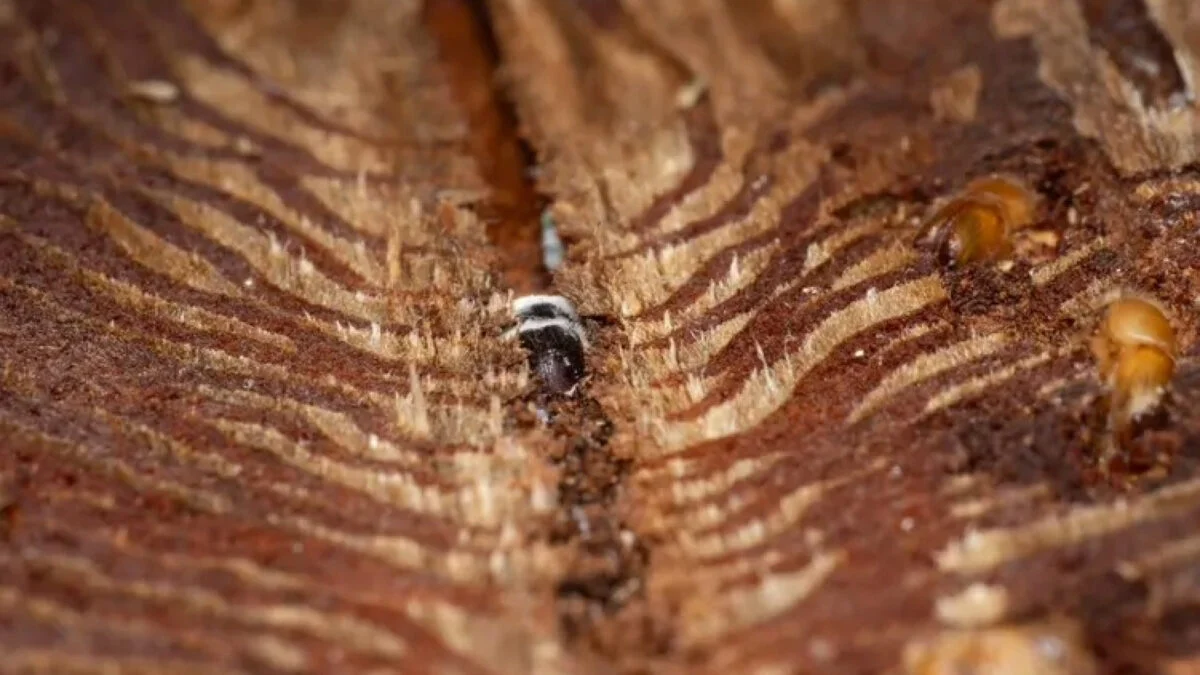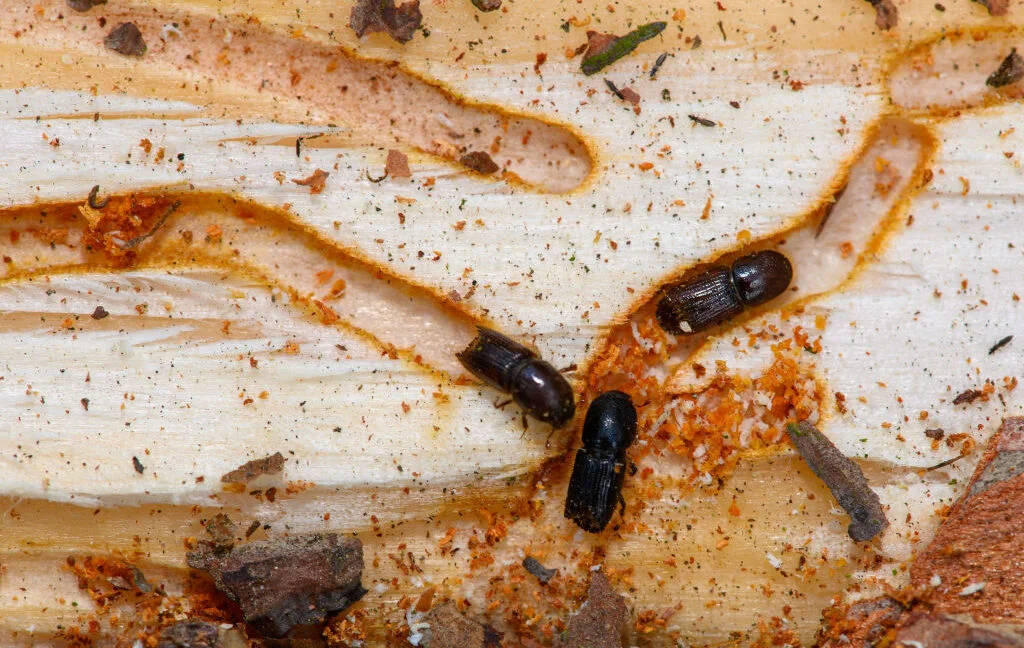
A study reveals that spruce bark beetles exploit the tree's antibiotic compounds for defense against a pathogenic fungus, Beauveria bassiana, which in turn can infect and kill the beetles, illustrating a complex natural arms race that could inspire organic pest control methods.
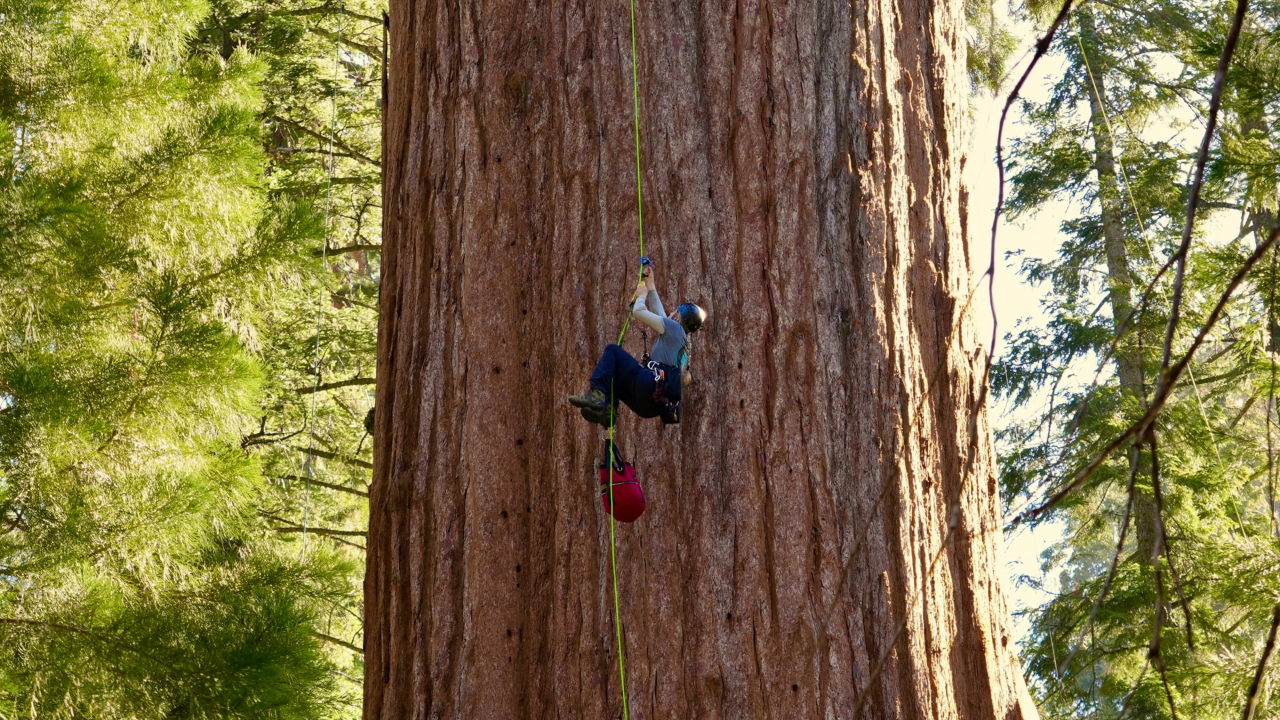
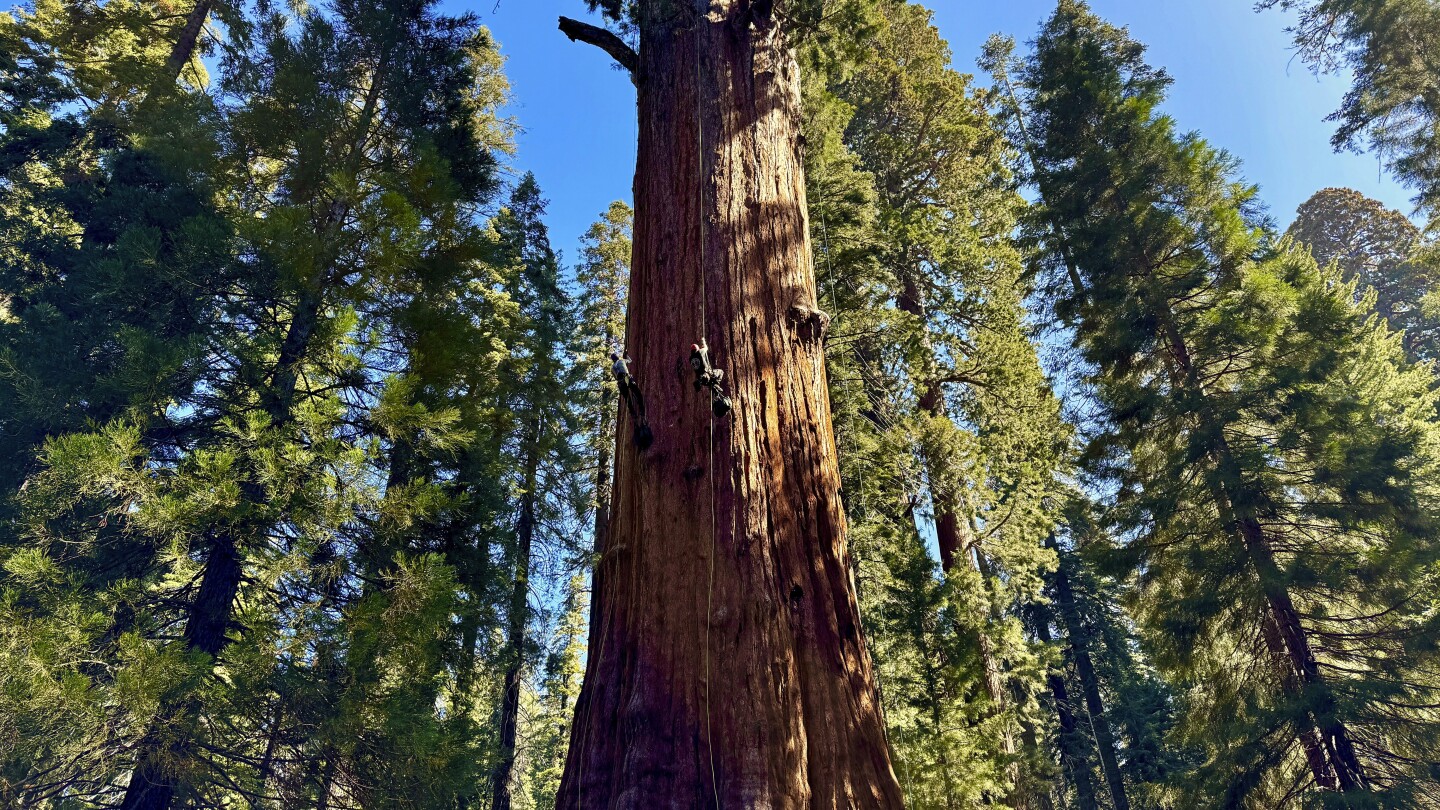
Researchers scaled General Sherman, the world's largest tree, in California's Sequoia National Park to inspect for bark beetles, an emerging threat to giant sequoias. The 2,200-year-old tree was found to be healthy and free of beetle infestation. However, scientists are increasingly concerned about the impact of climate change, which has made sequoias more vulnerable to beetles, drought, and wildfires. The inspection was part of a broader effort to monitor and protect these ancient trees.
Researchers have confirmed that General Sherman, the world's largest tree, is currently healthy and free from bark beetle infestations. However, giant sequoias face increasing threats from climate change, including extreme heat, drought, and wildfires, which have already killed a significant number of these ancient trees. Scientists are now also concerned about bark beetles, which have recently begun to kill weakened sequoias. Efforts are underway to monitor and protect these iconic trees using both direct inspections and advanced technologies like drones and satellite imagery.
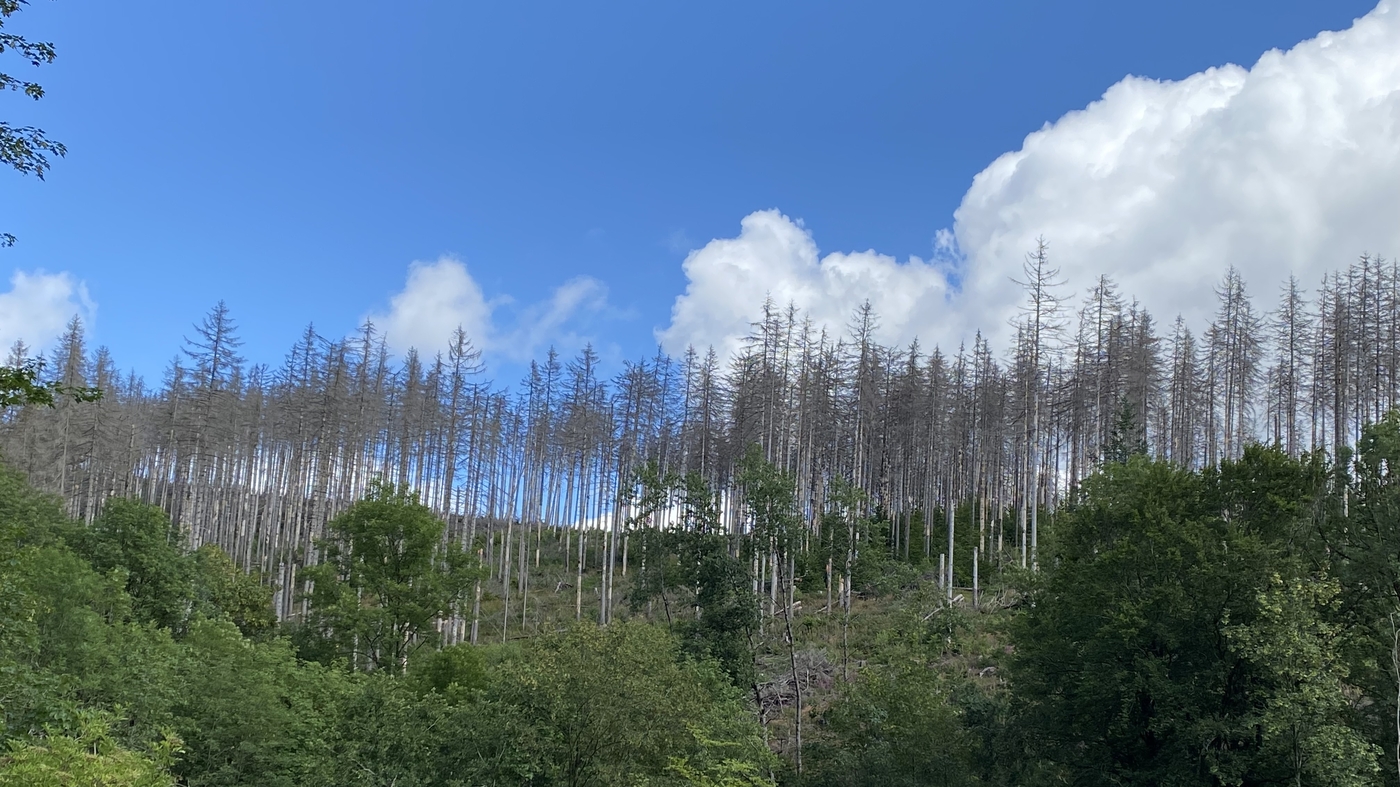
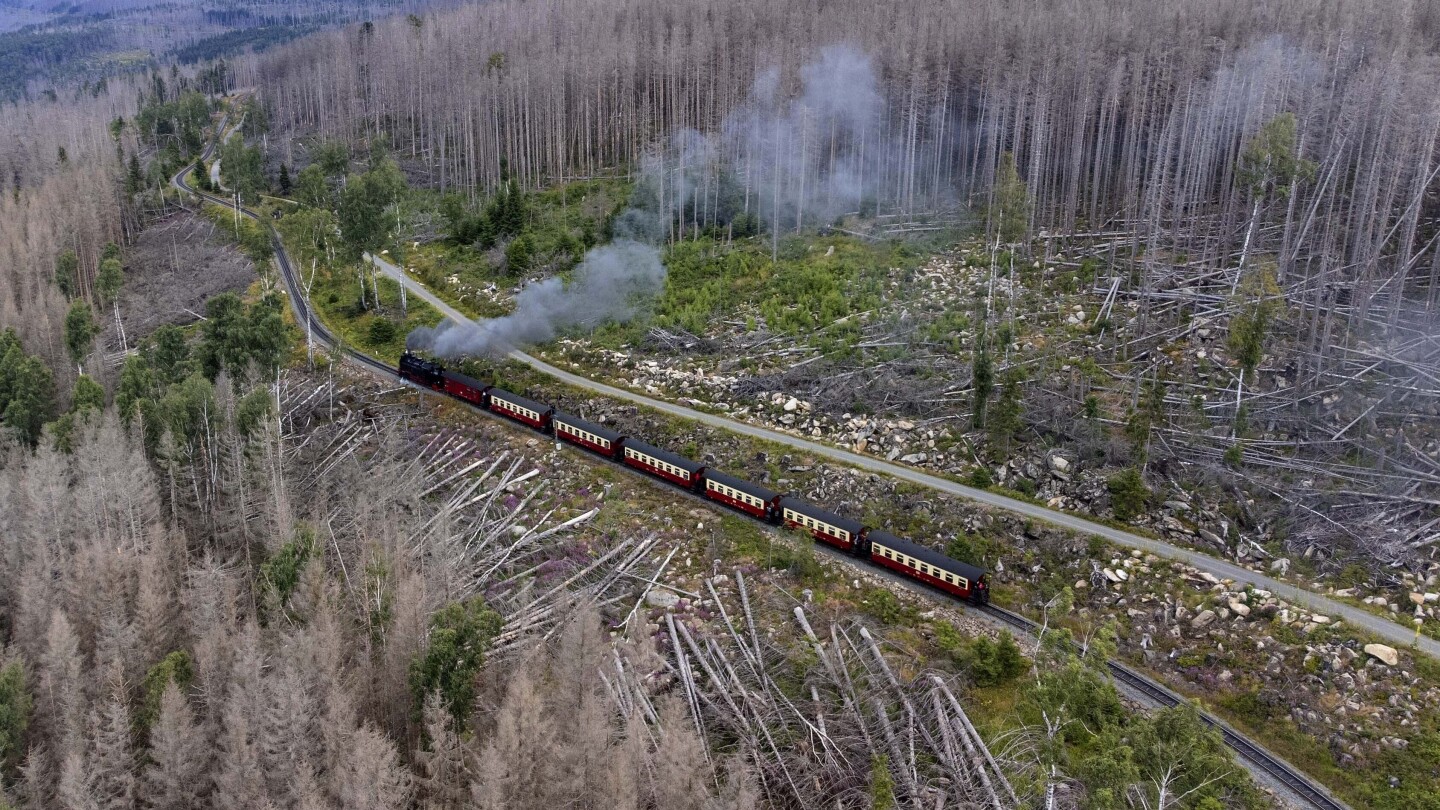
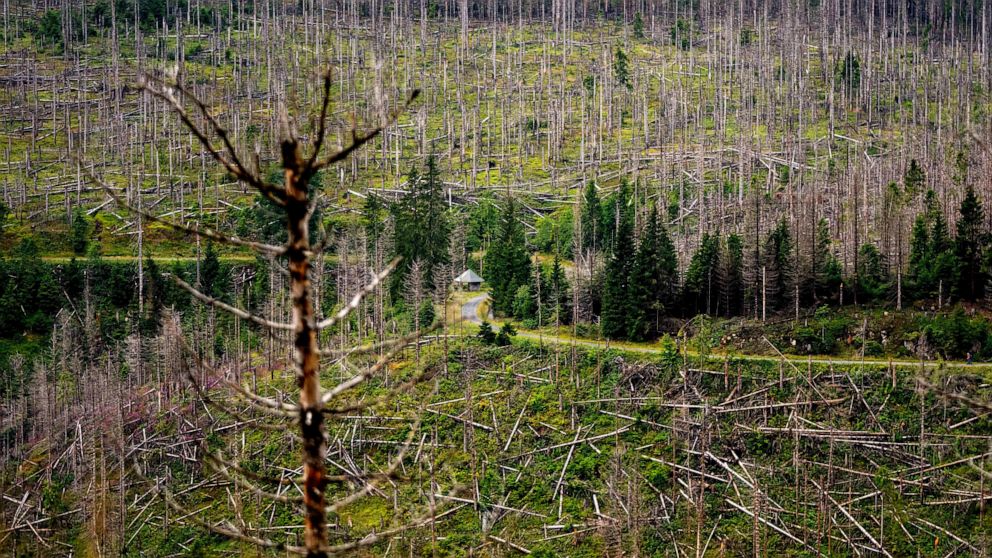
Germany's iconic fairy tale forests are under threat as 79% of all trees nationwide are sick, dying, or dead, according to a recent government survey. The forests, which have long captured Germany's cultural imagination, are turning gray and dying due to a combination of climate change and bark beetle infestations. The changing landscape is a cause for concern for foresters, tourists, and business owners alike. Efforts are being made to save the forests, including planting tree species from the United States and rethinking forest preservation methods, but the future remains uncertain.
Bark beetles, exacerbated by climate change, are causing significant damage to Germany's Harz forest, with two-thirds of the spruce population already destroyed. Drier conditions and higher temperatures weaken the trees' defenses, making them more susceptible to the beetles' larvae. Forest managers are working to remove vulnerable trees and use pesticides, but there is no easy solution. Conservation efforts, such as planting other tree species that can better withstand these conditions, are being considered for the long term.
Bark beetles, known as "book printers," are causing significant damage to Germany's Harz forest, with two-thirds of the spruce trees already destroyed. Climate change, with its drier conditions and hotter temperatures, has made the trees more vulnerable to the beetles' larvae. The beetles burrow into the trees' cambium, hindering their ability to receive nutrients. Forest conservationists are struggling to control the pests, as longer droughts and weakened trees provide favorable conditions for beetle reproduction. Forest managers are working to remove susceptible trees and use pesticides, but conservation efforts are limited by external factors like the changing climate. Planting other tree species that can better withstand these conditions may be a long-term solution.