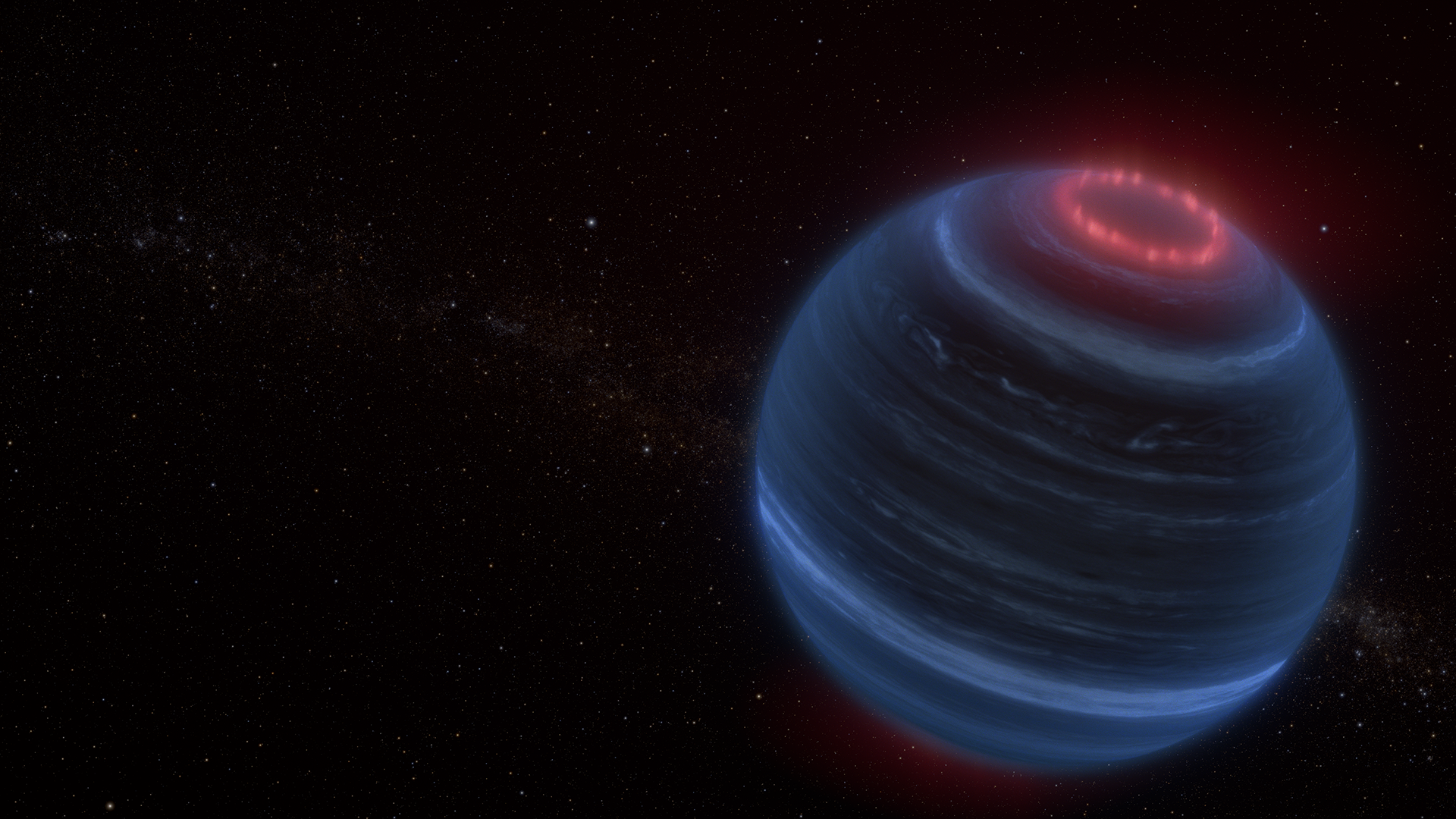
The James Webb Space Telescope has made a surprising discovery of methane emissions from a brown dwarf, suggesting the presence of aurorae and a potential hidden exomoon. This finding challenges previous assumptions about these "failed stars" and raises questions about the source of the emissions. The discovery highlights the significant impact of the JWST in uncovering new phenomena in the universe.
NASA's James Webb Space Telescope has potentially discovered aurorae on a brown dwarf known as Brown Dwarf W1935, located outside our solar system. Initial social media rumors of city lights on exoplanet Proxima Centauri b were debunked, but the telescope's findings are still significant. The brown dwarf, larger than Jupiter but smaller than the Sun, lacks a host star, making the source of its aurorae a mystery. While the discovery does not indicate extraterrestrial life, the possibility of life on exoplanet Proxima Centauri b, with its detected water presence, remains an area of interest for scientists.
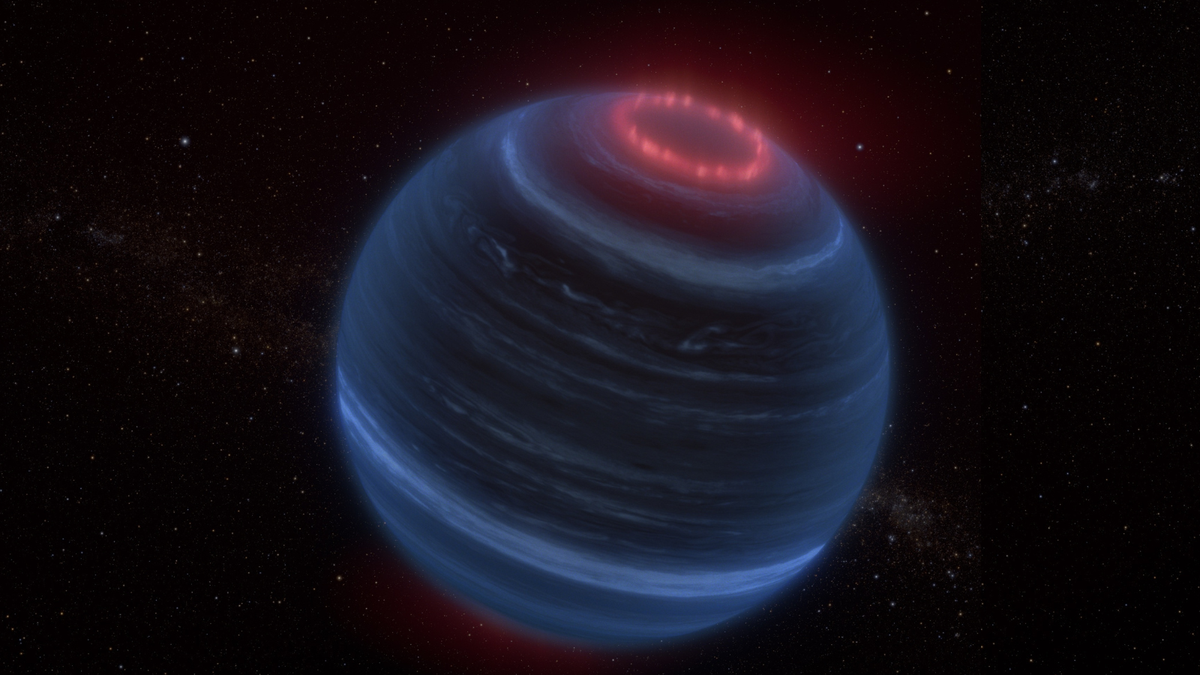
NASA's James Webb telescope has discovered bright red lights in a distant brown dwarf, with methane emissions in one of 12 cold brown dwarfs it was observing, called W1935, glowing like a bright red crown. This discovery is unusual as methane emissions are commonly found in gas giants like Jupiter and Saturn, where heating in the upper atmosphere powers the emissions linked to aurorae. The team theorizes that the emission may be facilitated by an internal process in the brown dwarf similar to the atmospheric phenomena of Jupiter, or interactions with nearby moons or interstellar plasma, presenting a puzzling extension of a solar system phenomenon without any stellar irradiation to help in the explanation.
NASA's James Webb Space Telescope has discovered a brown dwarf, W1935, with infrared emission from methane, suggesting atmospheric heating by auroral processes. This unexpected finding raises questions about the source of energy in the cold, isolated brown dwarf, which lacks a host star. Astronomers speculate that the methane emission may be due to processes generating aurorae, similar to those observed in our solar system's gas giants. The discovery provides insight into the atmospheric phenomena of distant worlds and the potential role of auroral processes beyond our solar system.