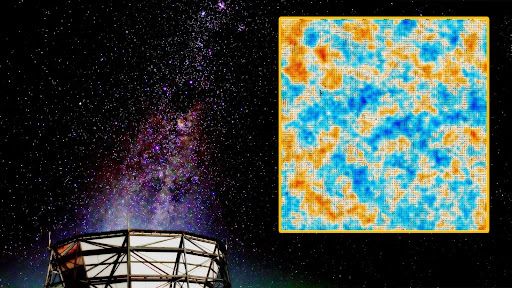
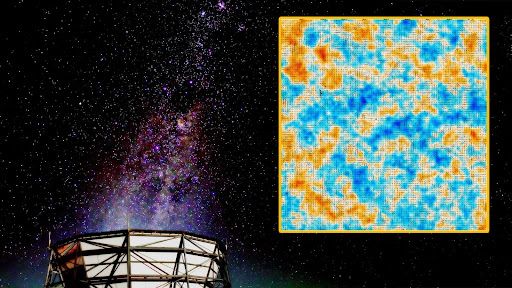
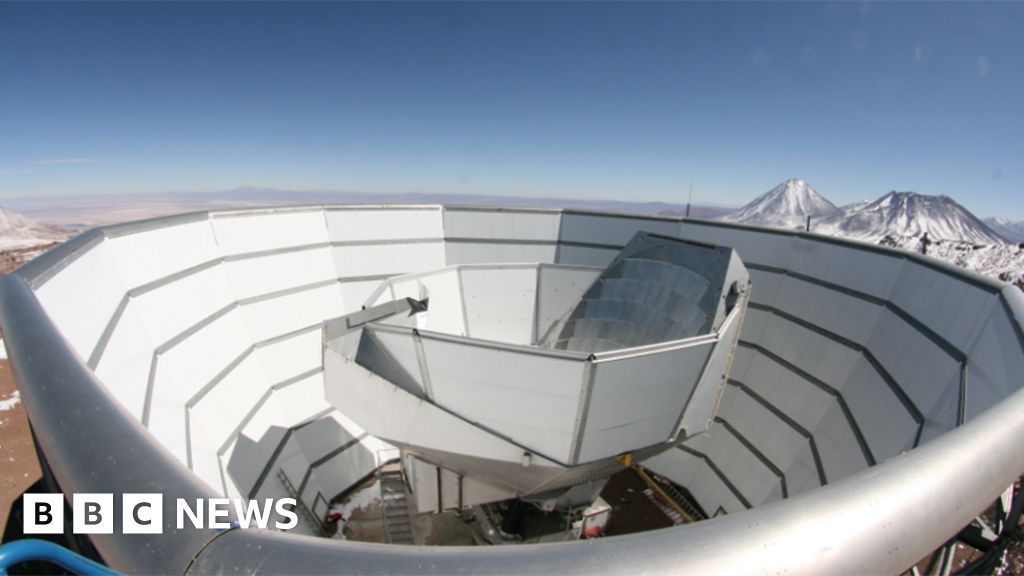
The final data from the Atacama Cosmology Telescope in Chile has confirmed the Hubble tension—discrepancies in the universe's expansion rate—and ruled out around 30 alternative cosmological models, helping to narrow down the possible explanations for this cosmic mystery.
A 15-year study using the Atacama Cosmology Telescope confirmed the existence of the Hubble tension, revealing discrepancies in the universe's expansion rate and ruling out many extended cosmological models, thus deepening the mystery of our universe's true nature.
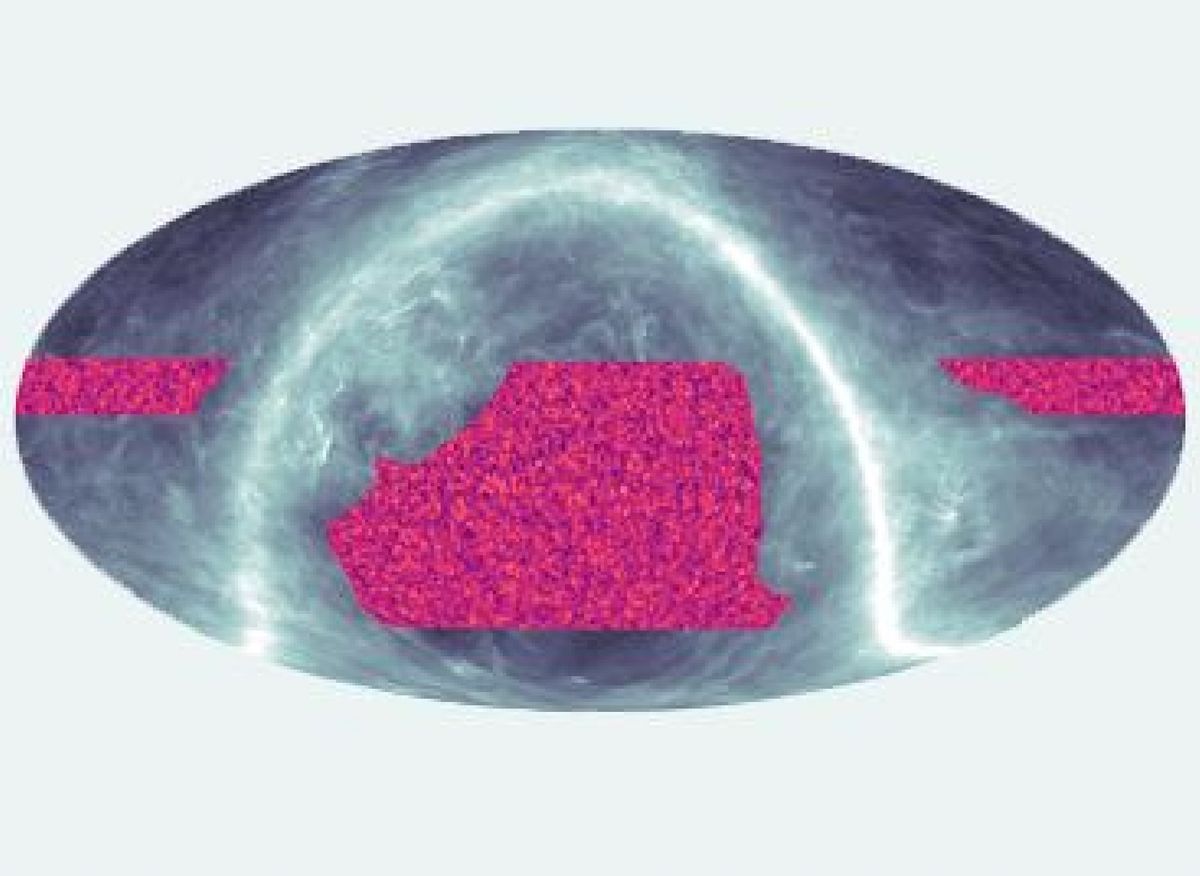
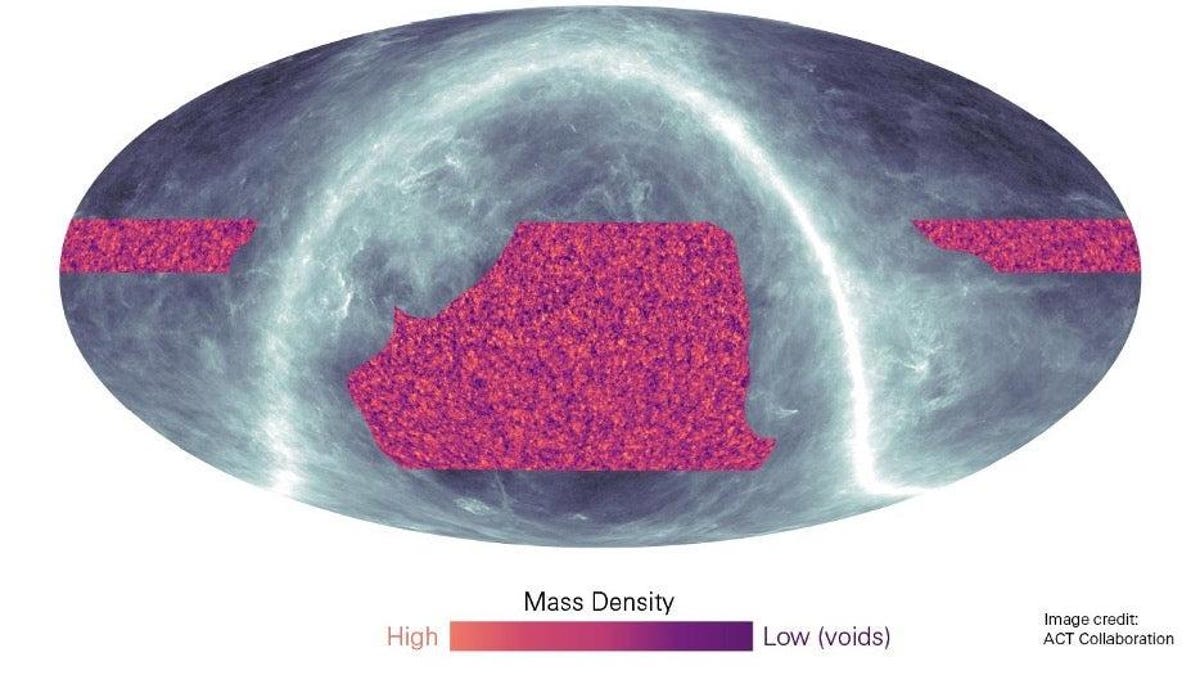
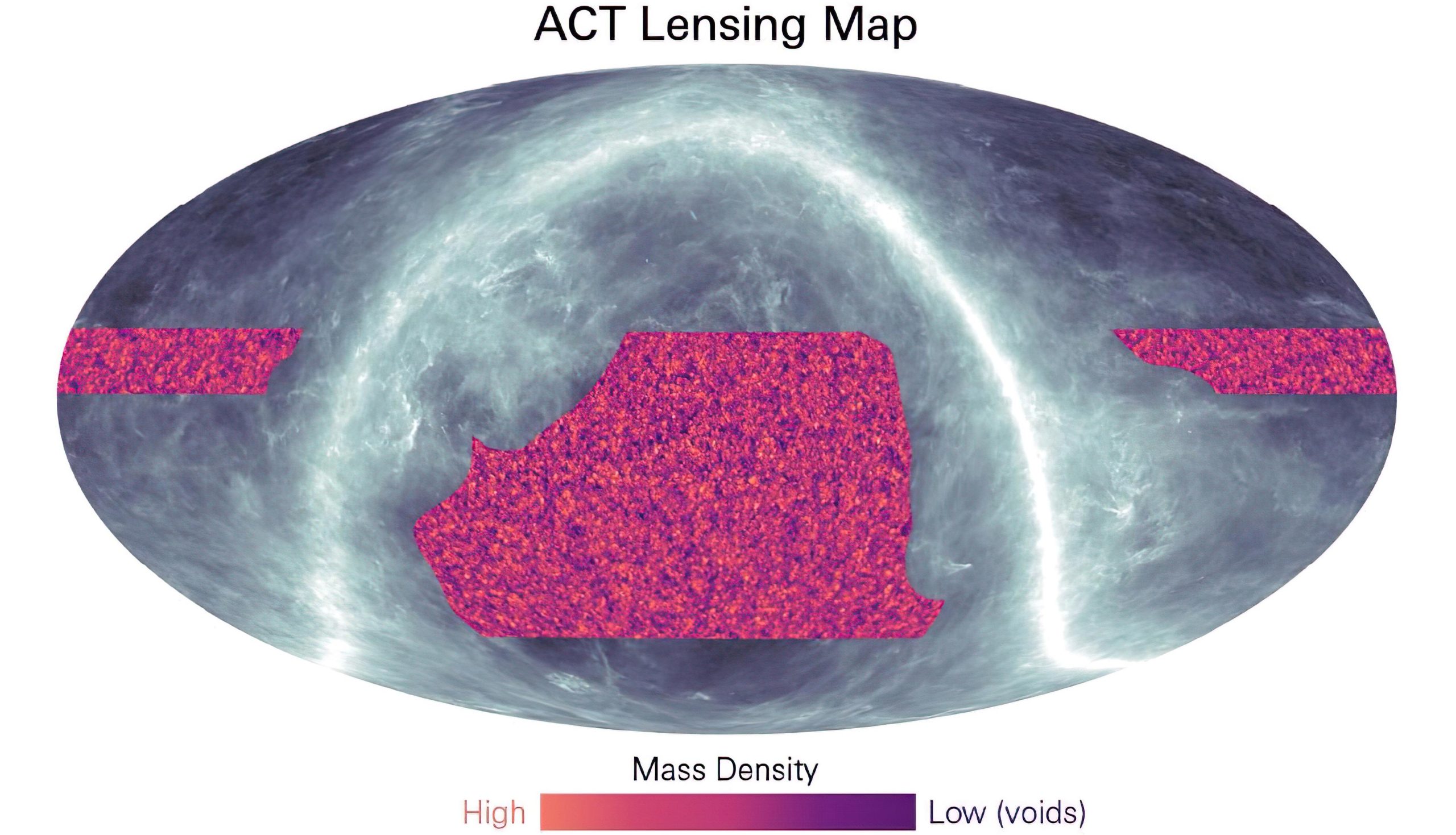
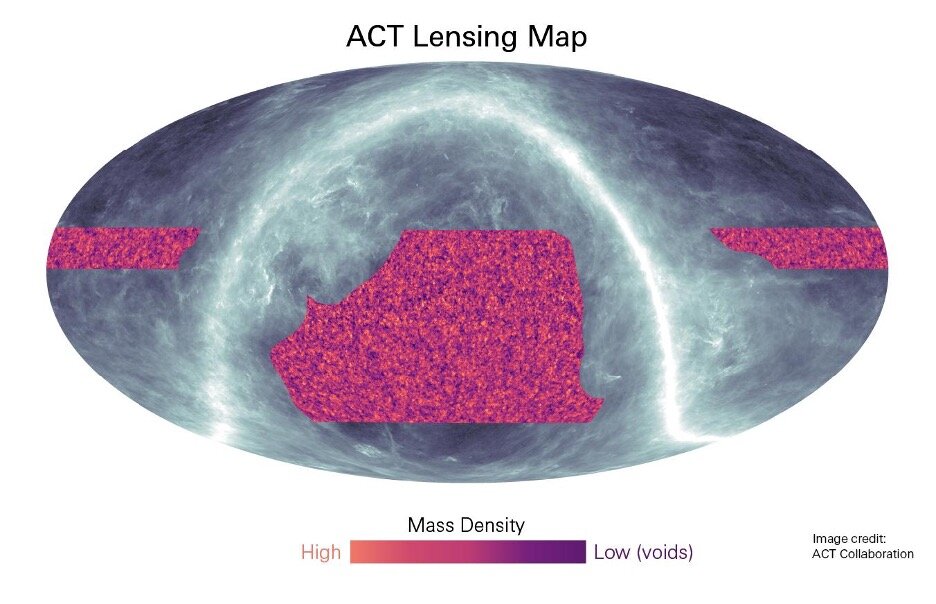
A new map of the cosmos created by the Atacama Cosmology Telescope (ACT) collaboration shows the distribution of dark matter in sharp detail, confirming a theory of gravity pioneered by Albert Einstein over a century ago. The map covers a quarter of the sky over Earth and extends deep into the cosmos, and was created using a "cosmic fossil" known as the cosmic microwave background (CMB), radiation left over from just after the Big Bang. The ACT observations allowed the team to study the effect that gravitational lensing, also predicted by general relativity, has on the CMB, providing them with a great way of mapping ordinary matter and, especially, dark matter, which makes up about 85% of the material universe but remains mysterious.
An international team of over 160 astronomers used the Atacama Cosmology Telescope (ACT) to create a detailed map of dark matter, confirming Albert Einstein's theories about gravity and cosmology. The map shows that the "lumpiness" and expansion rate of the universe agree with the Standard Model of cosmology based on Einstein's theory of gravity. The study provides novel insights into an ongoing debate in cosmology and reaffirms the validity of the Standard Model of physics.
A newly created dark matter map using the Atacama Cosmology Telescope has finally given undeniable proof that Albert Einstein's theory of general relativity was correct. Dark matter, an invisible force found throughout the universe, creates the gravity pull that determines how the universe curves and moves. Despite making up 85% of the universe's matter, dark matter has always been hard to detect. However, researchers have now been able to map out dark matter, proving that Einstein's theory was correct.
A newly created dark matter map, using the Atacama Cosmology Telescope, has finally given undeniable proof that Albert Einstein's theory of general relativity was correct. Dark matter makes up 85% of the universe's matter and is the force creating the gravity pull that determines how the universe curves and moves. Despite being hard to detect, researchers have now mapped out the dark matter hiding within our universe, proving that Einstein's theory was correct.
Scientists have created a detailed map of dark matter's distribution across a quarter of the sky using data from the Atacama Cosmology Telescope in Chile. The map shows regions of mass extending as far back in time as we can see, using the cosmic microwave background as a backdrop for the dark matter portrait. Dark matter makes up about 27% of the universe and is not directly observable, but its gravitational effects can be observed at large scales. The new map validates Einstein's theory of gravity and suggests that the dark matter was lumpy enough to fit with the standard model of cosmology.
The Atacama Cosmology Telescope collaboration has created a groundbreaking new map of dark matter distributed across a quarter of the entire sky, reaching deep into the cosmos, that confirms Einstein’s theory of how massive structures grow and bend light over the 14-billion-year life span of the universe. The new map uses light from the cosmic microwave background (CMB) essentially as a backlight to silhouette all the matter between us and the Big Bang. The findings provide further support to Einstein’s theory of general relativity, which has been the foundation of the standard model of cosmology for more than a century, and offer new methods to demystify dark matter.
The Atacama Cosmology Telescope (ACT) in Chile has produced the most detailed map of dark matter's influence on the Universe, tracing its distribution across almost 14 billion years of time and a quarter of the sky. Dark matter makes up about 85% of all mass in the Universe and influences the large-scale structure of everything we see. ACT used gravitational lensing to map the subtle distortions in the Cosmic Microwave Background, revealing all intervening structure on its journey to us. The distribution of matter agrees very well with scientific predictions, and ACT's observations indicate that the "lumpiness" of the Universe and the rate at which it has been expanding after 14 billion years of evolution are just what you'd expect from the standard model of cosmology.
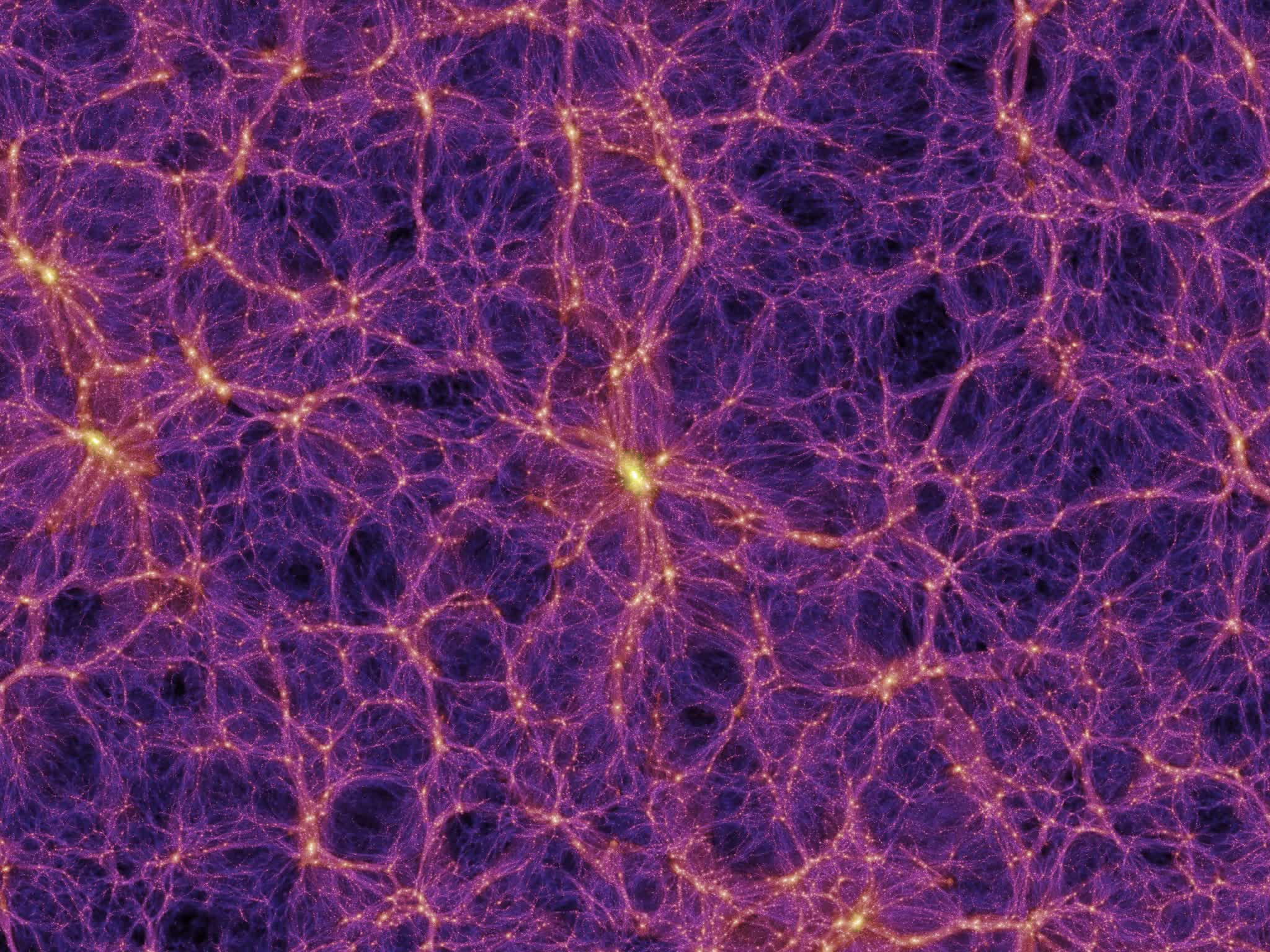
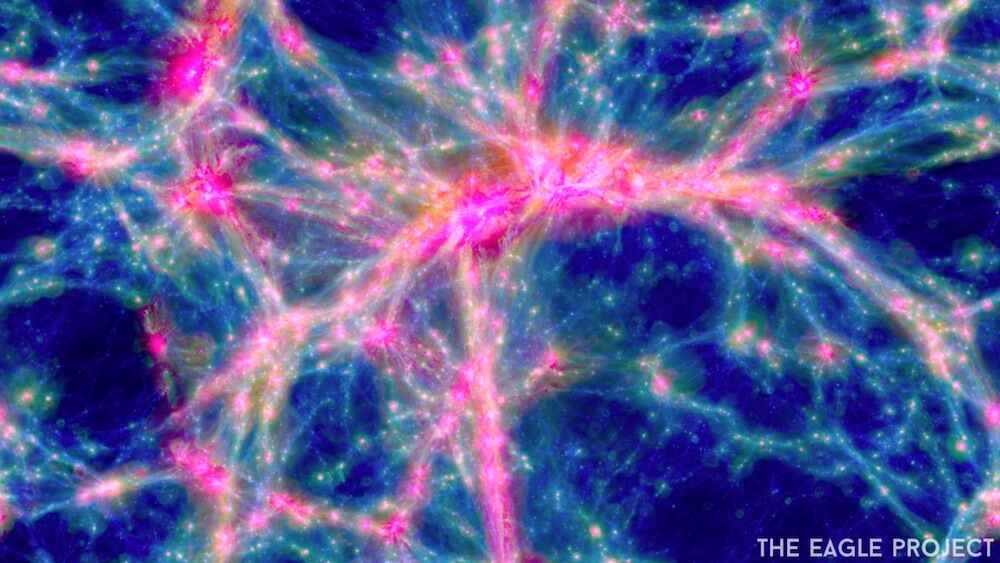
Astronomers have created the most detailed map of dark matter using the universe's first light, which shows the enormous matter tendrils that formed after the Big Bang. The shapes of these tendrils are remarkably similar to those predicted using Einstein's theory of general relativity. The new result contradicts previous dark matter maps that suggested the cosmic web is less clumpy than Einstein's theory predicted. The researchers suggest that additional maps made using the ACT's data and fresh observations from the Simons Observatory could finally resolve the perplexing cosmic mystery.
Researchers from the Atacama Cosmology Telescope (ACT) collaboration have created a groundbreaking new image that reveals the most detailed map of dark matter distributed across a quarter of the entire sky, extending deep into the cosmos. The new map confirms Einstein's theory of how massive structures grow and bend light, over the entire 14-billion-year life span of the universe. The team tracks how the gravitational pull of large, heavy structures including dark matter warps the cosmic microwave background radiation (CMB) on its 14-billion-year journey to us, like how a magnifying glass bends light as it passes through its lens.