Tag

Astrophysical Journal Letters

All articles tagged with #astrophysical journal letters

astronomy1 year ago

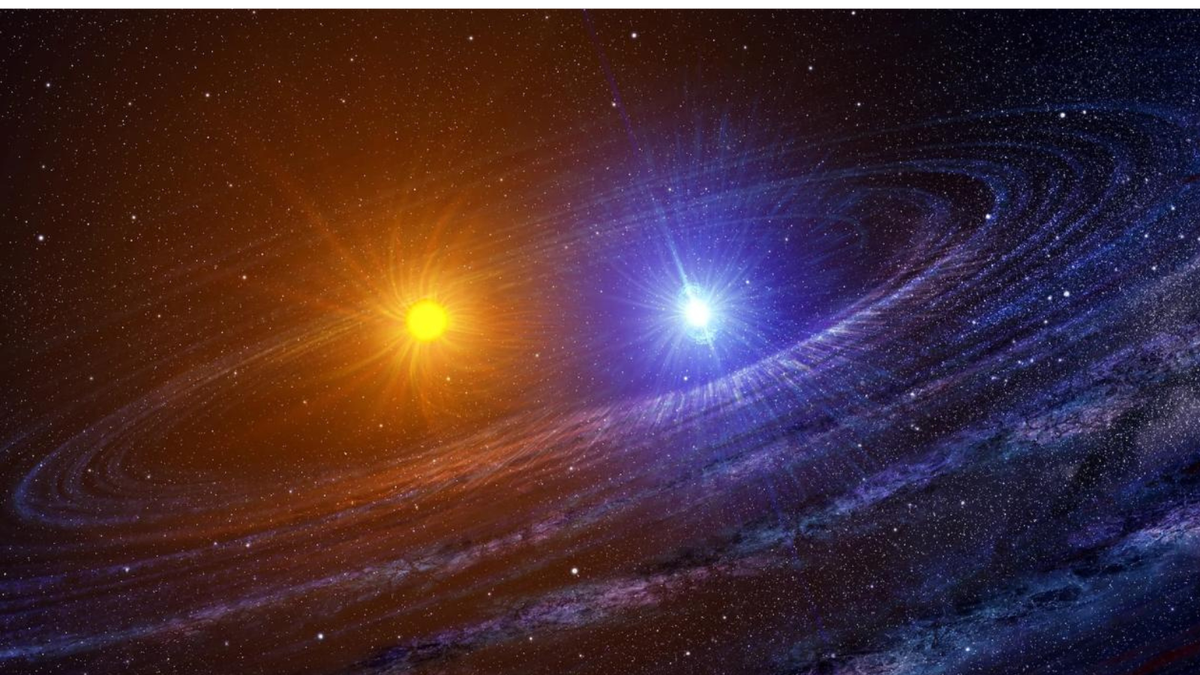
Unraveling the Birth of Extreme "Blue Supergiant" Stars

Astronomers may have discovered that blue supergiant stars are formed when two stars in a binary system merge, solving a long-standing mystery. The team of researchers analyzed 59 early B-type blue supergiants and conducted stellar simulations, finding that mergers may be the dominant channel for producing these extreme stars. This discovery could have significant implications for understanding the birth of blue supergiant stars and the role of binary star mergers in shaping galaxies. The next step for the researchers is to investigate how the supernova explosions of blue supergiant stars create neutron stars and black holes.
astronomy1 year ago

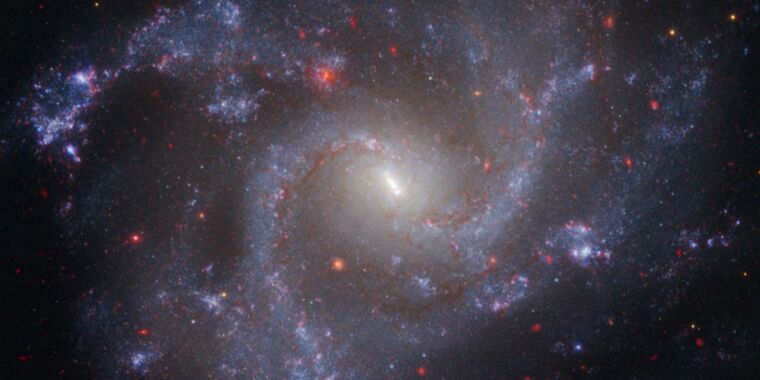
"Universe's Expansion Rate Puzzle Persists Despite Webb and Hubble Telescopes Study"

Astronomers have made new measurements of the Hubble Constant using data from the Hubble Space Telescope and the James Webb Space Telescope, confirming the accuracy of previous measurements and ruling out measurement errors as the cause of the "Hubble tension." The study suggests that the conflicting values for the Hubble Constant obtained by different observational methods may be influenced by something else affecting the expansion rate of the Universe, potentially leading to a better understanding of the cosmos.

astronomy1 year ago

Passing Stars: Altering Earth's Orbit and Climate

Research suggests that passing stars can alter Earth's orbit, limiting scientists' ability to study the links between past changes in Earth's orbit and climate. Simulations show that a star passing near the solar system can significantly affect Earth's path, shortening the forecasting time span from 77 million years to just 62 million years in the past. The study's findings have implications for understanding ancient climate changes and may impact future predictions of Earth's orbital evolution.

astronomy2 years ago

NASA Discovers Strange Signal from Beyond Our Galaxy

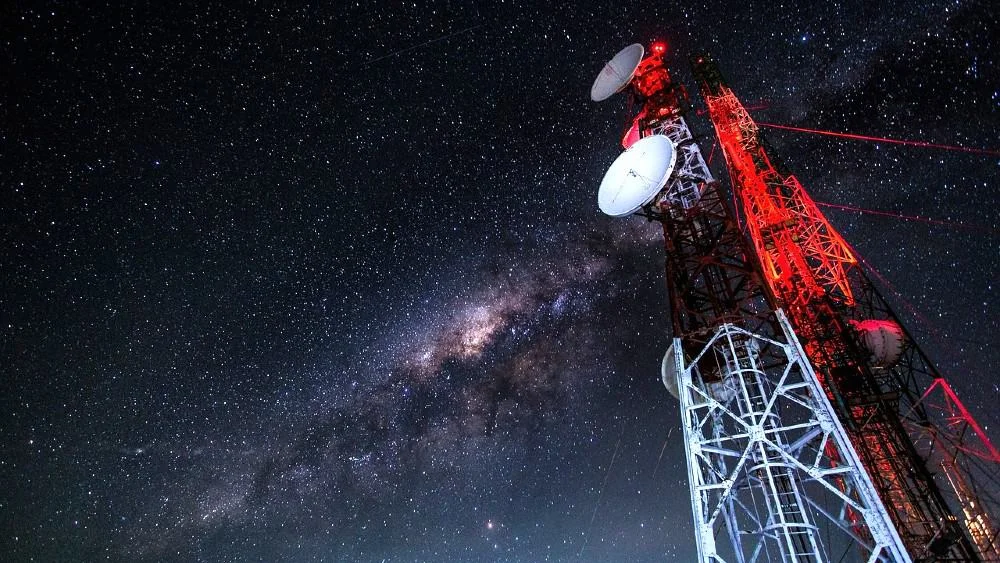
NASA astronomers have detected a mysterious signal originating from beyond our galaxy using the Fermi Gamma-ray Space Telescope, which is unrelated to the cosmic microwave background (CMB). The signal, with an unprecedented magnitude, is believed to be linked to a similar gamma-ray feature observed in 2017, potentially originating from a single unidentified source. This unexpected discovery offers new insights into the early universe and presents an opportunity to understand the formation of dipole structures in the cosmic microwave background, providing valuable scientific details dating back to the universe's earliest stages.

astronomy2 years ago

"Discovery of Alien, Mars-Sized Planets Beyond Pluto"

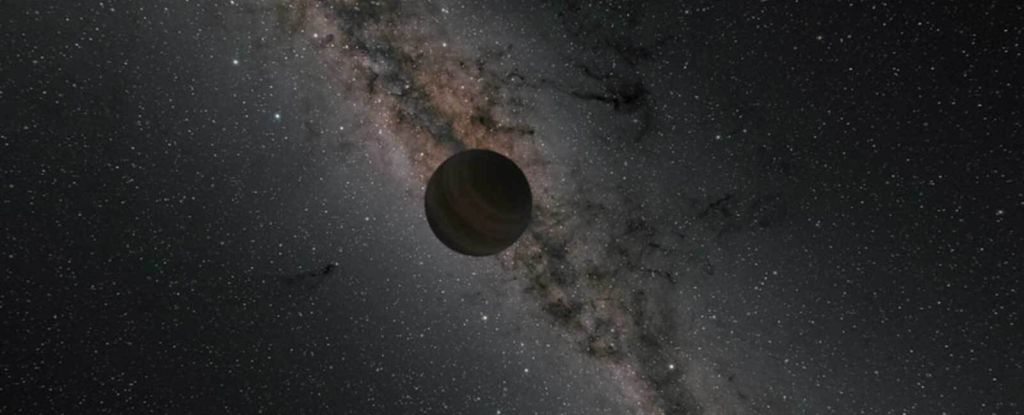
The outer Solar System may harbor alien, Mars-sized planets that have been captured by the Sun's gravity, according to theoretical astrophysicist Amir Siraj of Princeton University. His calculations suggest there could be 1.2 planets with a mass greater than Mars, 2.7 with a mass comparable to Mars, and 5.2 with a mass comparable to Mercury. These planets, potentially from distant stars, could be lurking beyond Pluto, and the upcoming Vera C. Rubin Observatory may be able to spot them when it commences science operations in 2025.

astronomy2 years ago

"Cooler Than a Campfire: Discover the Stellar S'mores Star"

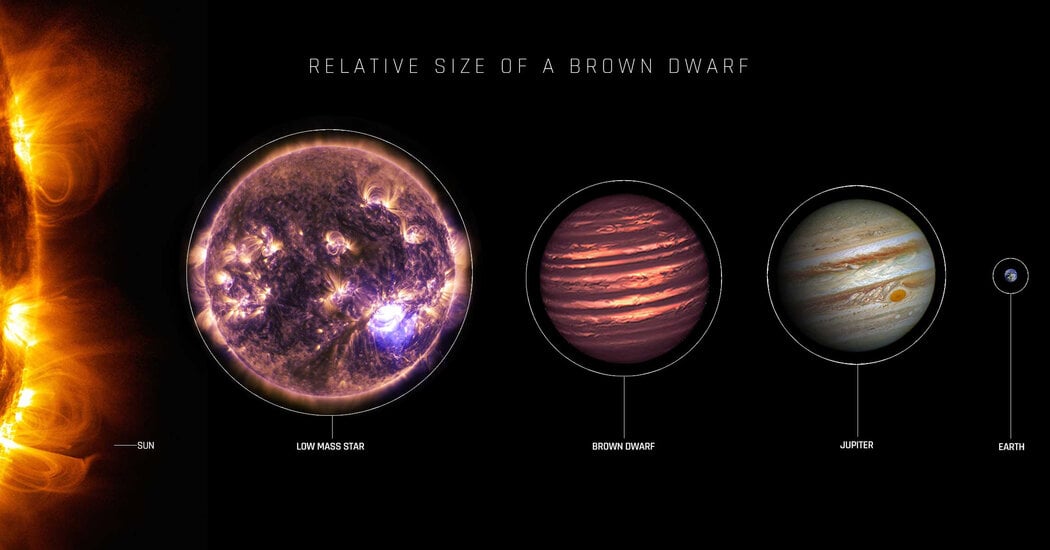
Researchers have discovered the coldest star ever detected with a radio telescope, a brown dwarf smaller than Jupiter with a temperature of 797 degrees Fahrenheit. Brown dwarfs, also known as "failed stars," are too small to undergo nuclear fusion like larger stars. The discovery was made using data from the Australian SKA Pathfinder Telescope and confirmed with other radio telescopes. The findings provide insights into the magnetic field properties of brown dwarfs and contribute to a better understanding of the 3-D structure of these celestial bodies.

astronomy2 years ago

Unprecedented Gamma Ray Burst Baffles Astronomers.

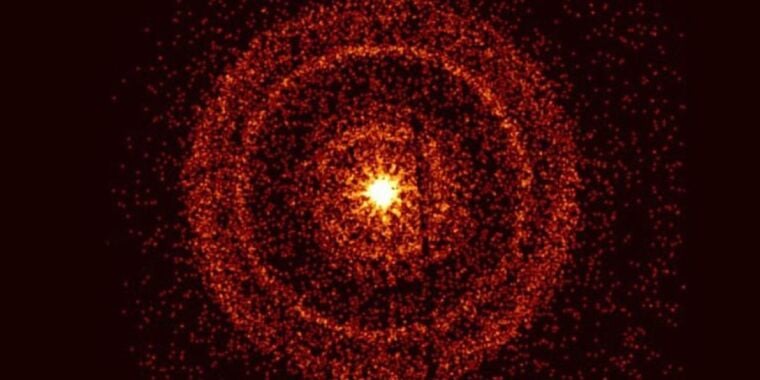
The brightest gamma-ray burst ever recorded, dubbed the BOAT, was likely the "birth cry" of a new black hole. However, follow-up observations have yielded surprising results that contradict current models of gamma-ray bursts. There is no evidence of an associated supernova, and radio data from the afterglow doesn't match predictions. Astronomers also detected rare extended rings of X-ray light echoes from the initial blast in distant dust clouds. The findings may lead to a significant overhaul of our current understanding of gamma-ray bursts.