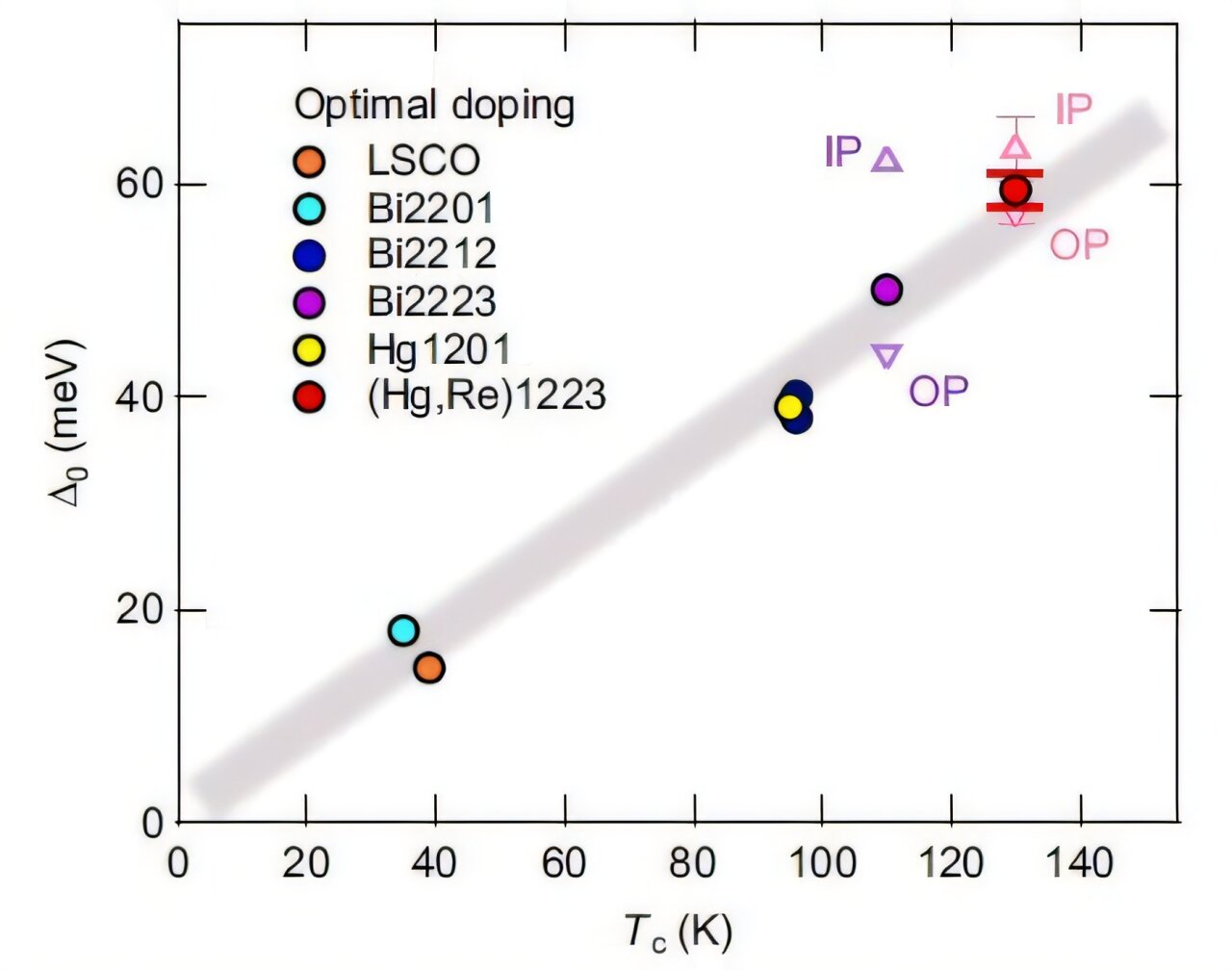
Researchers analyzed new high-temperature cuprate superconductors using ARPES, revealing that enhanced pairing energy in outer CuO2 layers contributes to higher critical temperatures, advancing understanding of superconductivity mechanisms.
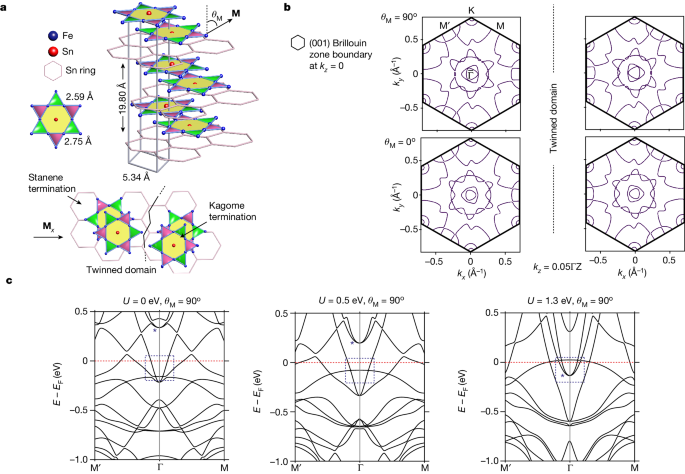
Researchers have conducted a detailed experimental study of the distinct electron pockets in the metallic kagome ferromagnet Fe3Sn2 using state-of-the-art laser-based micro-focused ARPES, overcoming averaging over crystallographic twins and surface sensitivity. The study revealed two distinct yet equivalent areas rotated from each other by 180°, indicating twinned domains, and provided insights into the electronic band structure and quasiparticle behavior at low temperatures. The findings suggest a many-body origin for the observed electron pockets and highlight the potential for exploiting electron-correlation effects for both measurement of the effective Coulomb interaction and the discovery of new electronic phenomena in materials with strongly influenced band structures.
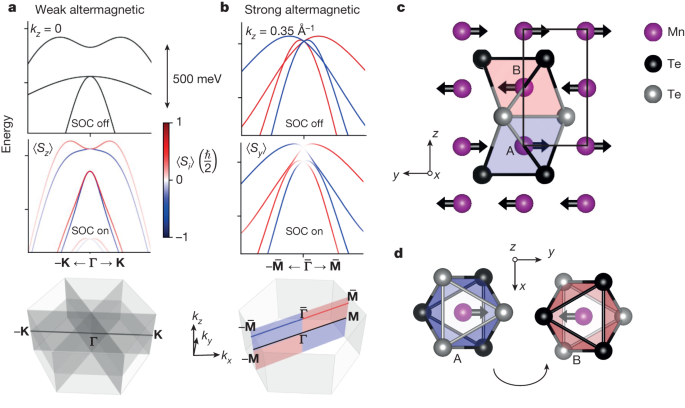
A new spin-group-symmetry classification has identified an unconventional magnetic phase called altermagnetic, which allows for lifted Kramers spin degeneracy (LKSD) without net magnetization and inversion-symmetry breaking. This altermagnetic LKSD has been confirmed in centrosymmetric MnTe using photoemission spectroscopy and ab initio calculations, revealing two distinct unconventional mechanisms of LKSD. The discovery of altermagnetic LKSD could have broad implications in fields such as spintronics, ultrafast magnetism, and topological matter, and may lead to the exploration of unconventional magnetic phases in various materials.