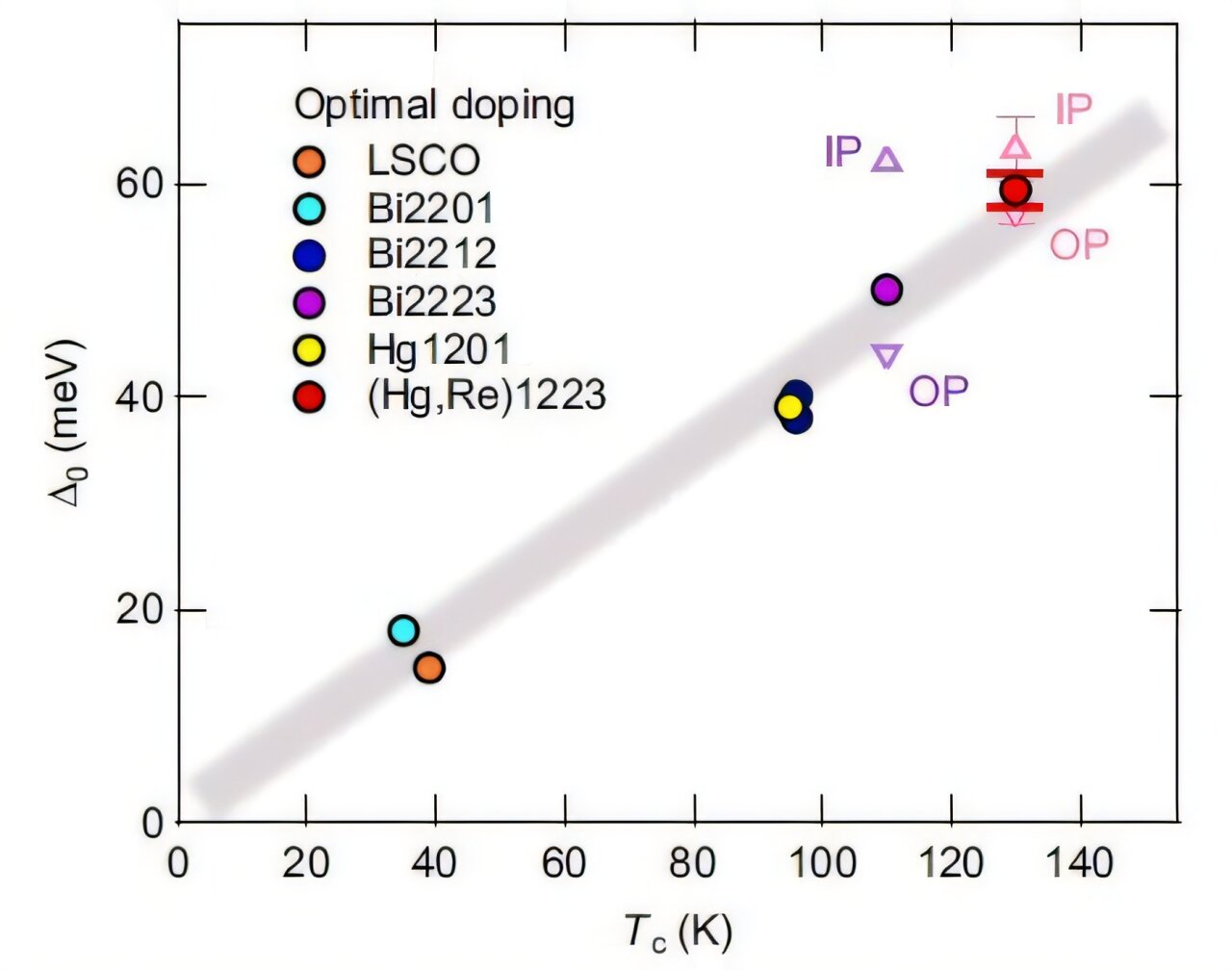
Researchers analyzed new high-temperature cuprate superconductors using ARPES, revealing that enhanced pairing energy in outer CuO2 layers contributes to higher critical temperatures, advancing understanding of superconductivity mechanisms.
Harvard researchers, led by Philip Kim, have developed a high-temperature superconducting diode using cuprates, a breakthrough that could advance quantum computing. By fabricating a clean interface between two thin layers of cuprate crystals, the team demonstrated directional supercurrent and control over quantum states. This development opens doors for studying exotic materials and topological phases, paving the way for new forms of superconductivity in previously unattainable materials. The research was supported by the National Science Foundation, the Department of Defense, and the Department of Energy.
Researchers at Harvard University have developed a new method for creating and manipulating higher-temperature superconductors called cuprates. Using a low-temperature device fabrication technique, they have successfully engineered a high-temperature superconducting diode made from thin cuprate crystals. This breakthrough could have implications for industries like quantum computing, which rely on sustained mechanical phenomena. The team achieved this by creating a clean interface between two layers of cuprate crystals and demonstrated electronic control over the interfacial quantum state. This research opens doors for further exploration of exotic materials and topological phases.
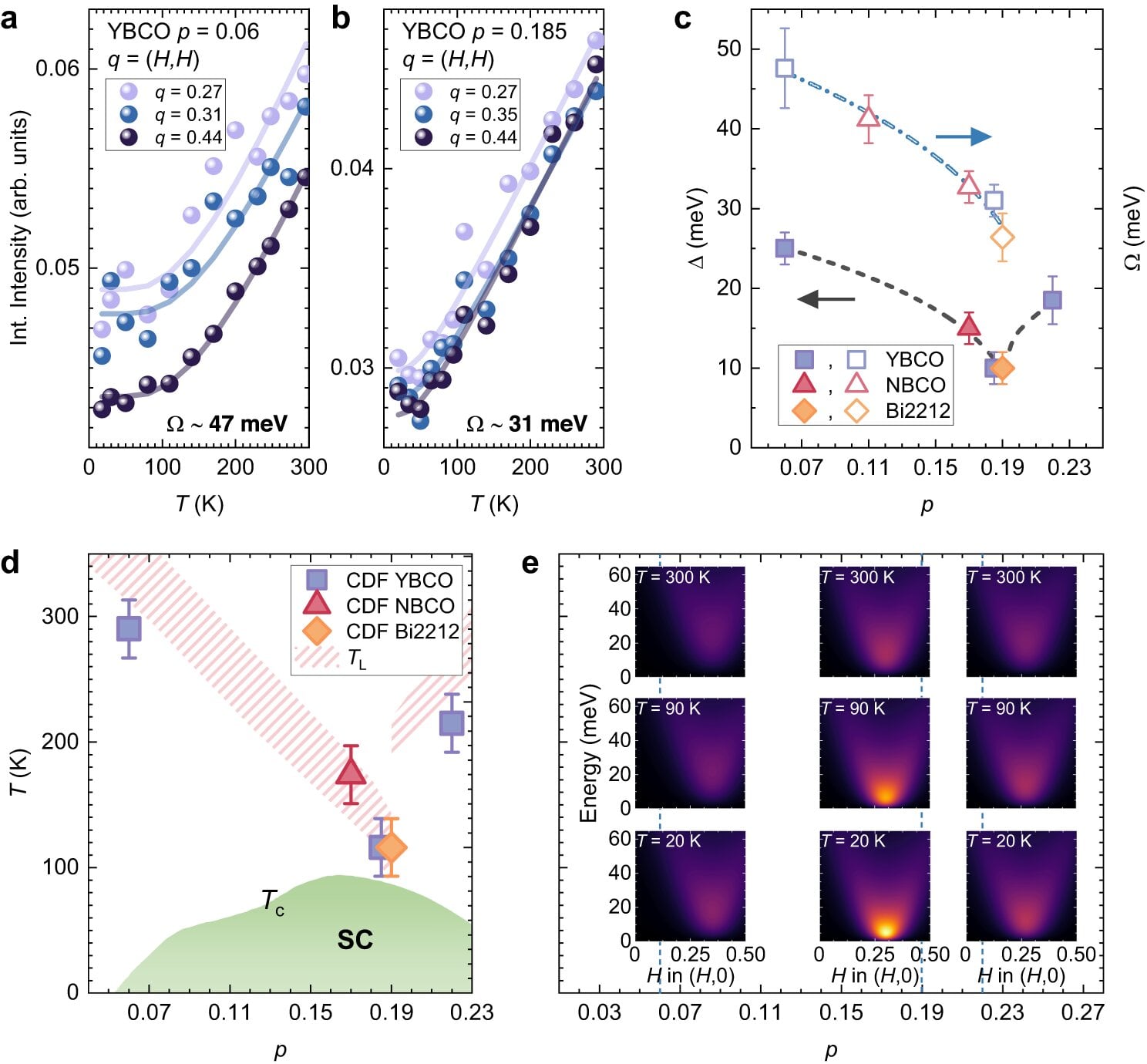
Researchers have discovered a quantum critical point connected to the "strange metal" phase of high-critical-temperature copper-based superconductors. The study, based on X-ray scattering experiments, reveals the existence of charge density fluctuations that make cuprates behave like "strange" metals. This discovery could lead to the development of better materials with higher critical temperatures, advancing superconductivity research and contributing to sustainable technologies.
A theoretical study by researchers at SLAC National Accelerator Laboratory, Stanford University, and the University of Illinois suggests that the 170-year-old Wiedemann-Franz law, which relates the ratio of electronic conductivity to thermal conductivity in metals, still approximately holds for copper oxide superconductors (cuprates), a type of quantum material. The researchers propose that other factors, such as vibrations in the material's atomic lattice, may account for experimental results that make it seem like the law does not apply. This finding is significant for understanding unconventional superconductors and other quantum materials.