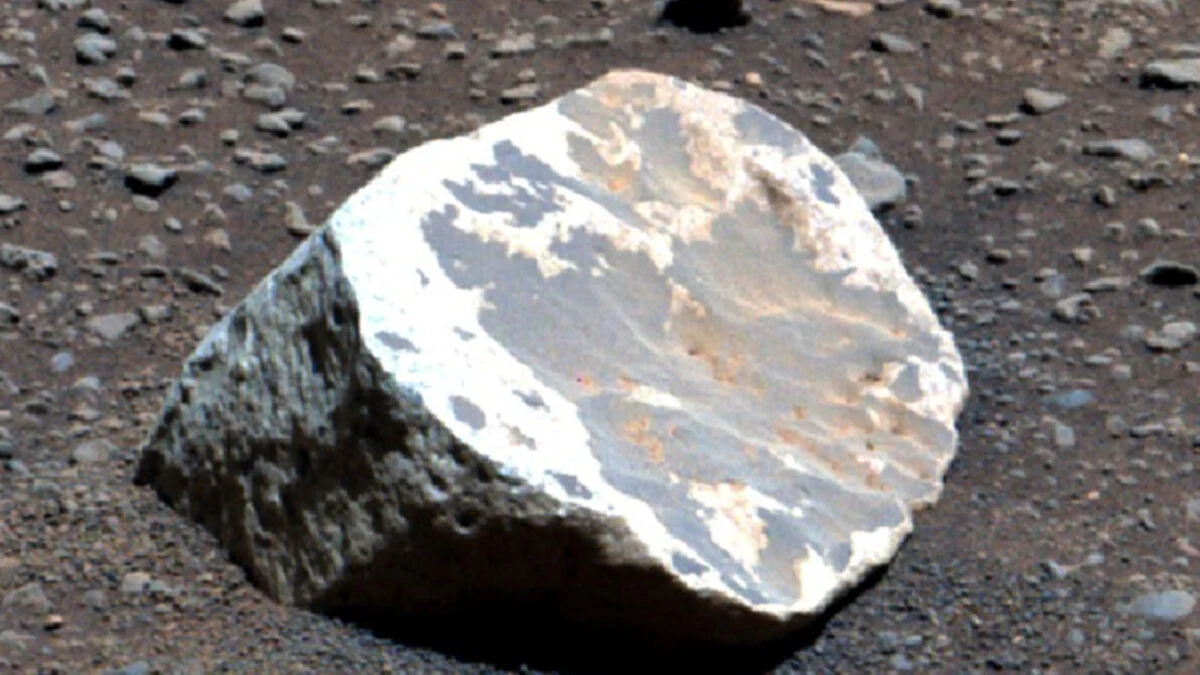
NASA's Perseverance rover discovered light-colored, kaolinite-rich rocks on Mars, suggesting the planet once had a tropical, rainy climate with water environments similar to Earth's, raising the possibility that Mars could have supported life in the past.
A study analyzing oxygen isotopes in rocks sampled by NASA's Curiosity Rover suggests that 3.7 billion years ago, Gale Crater on Mars had a warm, dry environment with significant evaporation, providing insights into the planet's past habitability and water cycle.
Scientists from Cambridge University have discovered a 390-million-year-old fossil forest in southwestern England, predating the previously oldest-known forest in upstate New York by four million years. The forest, mostly consisting of cladoxylopsids, provides evidence of the earliest known landscape of standing trees, fundamentally changing Earth's land biosphere. The discovery sheds light on how trees altered the planet and paved the way for the rise of complex life, while also offering insights into the ancient climate of England during the Middle Devonian Epoch.
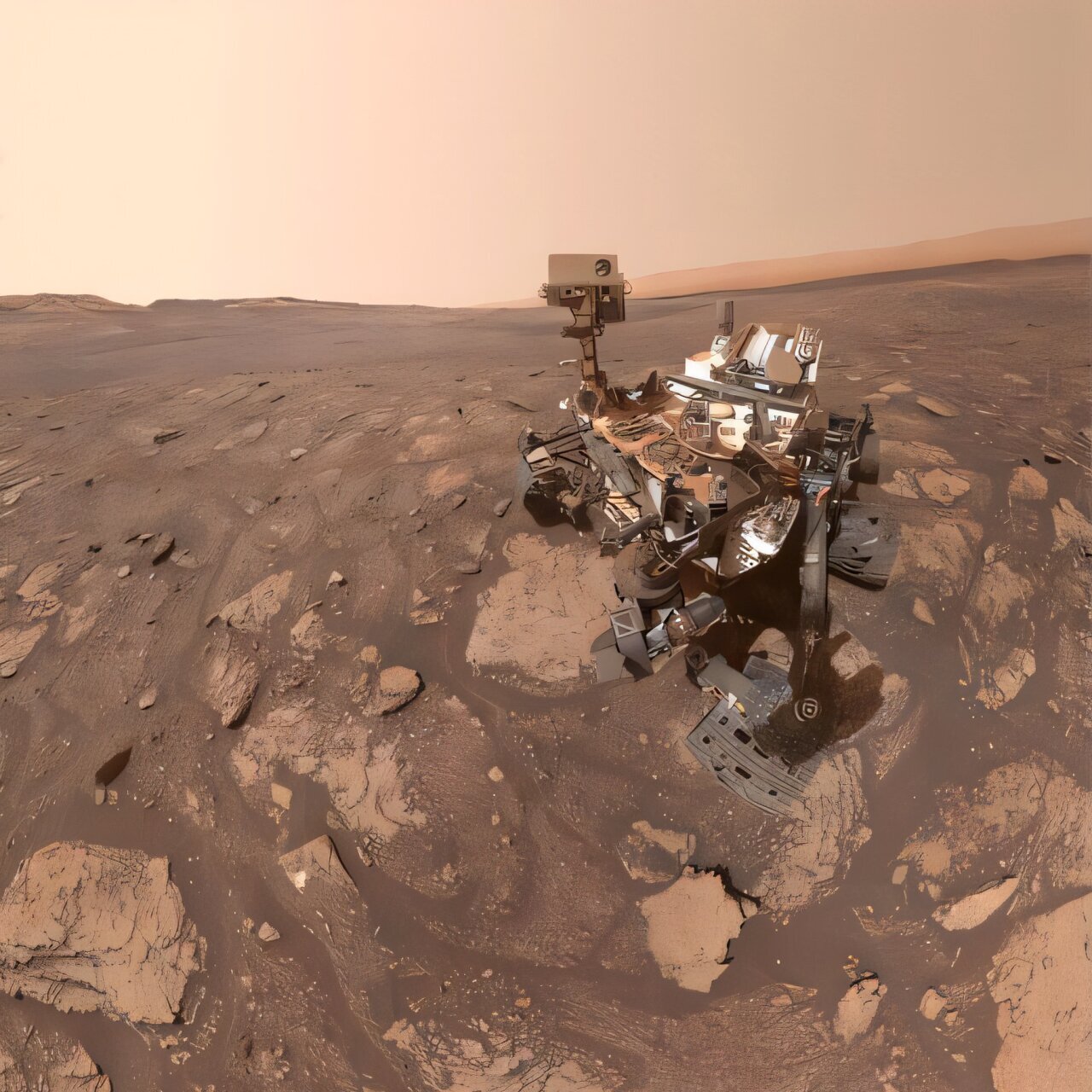
NASA's Curiosity rover has reached a historic milestone of 4,000 days on Mars, continuing to explore the planet's ancient climate. Despite challenges like a jammed camera filter wheel, the rover recently drilled its 39th sample from the sulfate-rich "Sequoia" region. The samples collected will provide insights into Mars' past habitability and how its climate evolved over time. Engineers are working to resolve the camera issue, and the rover's nuclear power source is expected to provide enough energy for many more years of operation. The team is preparing for a break in November when Mars will be behind the Sun, and communications may be affected.
NASA's Curiosity rover has reached a milestone of 4,000 Martian days on Mars since its landing in 2012. The rover recently collected its 39th sample, which will provide insights into the evolution of Mars' climate and habitability. Scientists hope to learn more about how the planet's climate changed over time as they study the layers of Mount Sharp. Despite some technical issues, Curiosity remains strong and continues to explore the Red Planet.
NASA's Curiosity rover has reached a significant milestone, completing 4,000 Martian days on the Red Planet. Despite the wear and tear from its 11-year journey, the rover continues to conduct scientific research, recently drilling its 39th sample for analysis. Curiosity is gradually ascending Mount Sharp to study the planet's changing climate over time and determine if it once had conditions suitable for microbial life. The latest sample, collected from a rock nicknamed "Sequoia," may provide insights into how Mars evolved as it dried up billions of years ago. Engineers are currently addressing an issue with one of the rover's cameras, but overall, Curiosity remains strong and is expected to operate for many more years.
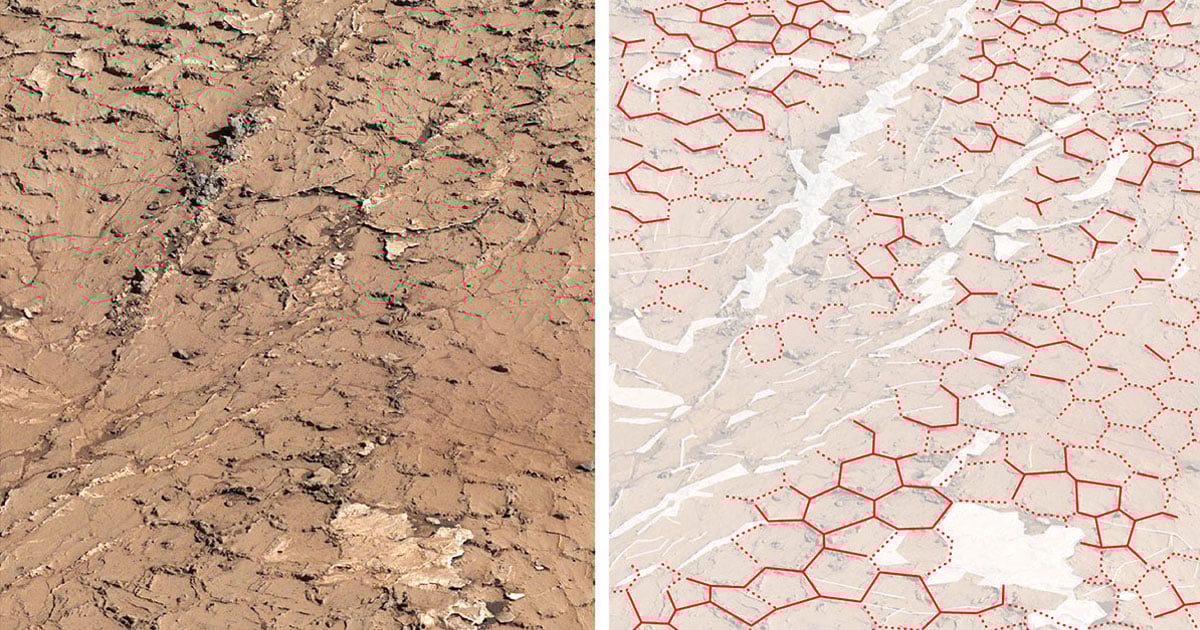
NASA's Curiosity Mars rover has discovered a hexagonal pattern in salt deposits on the Red Planet, providing evidence of a sustained, cyclical, and possibly seasonal climate on early Mars. The finding suggests that Mars may have experienced periods of lush water-rich seasons and drier conditions, bringing scientists closer to understanding whether the planet could have supported life. The hexagonal patterns formed as mud cracks turned into Y-shaped junctions due to recurring exposure to water. This discovery adds to the growing evidence that ancient Mars could have been habitable for microbial life.