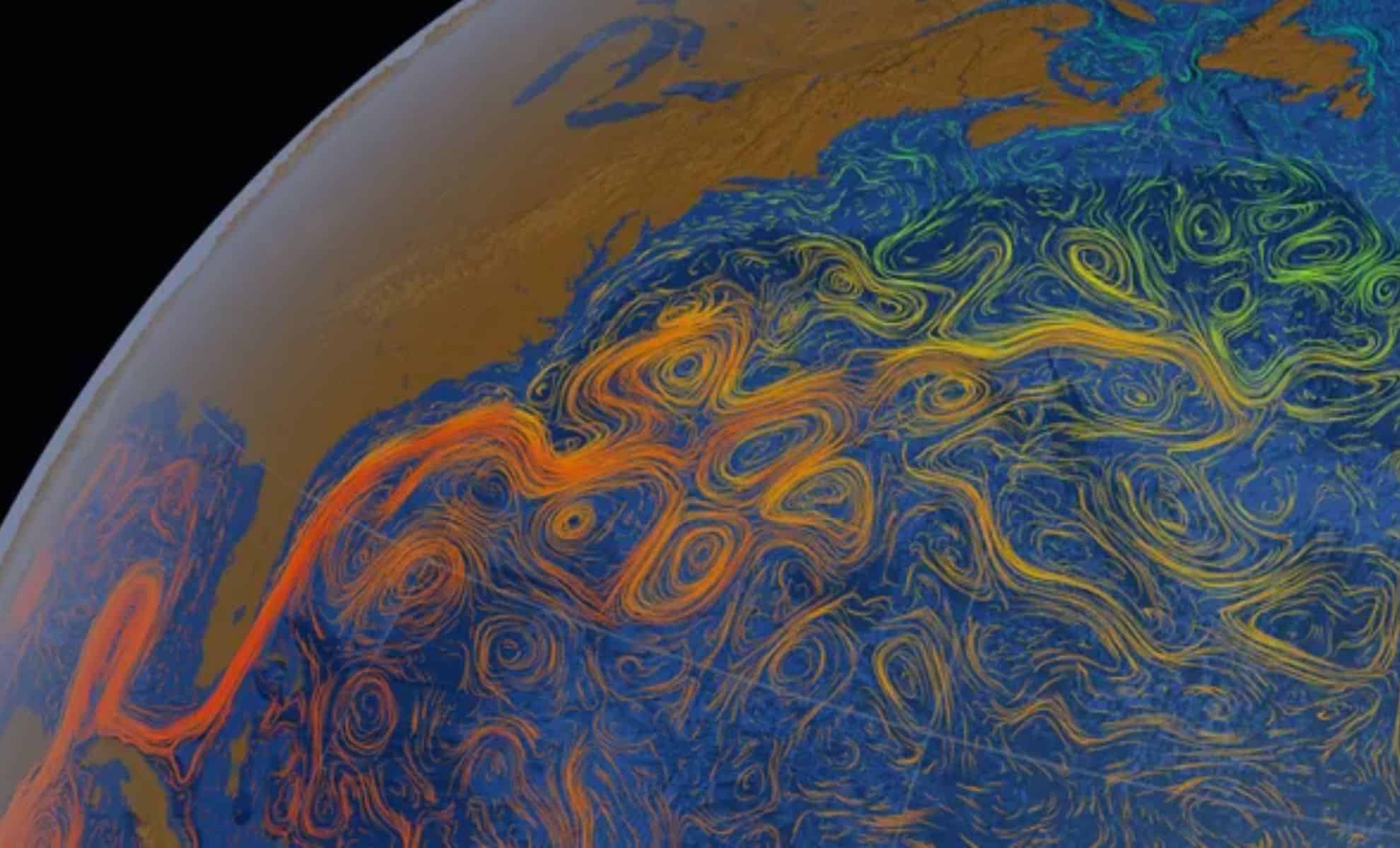
Scientists warn that climate change could cause the collapse of the Atlantic Meridional Overturning Circulation (AMOC), including the Gulf Stream, within decades, potentially triggering a new ice age and significant sea level rise, with Iceland declaring it a national security threat.

Scientists warn that the Atlantic Meridional Overturning Circulation (AMOC), including the Gulf Stream, could collapse after 2100 under high-emission scenarios, leading to extreme European winters, dry summers, and global weather disruptions, with the risk increasing if greenhouse gas emissions are not reduced.
A new study warns that the collapse of the Atlantic Meridional Overturning Circulation (AMOC), a crucial ocean current system, is more likely than previously thought, potentially occurring within the next 50 to 100 years due to human-caused pollution, with the tipping point possibly reached in the next 10 to 20 years, posing serious global climate risks.,
A new study warns that human-caused pollution could cause the Atlantic Meridional Overturning Circulation (AMOC) to collapse within the next 50 to 100 years, with the tipping point possibly occurring in the next 10 to 20 years, posing severe global climate risks. Urgent action to reduce emissions is necessary to prevent catastrophic environmental consequences, including colder Europe, disrupted weather patterns, and rising sea levels.
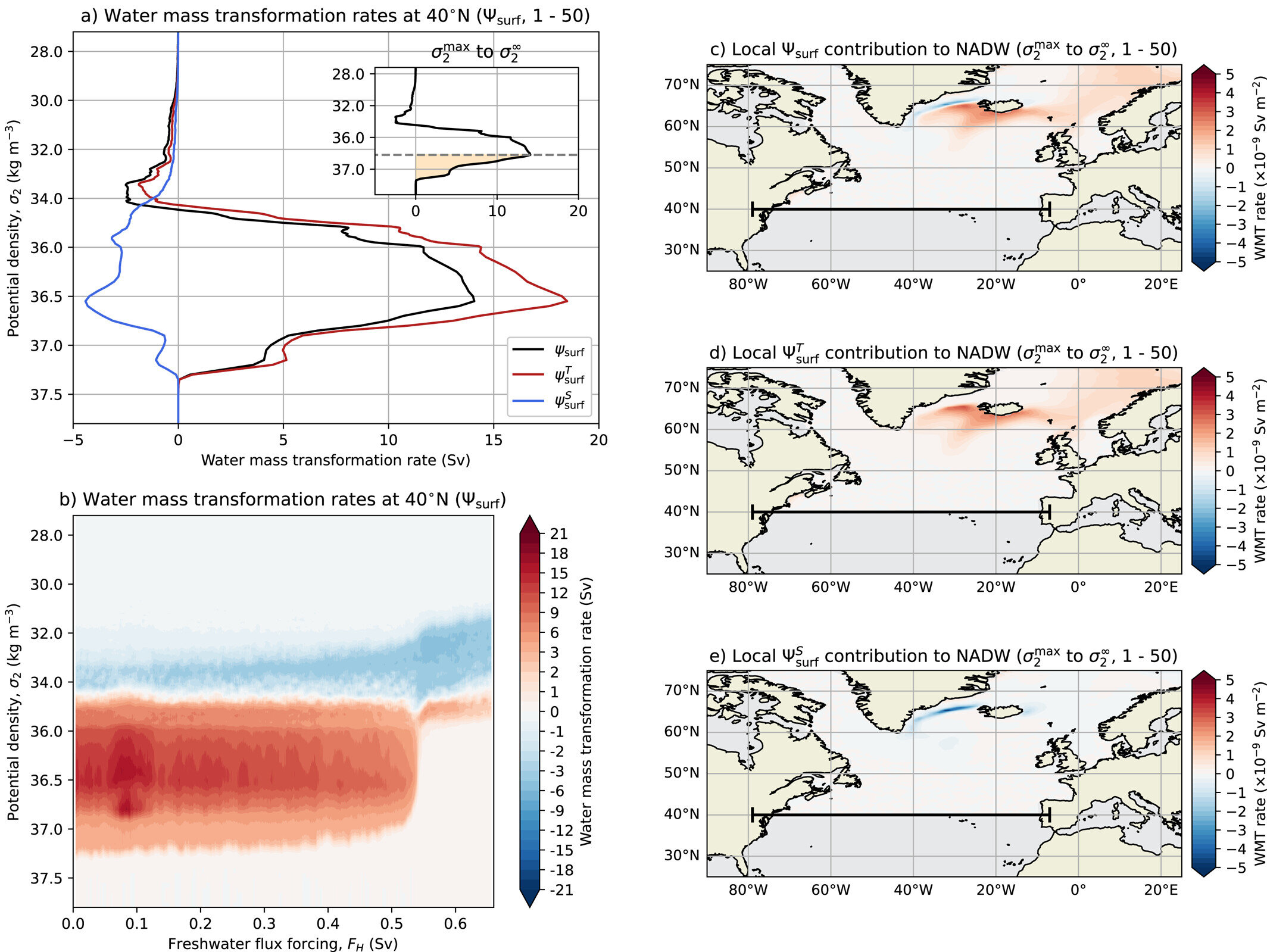
A recent study warns that the Atlantic Meridional Overturning Circulation (AMOC), a crucial ocean current system regulating global climate, could collapse as early as 2055 due to warming and melting Arctic ice, with significant worldwide consequences. Detecting early signs through surface buoyancy flux indicates the weakening of the AMOC, and while reducing carbon emissions could prevent or delay collapse, the risk remains, emphasizing the urgent need for climate action.
A new physics-based indicator suggests that the Atlantic Meridional Overturning Circulation (AMOC) could collapse as early as 2023 under high-emission scenarios, with a median predicted collapse around 2055, potentially leading to drastic climate changes in Northwestern Europe. Urgent climate action and reduced emissions are necessary to mitigate this risk.
A new study suggests that the collapse of the Atlantic meridional overturning circulation (Amoc) is more likely within the next few decades than previously thought, especially if fossil fuel emissions continue to rise, posing severe risks to global climate, sea levels, and regional weather patterns.
A study using Bermuda stalagmites reveals that the Gulf Stream has shifted northward since 1449, indicating a long-term weakening of the Atlantic Meridional Overturning Circulation (AMOC), which could lead to significant global climate disruptions if it continues to weaken due to rising global temperatures.
A report claiming the reversal of the Deep Western Boundary Current (DWBC) and a catastrophic collapse of the Atlantic Meridional Overturning Circulation (AMOC) is false. The recent study discussed surface salinity changes in the Southern Ocean but did not indicate any reversal of ocean currents or system collapse. The claim of a current reversal is based on a misinterpretation and an erroneous press release, and experts clarify that there is no evidence of such an event occurring.
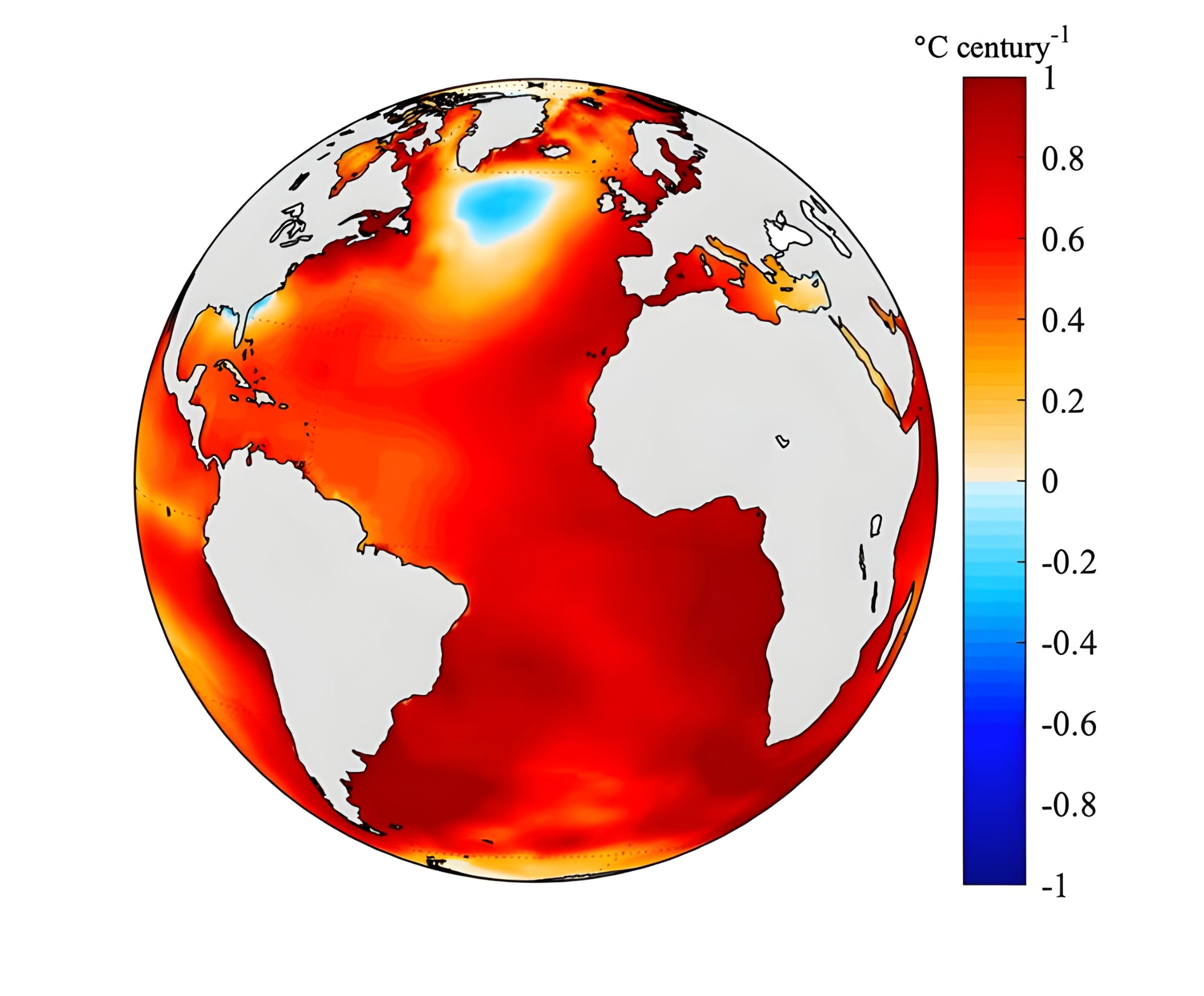
Scientists have identified a persistent cold spot south of Greenland linked to a weakening Atlantic Meridional Overturning Circulation (AMOC), which may be caused by climate change and could impact global weather patterns and marine habitats.
A new study reveals that the cooling patch in the North Atlantic, known as the North Atlantic Warming Hole, is caused by a weakening of the Atlantic Meridional Overturning Circulation (AMOC), which could have significant implications for global climate and marine ecosystems if the trend continues.
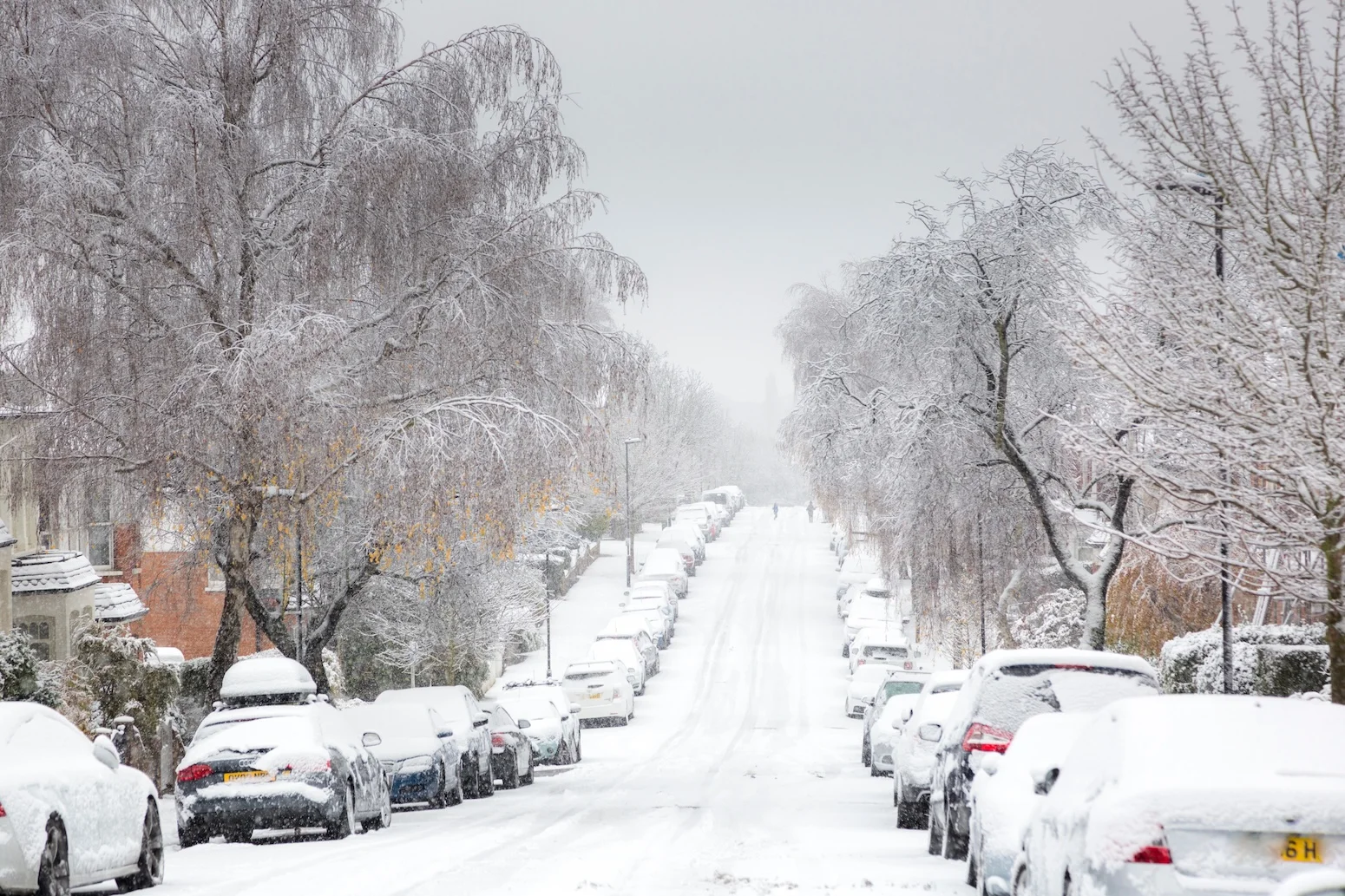
Scientists warn that the potential collapse of the Atlantic Meridional Overturning Circulation (AMOC) could cause severe cooling in Europe, with temperatures dropping dramatically and impacting daily life, agriculture, and infrastructure. Despite this, global warming would still lead to increased heat waves elsewhere, highlighting the complex and dangerous effects of climate change and the urgent need for monitoring and action.
A potential collapse of the Atlantic Meridional Overturning Circulation (AMOC) could cause significant cooling and temperature extremes in northern Europe, even amid global warming, with winter temperatures possibly dropping as low as -50°C in Scandinavia, highlighting a complex interplay between ocean currents and climate change impacts.
A new study warns that the collapse of the Atlantic Meridional Overturning Circulation (AMOC) could cause severe cooling in Europe, with winter temperatures dropping as low as -55°F, and lead to profound climate and societal impacts, especially if combined with ongoing global warming. The research highlights the potential for increased storminess, sea ice expansion, and temperature extremes, emphasizing the importance of monitoring ocean systems to prevent such a collapse.
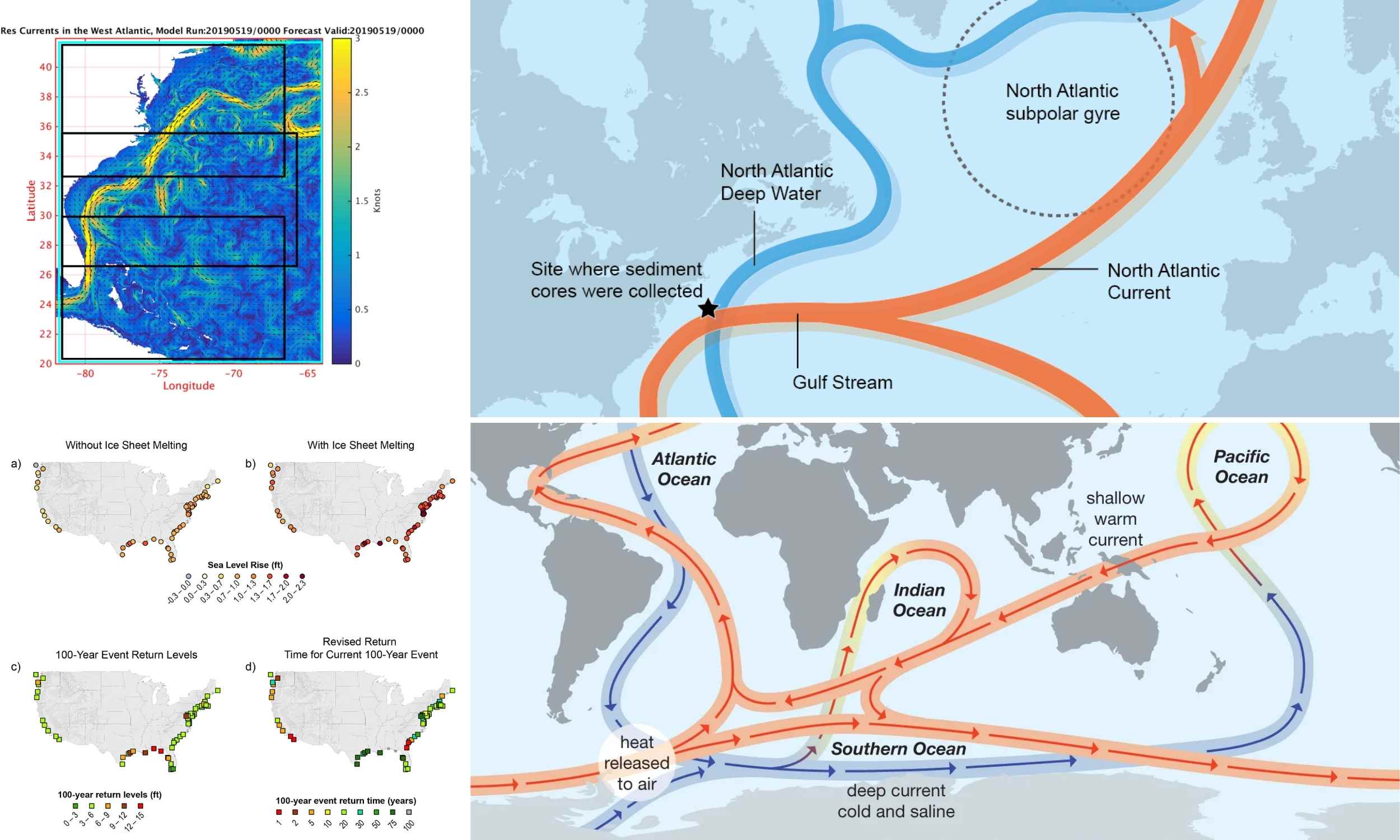
Scientists warn that accelerated Arctic warming could disrupt ocean currents like the Atlantic Meridional Overturning Circulation (AMOC), potentially leading to increased flooding along the U.S. East Coast, especially in states like Florida, Georgia, and the Carolinas, due to rising sea levels and intensified storms. Melting ice introduces freshwater into the Atlantic, threatening to weaken key currents that regulate climate and weather patterns, emphasizing the need for global emission reductions and resilient infrastructure to mitigate these impacts.