The article emphasizes the growing importance of microcredentials, especially in AI and technology, for young job seekers, with industry leaders advocating continuous learning to stay competitive in a volatile job market, and highlights the advice of Coursera's CEO on focusing on relevant skills like AI and soft skills for future employment.
Ian Carter, a former Microsoft technical program manager, has been unemployed for five months following a layoff amid a challenging tech job market, and is considering relocating to live with family if he doesn't secure a new position soon. Despite efforts in networking and skill development, especially in AI, he faces difficulties due to market conditions and specific job requirements, highlighting the broader impact of recent layoffs and hiring slowdowns in the tech industry.
AI development is progressing unevenly due to the effectiveness of reinforcement learning, which accelerates improvements in testable skills like coding and math, while more subjective skills like writing improve more slowly, creating a 'reinforcement gap' with significant economic implications.
The CEO of LinkedIn and other business leaders are warning that college degrees are becoming less relevant in the evolving job market, with success increasingly dependent on adaptability and AI skills rather than traditional education, as prominent entrepreneurs and CEOs highlight the changing landscape of employment and the diminishing value of degrees.
Stanford professor Jure Leskovec discusses how AI has prompted a shift in assessment methods, with his class switching from open-book exams to paper exams to better evaluate student knowledge amidst AI advancements. He emphasizes the importance of human skills and domain expertise, advocating for re-skilling and new teaching approaches to prepare students for an AI-augmented workforce. Despite AI's rapid growth, Leskovec believes we are still in the early stages of developing effective solutions for integrating AI into education and work.
Stanford professor Jure Leskovec adapted his exams to the AI era by returning to paper-based tests, emphasizing human grading to better assess student knowledge and skills, amidst broader debates on AI's impact on education and the workforce.
LinkedIn's latest ranking highlights that universities like Princeton, Duke, and UPenn best prepare students for long-term career success, emphasizing the importance of internships, alumni networks, and skills over mere prestige, especially as the value of degrees is increasingly questioned amid AI advancements and changing job markets.
AI is causing significant layoffs in the tech sector but is also boosting salaries in non-tech industries by nearly $18,000 annually, as AI skills become highly valuable across various fields like marketing, HR, and finance, leading to a broader distribution of job opportunities and higher wages for AI-proficient workers.
LinkedIn CEO Ryan Roslansky revealed that AI-generated suggestions for polishing posts are less popular than expected, mainly due to the high stakes of professional reputation on the platform. Despite this, the use of AI skills on LinkedIn is rapidly increasing, with a 20x rise in users adding AI skills and a 6x increase in jobs requiring AI expertise. Roslansky also shares his personal use of AI tools to communicate more effectively with Microsoft CEO Satya Nadella.
As the demand for AI skills continues to rise, professionals across various industries are seeking reeducation and training programs to stay relevant in the rapidly changing job market. Companies like Salesforce are retraining their employees to become AI experts, while universities like MIT and Stanford are offering executive education courses on generative AI. Online platforms such as Maven, Udacity, and Udemy are also providing AI training programs. The impact of generative AI is leading to the creation of new corporate roles, such as chief AI officers and AI ethicists. However, concerns about a digital divide in the workforce and the need for inclusivity in AI roles are also being addressed through initiatives like Microsoft and LinkedIn's generative AI skills program.
Employers are increasingly seeking employees with AI skills, particularly in the areas of generative AI and AI tools such as ChatGPT. The use of AI in various roles, from HR to content creation and software development, offers efficiency benefits and the potential for faster business growth. However, there are concerns about the personalization and potential biases of AI systems, as well as the need to ensure legal and security compliance. While AI is seen as a tool to enhance job performance rather than replace humans, there is a lack of formal AI training and guidelines provided by employers. Workers can acquire AI skills through experimentation, online courses, and understanding the purpose of using AI in their specific roles. The focus should be on creating a hybrid human-AI workforce to improve work processes.
A recent study conducted by Access Partnership and Amazon Web Services reveals that workers with AI skills can expect a salary increase of at least 30%. The study surveyed employers and employees across various industries and found that IT, sales and marketing, and operations departments are likely to see the highest pay bumps. Employers estimate that IT workers with AI expertise could receive a 47% salary increase, followed by sales and marketing teams at 38%. The research highlights the increasing value of AI skills in the workplace and the potential for productivity improvements.
Workers with AI skills can earn up to 40% more than those without, according to a study by the Oxford Internet Institute and the University of Copenhagen. The research, which surveyed 25,000 freelance workers, found that knowledge of machine learning, open-source AI software, and deep learning were the most valued skills by employers. As companies increasingly prioritize AI expertise, workers who fail to adapt risk being replaced by those who can effectively use AI technology. The study highlights the importance of reskilling and staying up-to-date with technological advancements to futureproof careers.
Microsoft has committed to training one million people in the United Kingdom with the AI skills needed to pursue careers in technology by 2025. The company aims to prepare individuals for the "AI economy" where AI is increasingly preferred over new hires. Microsoft's training program, called Get On, has already trained over one million people in the UK, with more than 30,000 securing tech industry careers. The focus areas of the training include AI fluency, AI technical skills, and supporting businesses in AI transformation. The initiative comes as business leaders express concerns about their workforce lacking the necessary skills to leverage AI opportunities.
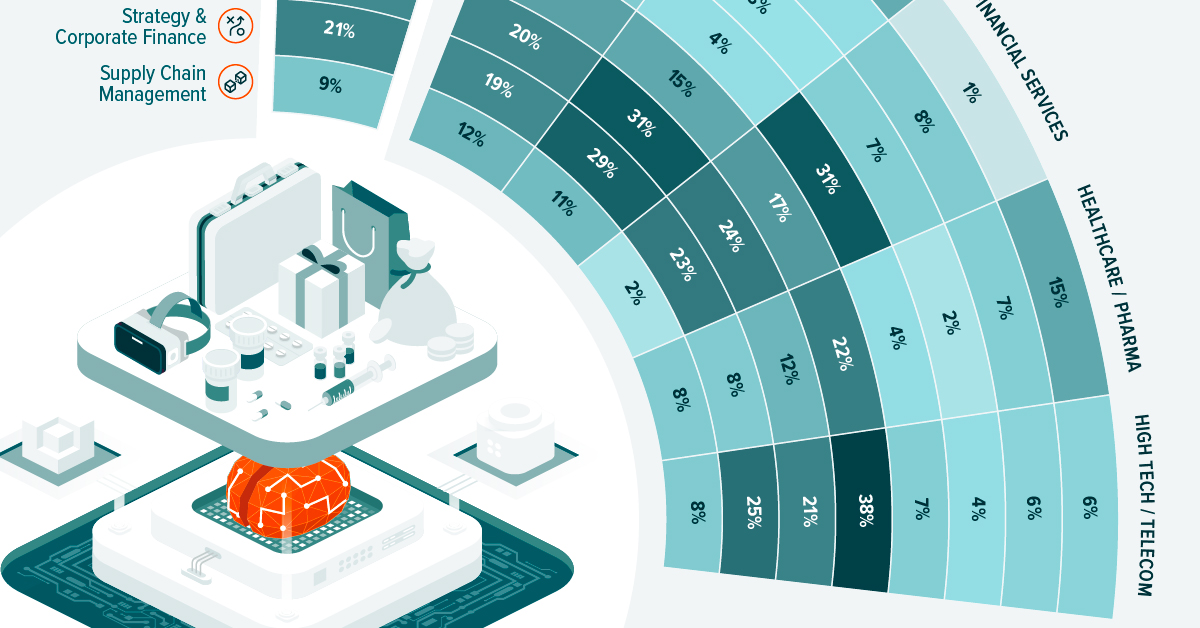
AI adoption is on the rise, with 50% of organizations using AI tools for various functions. The finance industry leads in AI adoption, utilizing AI algorithms to manage risk and detect fraud. The rise in AI adoption has created a demand for AI-skilled professionals, particularly in IT, professional services, and finance and insurance sectors. AI has the potential to transform industries and optimize operations, with the Artificial Intelligence of Things (AIoT) representing the next frontier. Investors can participate in this dynamic market through AI-driven growth opportunities.