A leading UK AI safety expert warns that the world may not have enough time to prepare for the risks posed by rapidly advancing AI systems, emphasizing the need for urgent safety measures and better understanding of AI behaviors to prevent destabilization of security and economy.

Apple's efforts to improve Siri face increasing skepticism due to slow progress and recent reports of underwhelming performance in testing, raising concerns about whether Apple can meet the high expectations set by competitors like ChatGPT and Alexa in the near future.
AI development is progressing unevenly due to the effectiveness of reinforcement learning, which accelerates improvements in testable skills like coding and math, while more subjective skills like writing improve more slowly, creating a 'reinforcement gap' with significant economic implications.
AI researcher Julian Schrittwieser warns that the focus on an AI bubble is overlooking the rapid exponential advancements in AI technology, with predictions that by 2026 AI models will autonomously work full days, match human experts across industries, and outperform them in many tasks, potentially leading to significant economic and job impacts.
AI is experiencing a reality check with expectations moderating, leading to a more steady, incremental progress similar to past tech evolutions like smartphones, rather than dramatic leaps. While some companies see tangible benefits, widespread economic impact and productivity gains are still emerging, and the AI market may be in a bubble. This tempered outlook is seen as positive for the future of AI, emphasizing steady development over hype.
Originally Published 4 months ago — by Hacker News
The article discusses the rapid advancements in AI language models, highlighting key leaps from GPT-3.5 to GPT-4 and beyond, emphasizing the importance of infrastructure, thresholds of usefulness, and the perception of progress. It explores how models have become more accurate, useful, and capable over time, while also addressing the challenges of predicting long-term progress and the impact of infrastructure and investment on AI development.
Apple is set to report its Q3 earnings amid a 16% stock decline this year, with investors eager for updates on AI development, iPhone demand, and tariff impacts. Analysts are divided on AI strategy importance, but many see quick AI progress as crucial for future growth. The company is also expected to consider price hikes for iPhone 17 models to offset tariff costs. The results and CEO comments could influence the stock's outlook.
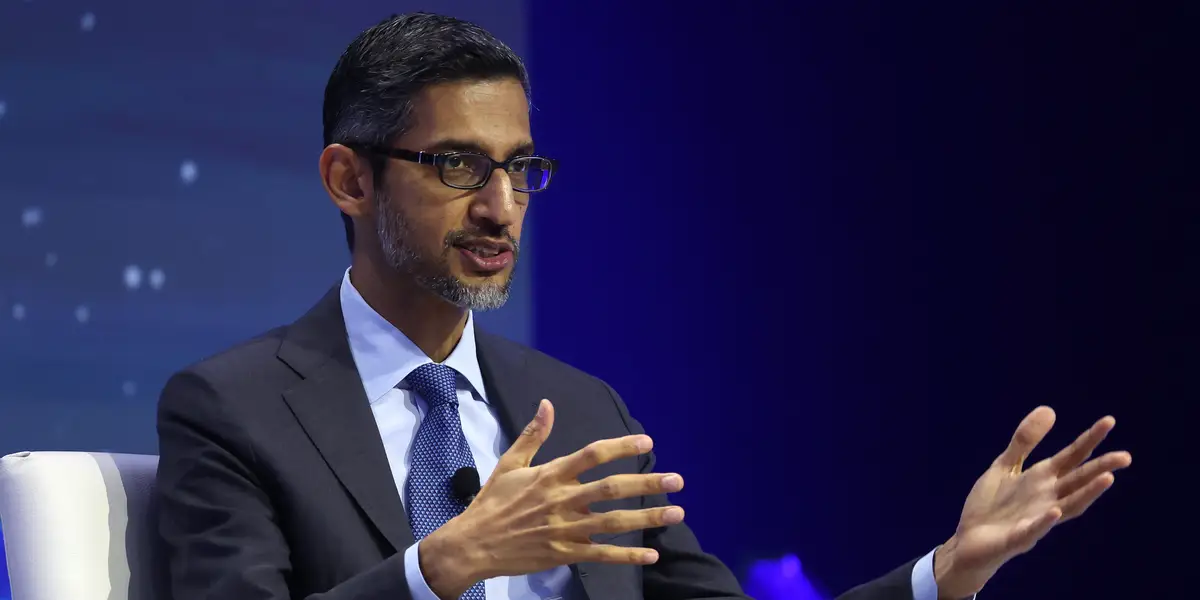
Google CEO Sundar Pichai stated that while AI development isn't hitting a 'wall,' progress will become more challenging by 2025 as the 'low-hanging fruit is gone.' Speaking at The New York Times' Dealbook summit, Pichai emphasized the need for deeper breakthroughs in AI reasoning and sequence completion. Despite industry debates on AI bottlenecks, Pichai remains confident in future advancements. He also challenged Microsoft's AI leadership claims, highlighting Google's capabilities over Microsoft's reliance on OpenAI models.