
Webb Telescope Unveils Black Hole Defying Theoretical Limits and Cosmic History
TL;DR Summary
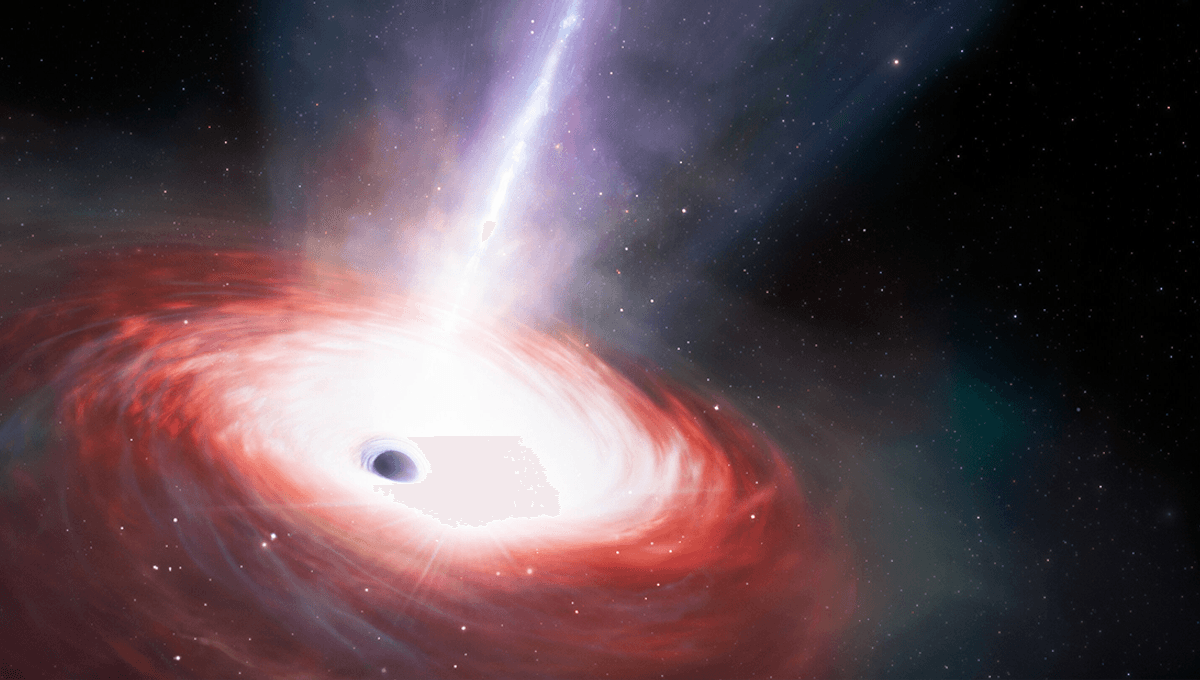
Astronomers have discovered a black hole, LID-568, in the early universe consuming matter at a rate 40 times greater than the Eddington limit, challenging previous understandings of black hole growth. Using the JWST's Near Infrared Spectrograph, the team observed powerful gas outflows around the black hole, suggesting a rapid feeding mechanism that could explain the existence of massive black holes shortly after the Big Bang. This discovery may provide insights into the mass growth of supermassive black holes and their formation from either light or heavy seeds.
- Black Hole Found Devouring Matter At A Rate 40 Times Greater Than The Eddington Limit IFLScience
- 'Webb has shown us they are clearly wrong': How astrophysicist Sophie Koudmani's research on supermassive black holes is rewriting the history of our universe Livescience.com
- How did supermassive black holes get so big, so early? They might have had a head start Phys.org
- Webb Telescope Shows a Black Hole Breaking a Theoretical Limit VOA Learning English
- NASA’s Webb and Chandra telescopes capture fast-feeding black hole from 1.5 billion years post-big bang Moneycontrol
Reading Insights
Total Reads
0
Unique Readers
0
Time Saved
3 min
vs 4 min read
Condensed
86%
629 → 87 words
Want the full story? Read the original article
Read on IFLScience