
Six-planet sky parade lights up twilight this weekend
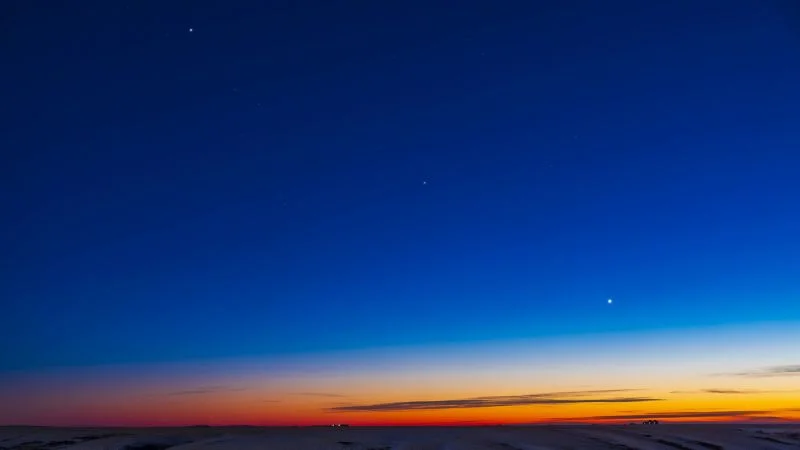
NASA says a six-planet alignment will brighten the night sky this Saturday (weather permitting): Mercury, Venus, Saturn and Jupiter should be visible to the naked eye, while Uranus and Neptune will require binoculars or a telescope. The display is best at twilight and visible worldwide, with viewing times varying by location and planets roughly 10 degrees above the horizon. Venus will be the brightest after the Sun and Moon; Mars will appear as a red dot; Saturn will have a yellowish hue; Jupiter will be high overhead; Mercury will be the hardest to spot, best about 30–60 minutes after local sunset. The event illustrates how planetary orbits shift relative to Earth and even informs mission planning; keep an eye out for related celestial events later this year, like a total lunar eclipse and a Venus–Jupiter pairing on June 8–9.
- How and when to see 6 planets aligned in a planetary parade CNN
- Six planets due to parade across night sky in rare celestial spectacle | Astronomy The Guardian
- Planetary parade 2026: Six planets visible in night sky BBC
- Catch Venus, Mars and Jupiter over NC’s eastern horizon during Feb. 28 alignment WCTI
- Seen the 2026 planet alignment? How about listening to it? NASA reveals what the parade planets sound like BBC Sky at Night Magazine
Reading Insights
1
3
213 min
vs 214 min read
100%
42,675 → 139 words
Want the full story? Read the original article
Read on CNN