
JWST Dots May Be Young Globular Clusters, Not Baby Black Holes
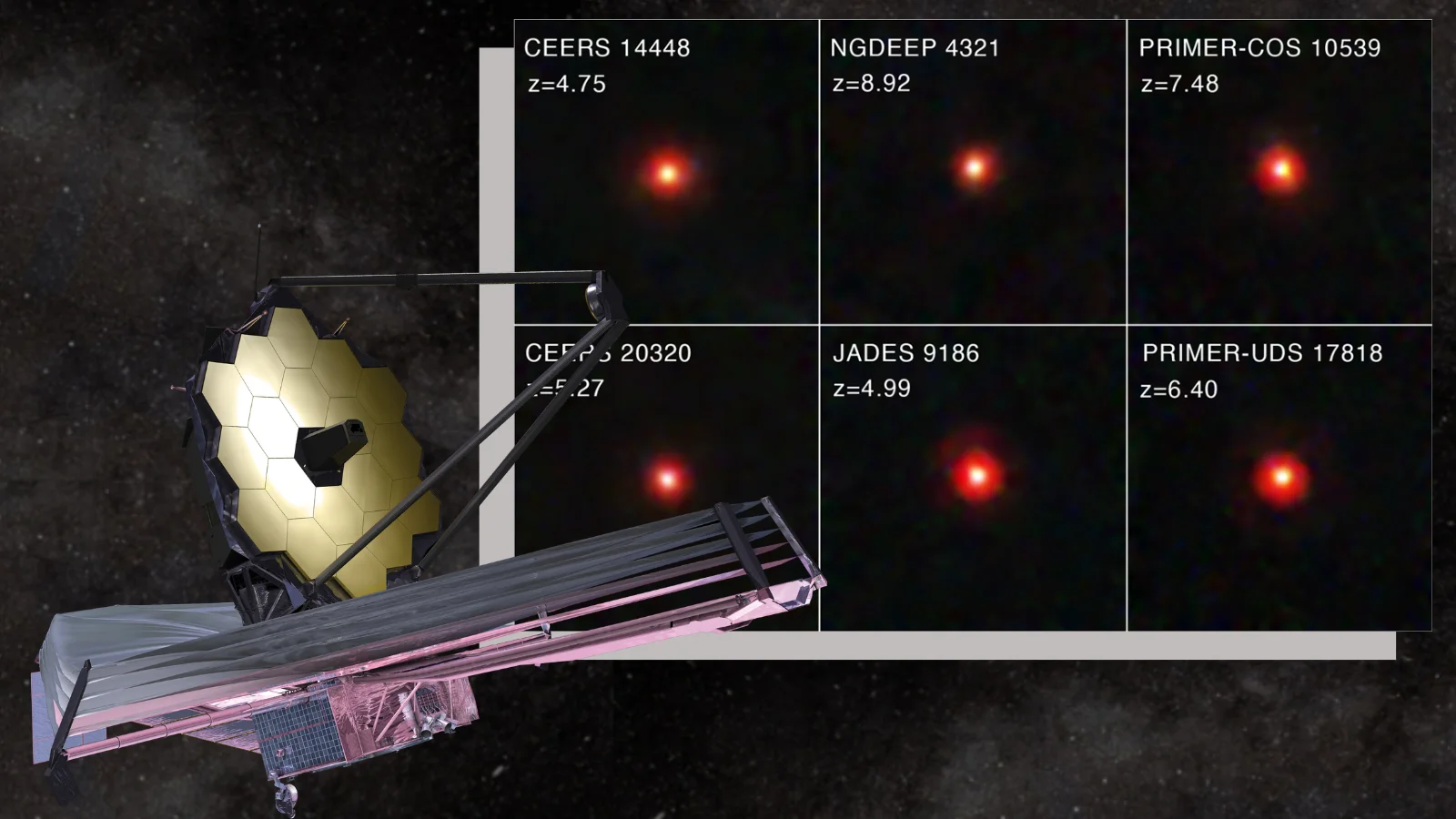
A Space.com analysis of James Webb Space Telescope data suggests the mysterious “Little Red Dots” from the early universe could be newborn globular clusters rather than proto-black holes. A new arXiv study proposes these LRDs host very young stellar populations, potentially powered by an extremely massive, short‑lived star, which could explain their distinctive V‑shaped spectrum. The observed redshift range aligns with metal‑poor globular clusters, and the team estimates a global formation density around 0.3 per cubic megaparsec, similar to the number of globular clusters today. If confirmed, this would provide a direct window into early globular cluster formation, though future spectroscopy tracking chemical signatures (like helium and nitrogen enhancements, and specific element anti-correlations) will be crucial to test the hypothesis.
- Are mysterious 'Little Red Dots' actually baby galaxies under construction? Space
- Webb telescope photos reveal mysterious little red dots — astronomers have no idea what they are New York Post
- Webb telescope finds mysterious little red dots MSN
- Neither galaxies nor ordinary stars: red objects discovered by the James Webb Space Telescope challenge theories and may reveal a new type of cosmic phenomenon never before seen by science. CPG Click Petróleo e Gás
- Scientists discover mysterious red dots in space and agree: “We don’t know what it is” Diario AS
Reading Insights
0
4
75 min
vs 76 min read
99%
15,178 → 120 words
Want the full story? Read the original article
Read on Space