
Juno's Discovery: Organic Compounds and Potential Alien Life on Ganymede
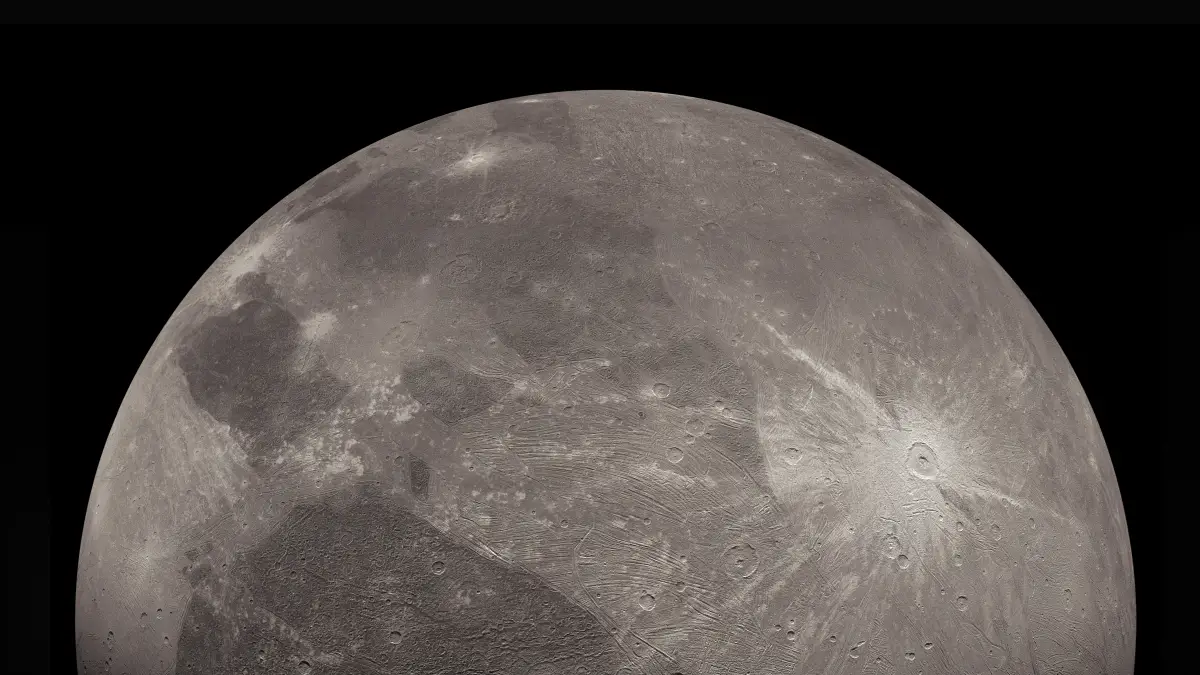
NASA's Juno spacecraft, during its flyby of Jupiter's moon Ganymede in 2021, has discovered the presence of mineral salts and organic compounds on the moon's surface. The high-resolution spectroscopic observations made by Juno's Jovian Infrared Auroral Mapper (JIRAM) spectrometer revealed the presence of hydrated sodium chloride, ammonium chloride, sodium bicarbonate, and possibly aliphatic aldehyde. These findings provide insights into Ganymede's formation and the composition of its deep subsurface ocean. The localized distribution of these compounds suggests that Ganymede's magnetic field shields them from surrounding radiation. Further investigations by upcoming missions like ESA's JUICE and NASA's Europa Clipper will provide more detailed observations of Ganymede and other icy moons in Jupiter's system.
- Juno discovers salts and organic compounds on Ganymede's surface - NASASpaceFlight.com NASASpaceflight.com
- NASA Says It's Spotted Organic Compounds on Jupiter's Largest Moon Futurism
- NASA's Juno Probe Detects Potential Organic Compounds on Ganymede, Is It Ancient Life? autoevolution
- ‘Icy ocean on Jupiter moon’ found seeping ‘mysterious material’ that could help confirm alien life... The Sun
Reading Insights
0
10
4 min
vs 6 min read
89%
1,003 → 111 words
Want the full story? Read the original article
Read on NASASpaceflight.com