
"Revolutionary Observatories: Detecting Massive Black Hole Mergers and Black Hole Rain"
TL;DR Summary
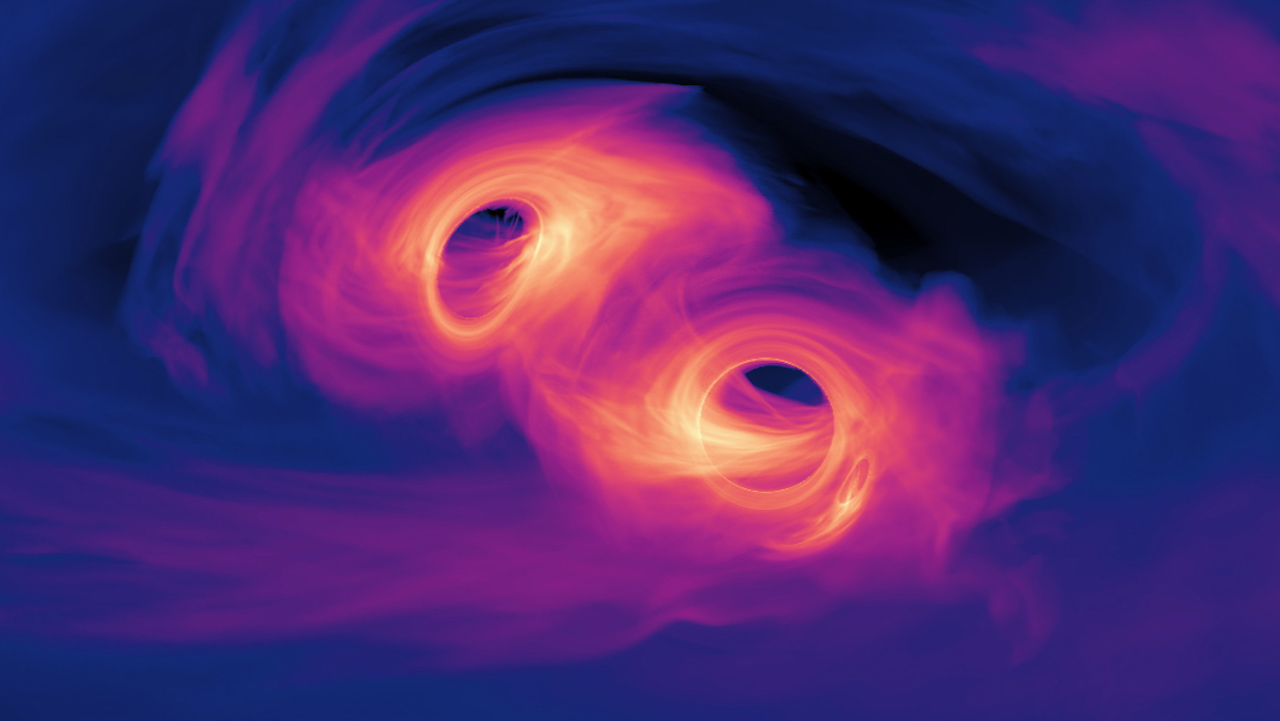
The next generation of gravitational wave (GW) observatories, such as the Einstein Telescope and the Cosmic Explorer, could detect mergers of intermediate mass black holes, which have masses between 100 and one million solar masses. These observatories would expand our understanding of black holes and their role in the formation of supermassive black holes at the center of galaxies. Detecting these mergers would also help narrow uncertainties about the pair-instability mass-gap and shed light on the origin and evolution of black hole populations across cosmic epochs.
Topics:science#astrophysics#black-holes#gravitational-waves#intermediate-mass-black-holes#observatories#science-and-technology
Reading Insights
Total Reads
0
Unique Readers
1
Time Saved
6 min
vs 7 min read
Condensed
94%
1,324 → 86 words
Want the full story? Read the original article
Read on Universe Today