
JWST's groundbreaking discoveries unveil secrets of the universe.
TL;DR Summary
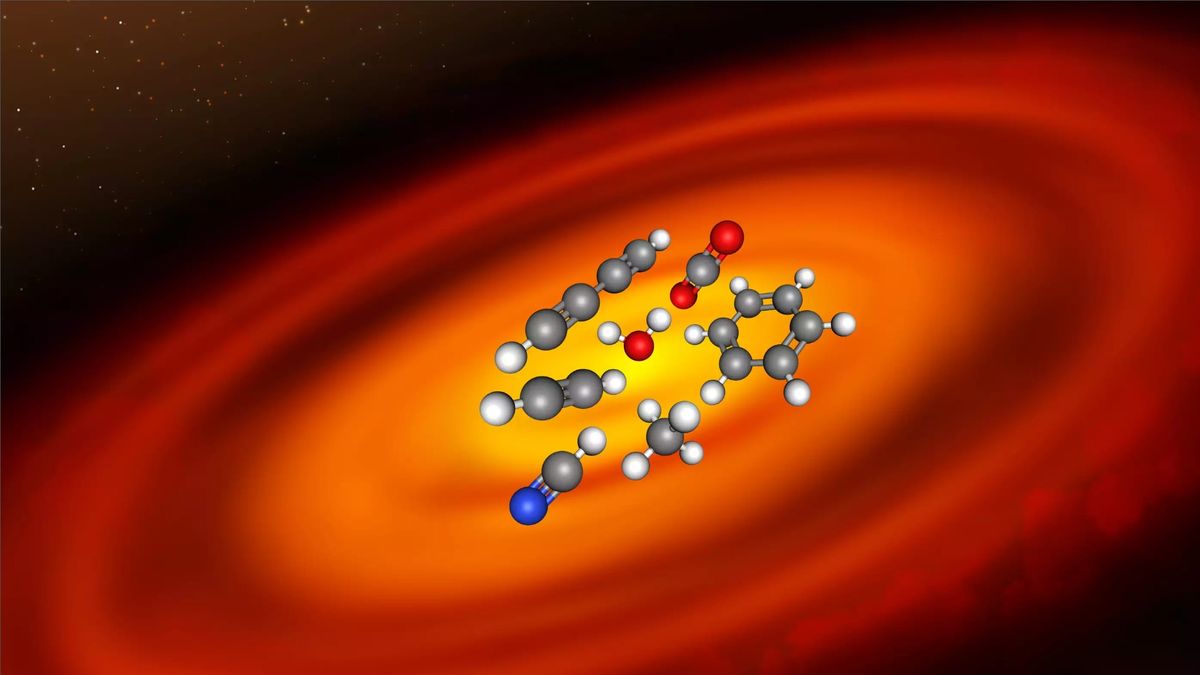
The James Webb Space Telescope has detected a variety of chemical compounds in the disks of gas and dust surrounding three low-mass stars, including organic molecules like carbon dioxide, carbon monoxide, acetylene, and the first detections of benzene, as well as water. The stars studied are only a few million years old, which means the chemicals spotted by the telescope will ultimately be inherited by planets and their atmospheres that will form in these cosmic nurseries. Webb's data allows astronomers to determine physical conditions like densities and temperatures across and inside those planet-forming disks, directly where the planets grow.
Topics:science#chemical-compounds#exoplanets#james-webb-space-telescope#organic-molecules#planet-forming-disks#science-and-astronomy
- James Webb Space Telescope reveals rich chemistry of planet-forming disks for the 1st time Space.com
- JWST has spotted the most distant galaxy cluster ever seen New Scientist
- JWST captures an unprecedented ‘prequel’ to a galaxy Popular Science
- JWST Sees Merging Galaxies Releasing the Light of a Trillion Suns Universe Today
- Yes, JWST caught a baby galaxy cluster being born! Big Think
Reading Insights
Total Reads
0
Unique Readers
8
Time Saved
5 min
vs 6 min read
Condensed
91%
1,047 → 99 words
Want the full story? Read the original article
Read on Space.com