
"Uncovering Human Upright Walking Evolution Through Ancient Ape's Inner Ear"
TL;DR Summary
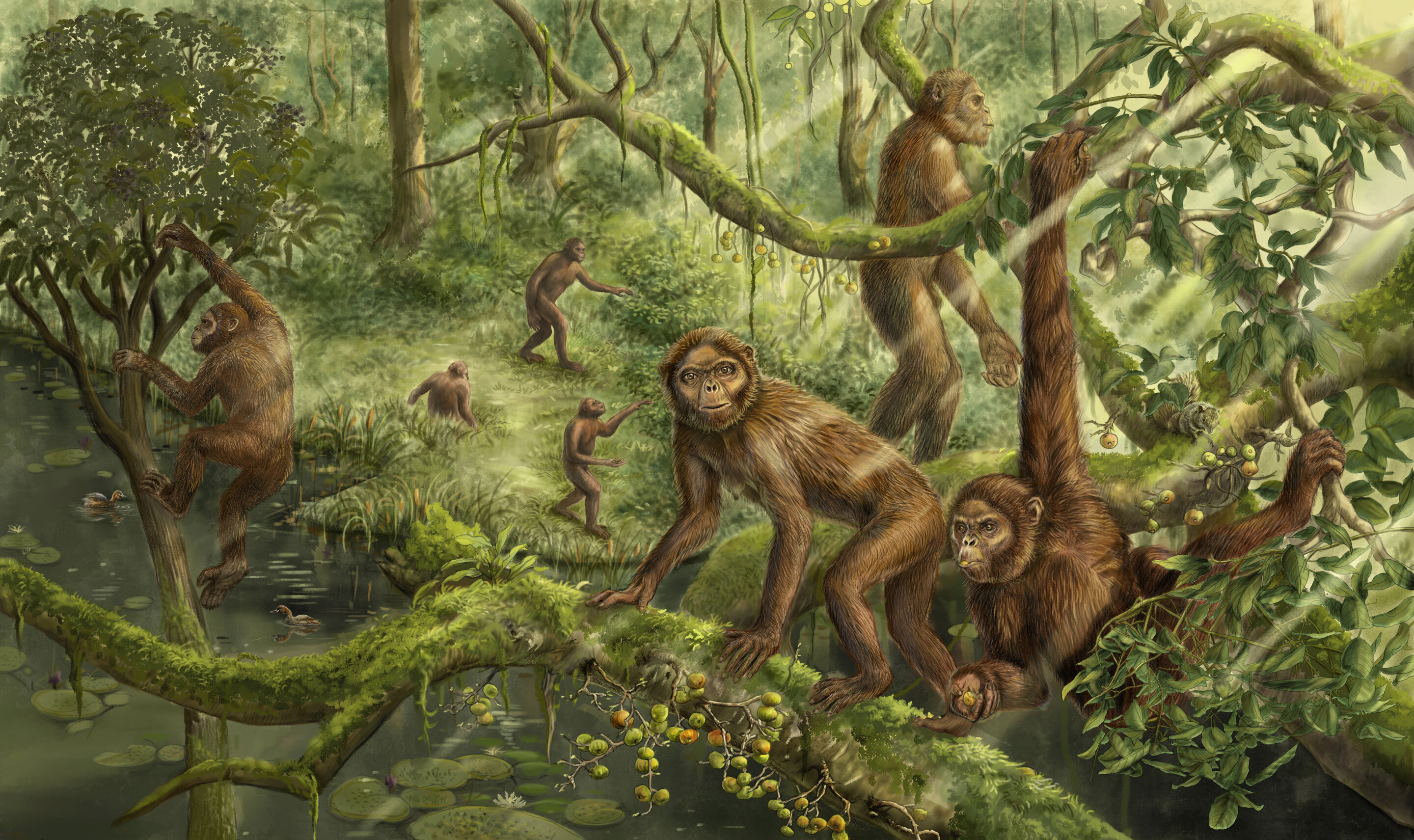
A study on the 6-million-year-old fossil ape, Lufengpithecus, sheds light on the evolution of human movement by analyzing its bony inner ear region using CT-scanning. The research suggests a three-step evolution of human bipedalism, indicating that the last common ancestor of apes and humans had a locomotor repertoire similar to Lufengpithecus, involving climbing, clambering, forelimb suspension, arboreal bipedalism, and terrestrial quadrupedalism. The study also proposes that climate change may have played a role in promoting the locomotor diversification of apes and humans.
- Inner ear of 6-million-year-old ape fossil reveals clues about the evolution of human movement Phys.org
- Extinct ape's inner ear holds clues to how humans learned to walk upright Popular Science
- Scientists Shine Light on How Humans First Learned to Walk Upright Newsweek
- Ancient Ape's Inner Ears May Hold Key to Evolution of Walking on Two Feet DISCOVER Magazine
- Six million year old human ancestors left clues found in their ear canal that they would one day walk upright, scientists have revealed The Mountaineer
Reading Insights
Total Reads
1
Unique Readers
15
Time Saved
4 min
vs 5 min read
Condensed
90%
851 → 82 words
Want the full story? Read the original article
Read on Phys.org