
Honey Analysis Reveals Local Pollution Levels
TL;DR Summary
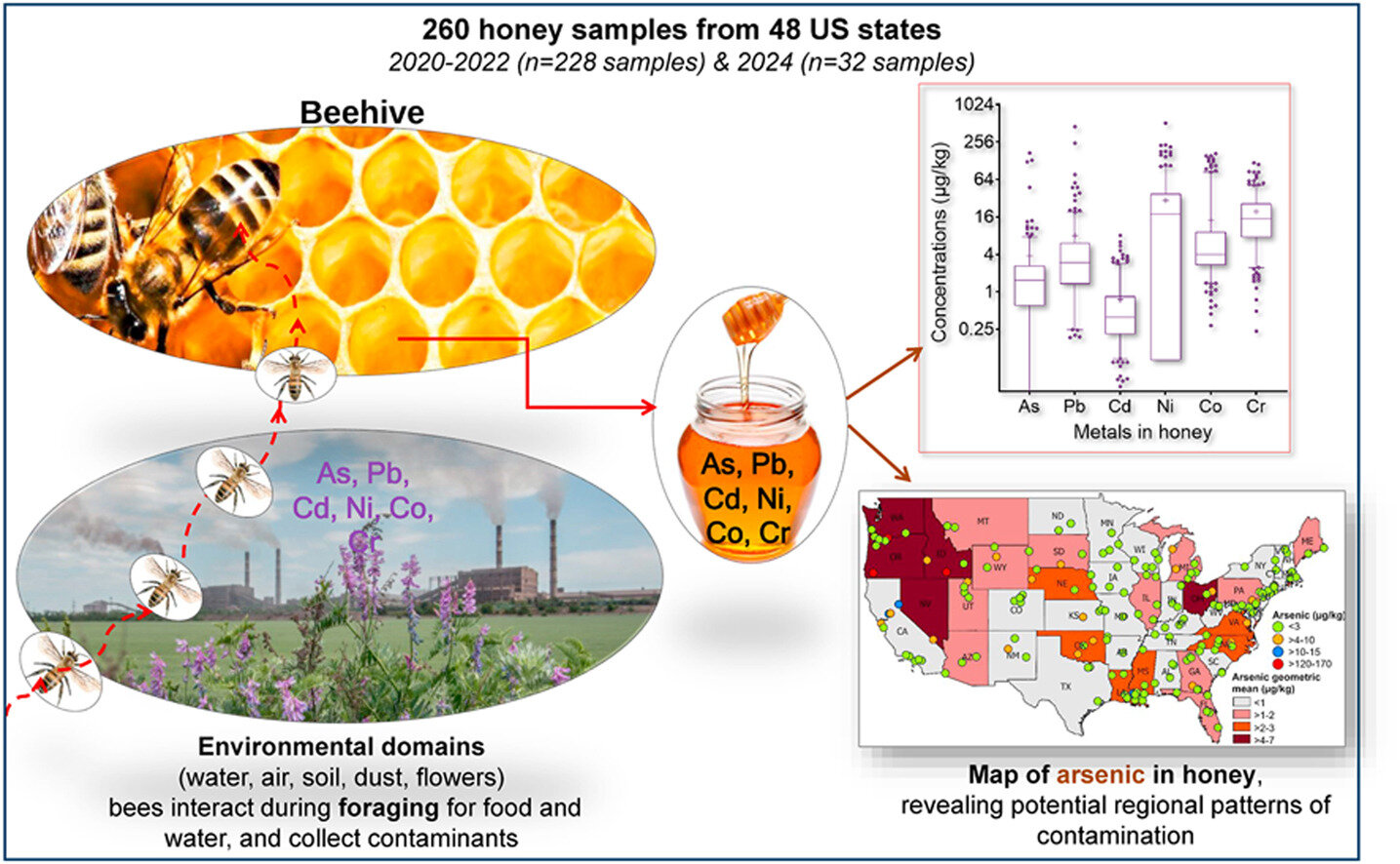
A study from Tulane University, published in Environmental Pollution, reveals that honey can serve as an indicator of environmental pollution by containing traces of toxic metals like arsenic, lead, and cobalt. Researchers tested 260 honey samples from 48 U.S. states, finding regional variations in metal concentrations, though none exceeded safe levels. The study suggests honey's potential dual role as a food source and environmental monitor, with bees acting as passive samplers of contaminants. Further research is needed to link these pollutants to their sources and understand their impact on community health.
Reading Insights
Total Reads
0
Unique Readers
9
Time Saved
2 min
vs 3 min read
Condensed
83%
530 → 91 words
Want the full story? Read the original article
Read on Phys.org