
Arctic Ocean Faces Imminent Ice-Free Summers by 2030, Study Warns
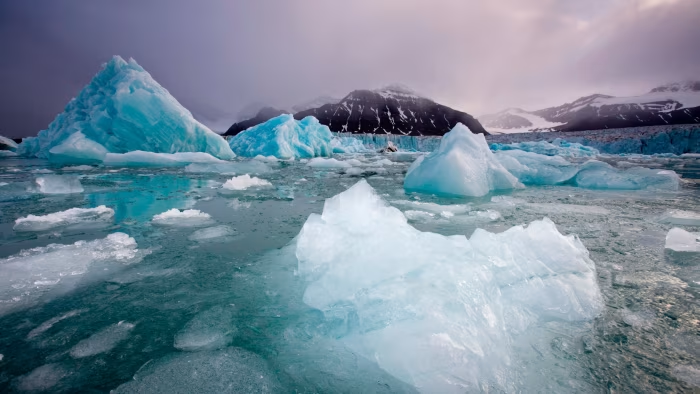
TL;DR Summary
A new study predicts the Arctic Ocean could experience its first ice-free day before 2030 due to rapid sea ice loss, a significant shift from previous projections. The Arctic has lost half of its late summer sea ice since the 1980s, and models suggest this trend could lead to an ice-free Arctic within the next three to six years. The loss of sea ice, exacerbated by the Albedo effect, could accelerate climate change and trigger extreme weather events. Reducing greenhouse gas emissions may delay but not prevent this outcome, impacting ecosystems and communities in the region.
- Climate graphic of the week: First ice-free day in the Arctic Ocean may come before 2030, study shows Financial Times
- Scientists Warn Sea Ice Could Vanish The Weather Channel
- 'Ominous milestone for the planet': Arctic Ocean's 1st ice-free day could be just 3 years away, alarming study finds Yahoo! Voices
- Scientists predict exact month the Arctic could lose all its sea ice Euronews
- The Arctic Could Be Functionally Ice-Free in Just a Few Years Scientific American
Reading Insights
Total Reads
0
Unique Readers
1
Time Saved
3 min
vs 4 min read
Condensed
85%
661 → 96 words
Want the full story? Read the original article
Read on Financial Times