
Unveiling the Mystery: The Surprising Relationship Between Black Holes and Galaxies
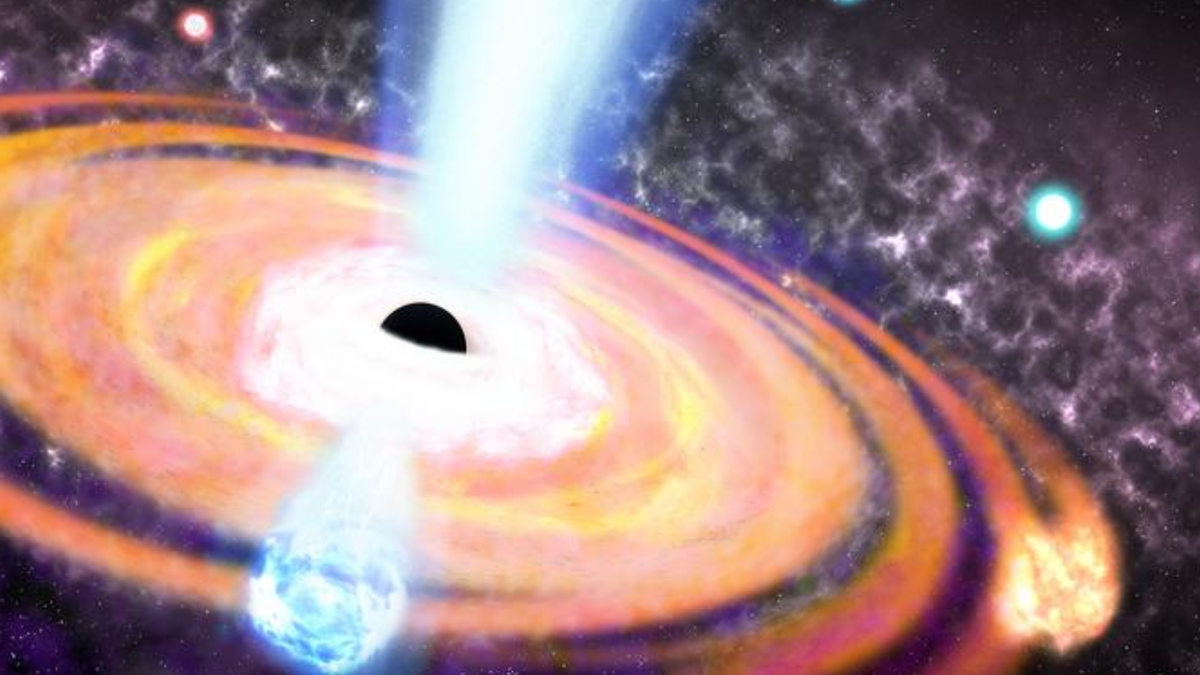
New research based on a reanalysis of data from the James Webb Space Telescope suggests that supermassive black holes may have existed during the first 50 million years of the universe, challenging previous theories that they formed after the first stars and galaxies. The findings indicate that these black holes could have influenced the early universe by driving star formation, potentially reshaping our understanding of how galaxies form. The research team theorizes that the early universe had two distinct phases, with black holes accelerating star formation in the first phase and triggering rapid star formation in the second phase before stymying it with massive outflows. The team believes that future JWST data could confirm this new theory and provide answers to fundamental questions about the universe.
- Did monster black holes or galaxies come first? The James Webb Space Telescope may have a surprise answer Space.com
- JWST Reveals a Surprise Twist in Black Hole And Galaxy Formation ScienceAlert
- Which came first: black holes or galaxies? The Hub at Johns Hopkins
- A long, long time ago in a galaxy not so far away: Research unearths clues to conditions of the early universe Phys.org
- Galaxy smash-ups may explain strange light from early universe New Scientist
Reading Insights
0
0
6 min
vs 7 min read
90%
1,226 → 126 words
Want the full story? Read the original article
Read on Space.com