
Unveiling the Birth of the Universe's First Stars
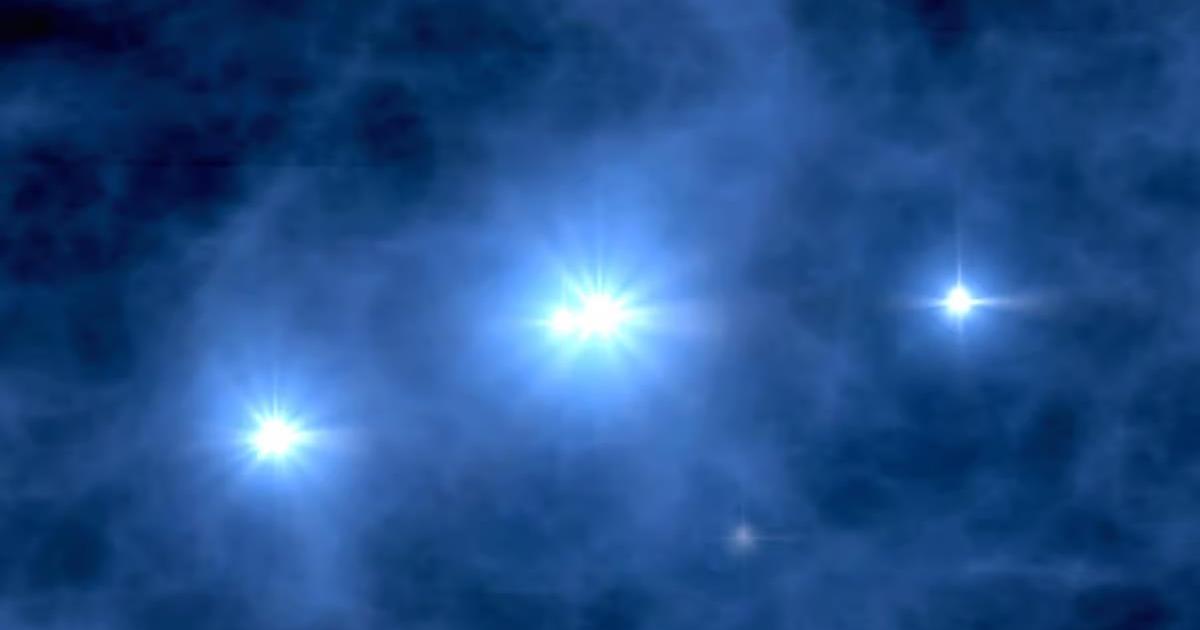
The formation of the first stars in the Universe took at least 50 million years and possibly up to 100 million years or more. Gravity slowly pulled matter together into clumps and clusters, eventually leading to the collapse of dense gas clouds and the ignition of nuclear fusion. These early stars were much larger and more massive than stars today, with an average mass about 10 times that of the Sun. The radiation emitted by these stars, dominated by ultraviolet light, ionized the surrounding neutral atoms and triggered a process known as reionization. However, the intense radiation pressure and lack of heavy elements prevented the formation of small, rocky planets. The first stars marked the beginning of a new chapter in the cosmic story, leading to the eventual formation of galaxies and the evolution of the Universe.
- What was it like when the first stars began to shine? Big Think
- Can Webb Find the First Stars in the Universe? Universe Today
- Astronomers home in on offspring of universe's first stars Science
- Searching for stars at the beginning of the Universe Astrobites
- What was it like when no stars yet existed? Big Think
Reading Insights
0
3
12 min
vs 13 min read
94%
2,478 → 137 words
Want the full story? Read the original article
Read on Big Think