
Unprecedented Discoveries: James Webb Space Telescope Captures Cosmic Collisions and Explosions
TL;DR Summary
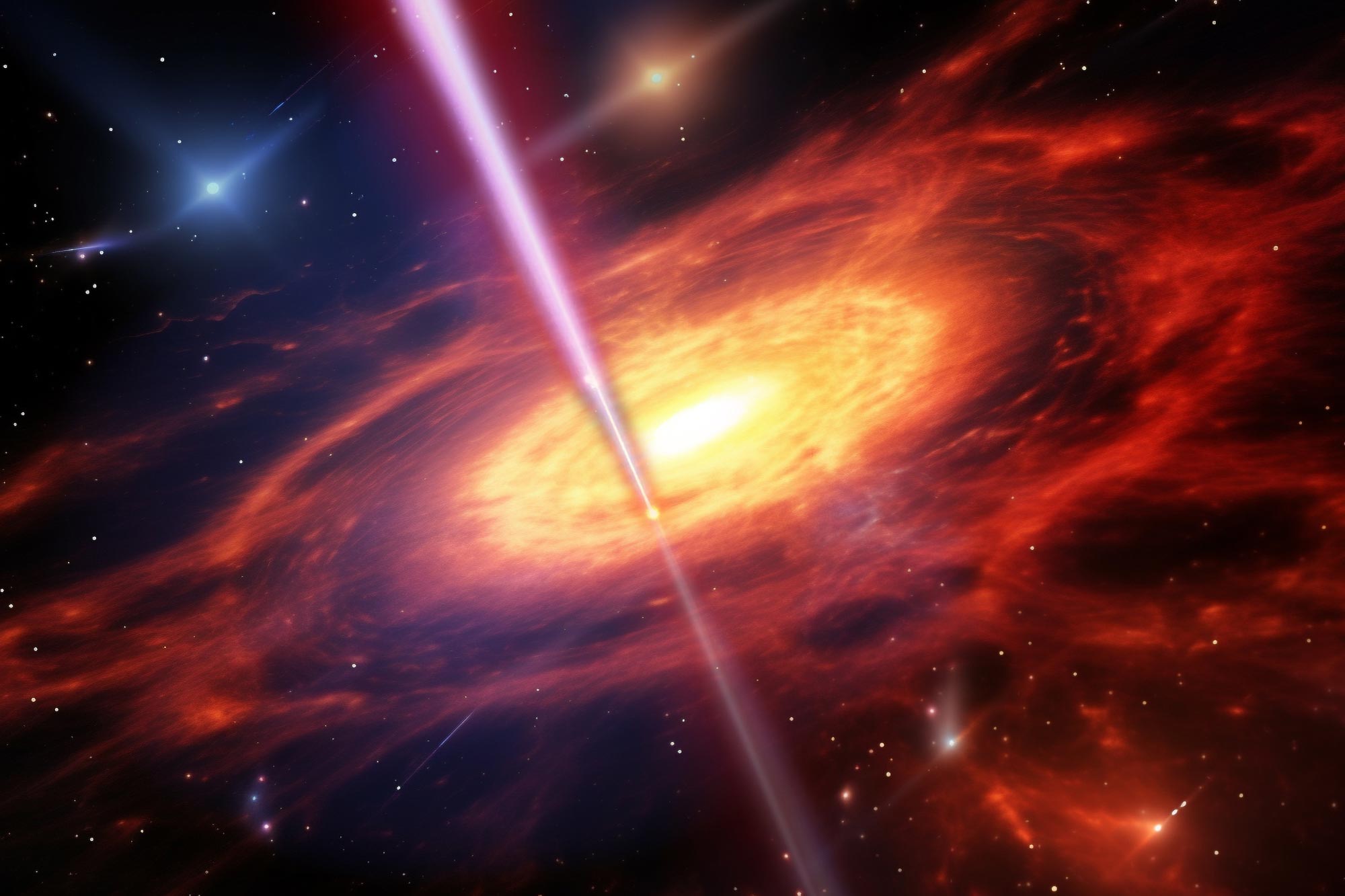
An international team of astronomers has detected a long gamma-ray burst in an ancient galaxy, challenging previous understanding of their origins. The burst is believed to have been caused by the merging of two separate neutron stars, rather than the collapse of a massive star or the collision of neutron stars that had been orbiting each other. The researchers used multiple telescopes to study the burst and found evidence supporting their hypothesis, including the absence of heavy stars and the crowded nature of the galaxy's center. They hope future observations will provide further insights into the phenomenon.
- Historic Gamma-Ray Burst Detected at the Heart of an Ancient Galaxy SciTechDaily
- James Webb Space Telescope observes massive kilonova explosion for first time Interesting Engineering
- Scientists think they saw an asteroid crash into a dead star — and release one of the brightest explosions in the universe Livescience.com
- JWST spotted 2 stars colliding, impact could have created gold in space Business Insider
- James Webb Space Telescope spots violent collision between neutron stars Space.com
- View Full Coverage on Google News
Reading Insights
Total Reads
0
Unique Readers
5
Time Saved
3 min
vs 4 min read
Condensed
85%
660 → 97 words
Want the full story? Read the original article
Read on SciTechDaily