
Surviving a Nearby Supernova: How Our Infant Solar System Endured
TL;DR Summary
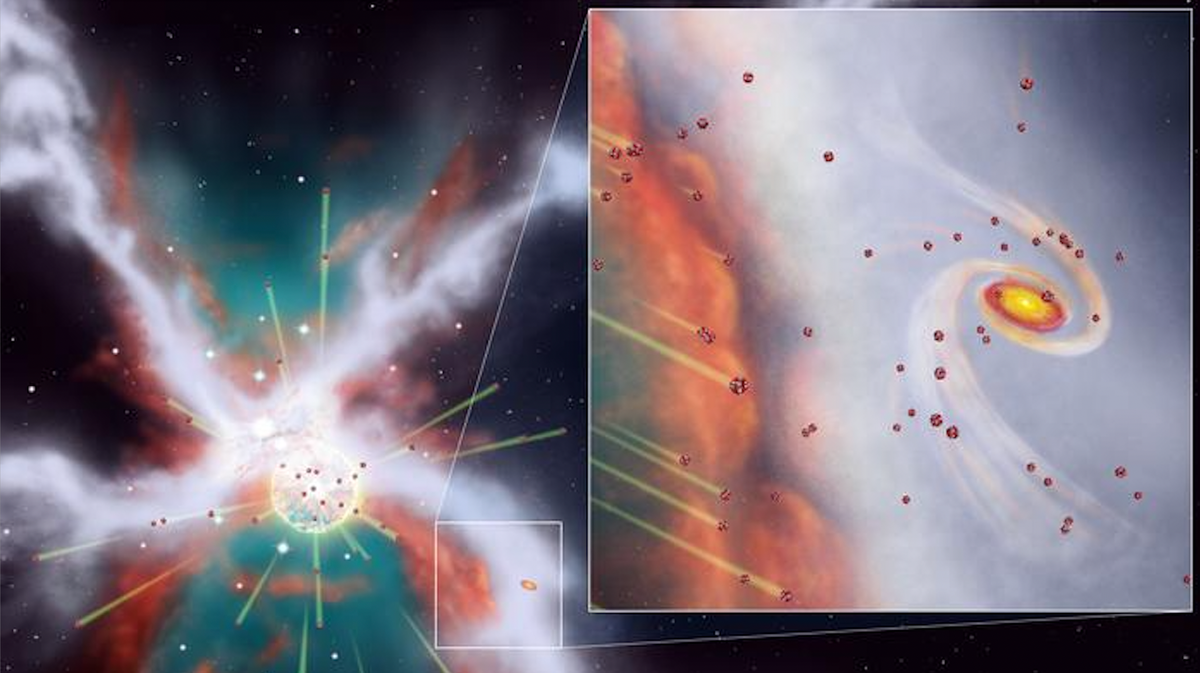
Our solar system may have survived a nearby supernova explosion thanks to a shield of molecular gas, according to a study. Researchers analyzed isotopes of elements found in meteorites and discovered varying concentrations of a radioactive isotope of aluminum, indicating an injection of radioactive material around 4.6 billion years ago. The dense filament of gas surrounding the forming solar system likely acted as a buffer, protecting it from the supernova blast wave. This finding has important implications for understanding the formation and evolution of stars and their planetary systems.
Reading Insights
Total Reads
0
Unique Readers
6
Time Saved
2 min
vs 3 min read
Condensed
85%
584 → 89 words
Want the full story? Read the original article
Read on Space.com