
"NASA's Webb Spots Dusty 'Cat's Tail' in Beta Pictoris System"
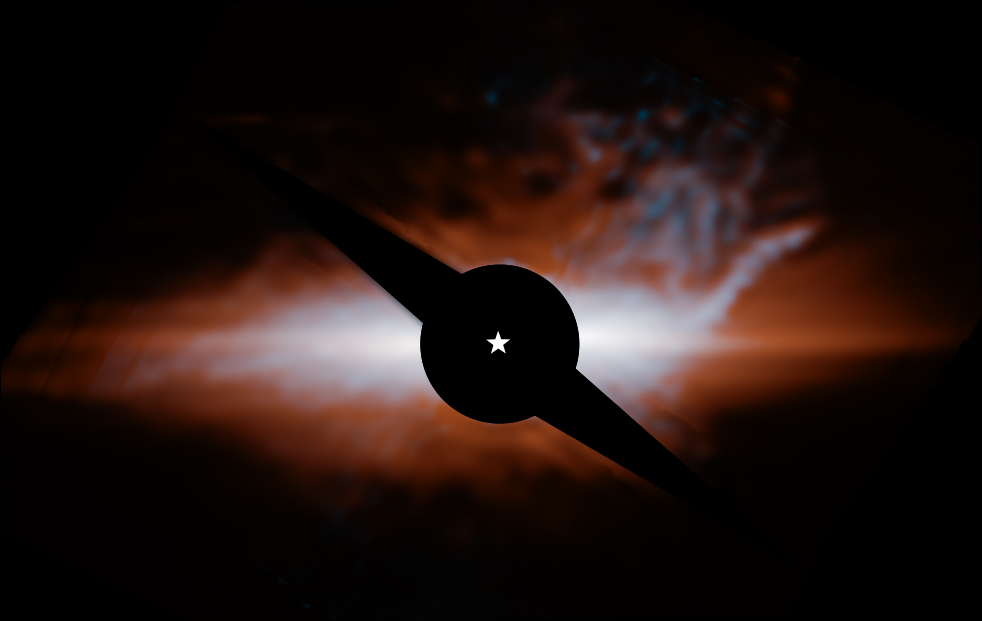
NASA's James Webb Space Telescope has discovered a new, previously unseen structure in the Beta Pictoris system, located 63 light-years away. The structure, shaped like a cat's tail, extends from the secondary debris disk and is composed of highly porous organic refractory material. The team of astronomers also observed differences in temperature between the two disks, indicating different compositions. The team's preferred model suggests that the cat's tail is the result of a recent dust production event, and its unusual curvature is explained as an optical illusion. These findings were presented at the 243rd meeting of the American Astronomical Society and provide new insights into the complex planetary system of Beta Pictoris.
- NASA's Webb Discovers Dusty 'Cat's Tail' in Beta Pictoris System NASA
- NASA's Webb Discovers Dusty 'Cat's Tail' in Beta Pictoris System | Webb WebbTelescope.org
- Webb discovers dusty cat's tail in Beta Pictoris system European Space Agency
- Webb discovers dusty 'cat's tail' in Beta Pictoris System Phys.org
Reading Insights
1
2
5 min
vs 6 min read
90%
1,103 → 112 words
Want the full story? Read the original article
Read on NASA