
JWST discovers ancient galaxy with complex organic molecules.
TL;DR Summary
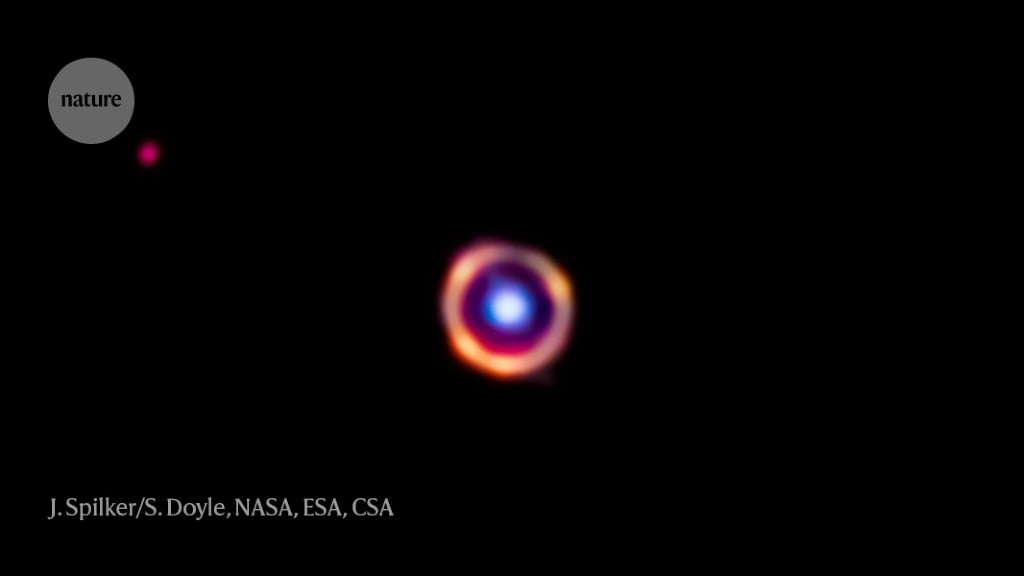
Astronomers using the James Webb Space Telescope (JWST) have discovered tangles of huge organic molecules drifting through a faraway galaxy, which suggests that their host galaxy was busy creating stars early in the history of the Universe. The galaxy lies 3.8 billion parsecs (12.3 billion light years) away, and the molecules are hard to spot except in infrared wavelengths of light, which JWST excels at studying. The discovery will force astronomers to rethink how dust first formed and how that shaped the early generations of stars and galaxies.
Topics:science#astronomy#early-universe#james-webb-space-telescope#organic-molecules#polycyclic-aromatic-hydrocarbons#spt0418-47
- JWST spots the most distant 'smoke' molecules ever seen in space Nature.com
- James Webb Space Telescope spies earliest complex organic molecules in the universe Space.com
- Complex Molecules Detected in Ancient Galaxy Near The Dawn of Time ScienceAlert
- Webb Space Telescope detects universe's most distant complex organic molecules Phys.org
- One Of The Rarest Galaxies In The Universe Is Confirmed By Scientists Giant Freakin Robot
Reading Insights
Total Reads
0
Unique Readers
2
Time Saved
3 min
vs 4 min read
Condensed
88%
725 → 88 words
Want the full story? Read the original article
Read on Nature.com