
"James Webb Space Telescope Uncovers Mysterious Auroras on Isolated Brown Dwarf"
TL;DR Summary
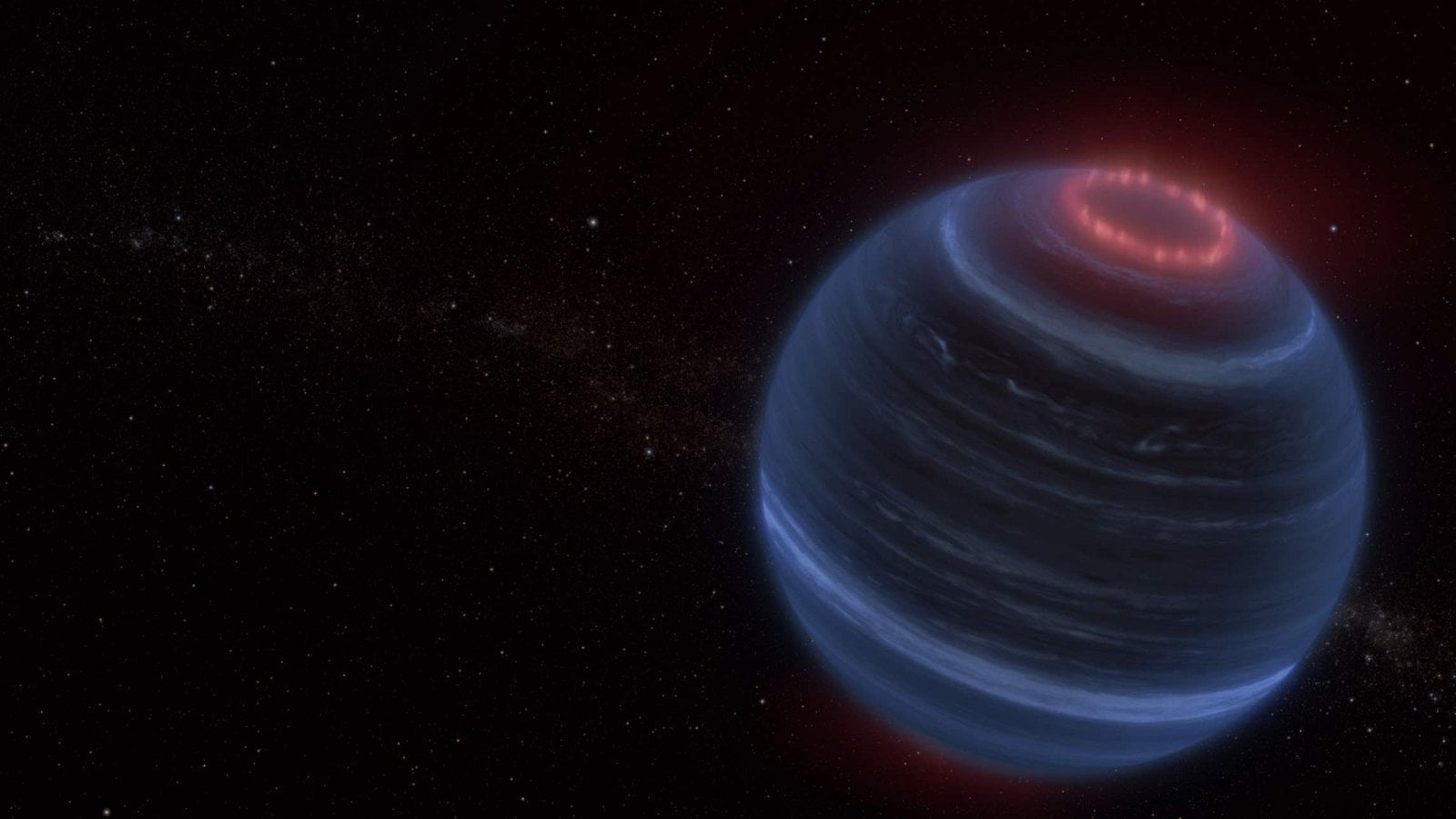
The James Webb Space Telescope has detected anomalous methane emissions from a mysterious isolated brown dwarf called W1935, larger than Jupiter, which lacks a host star to provide energy for such emissions. Astronomers believe the emissions could be due to auroral processes, similar to those seen on gas giants like Jupiter. This discovery challenges current understanding of how methane emissions are produced and raises questions about the source of the brown dwarf's eerie glow, possibly involving interstellar plasmas or an active moon. Further observations with the James Webb Space Telescope may provide more insight into this puzzling phenomenon.
- James Webb Space Telescope Detects Anomalous Emissions Coming from Mysterious Isolated Space Object The Debrief
- James Webb Space Telescope spots hint of mysterious aurora over 'failed star' Space.com
- Webb Telescope's Startling Find: Auroral Phenomenon on a Starless Brown Dwarf SciTechDaily
- Webb finds signs of possible aurorae on isolated brown dwarf Phys.org
- A failed star is witnessing mysterious auroras, leaving scientists perplexed WION
Reading Insights
Total Reads
0
Unique Readers
1
Time Saved
3 min
vs 4 min read
Condensed
85%
648 → 98 words
Want the full story? Read the original article
Read on The Debrief