
James Webb Space Telescope uncovers ancient organic molecules and faintest galaxy in the universe.
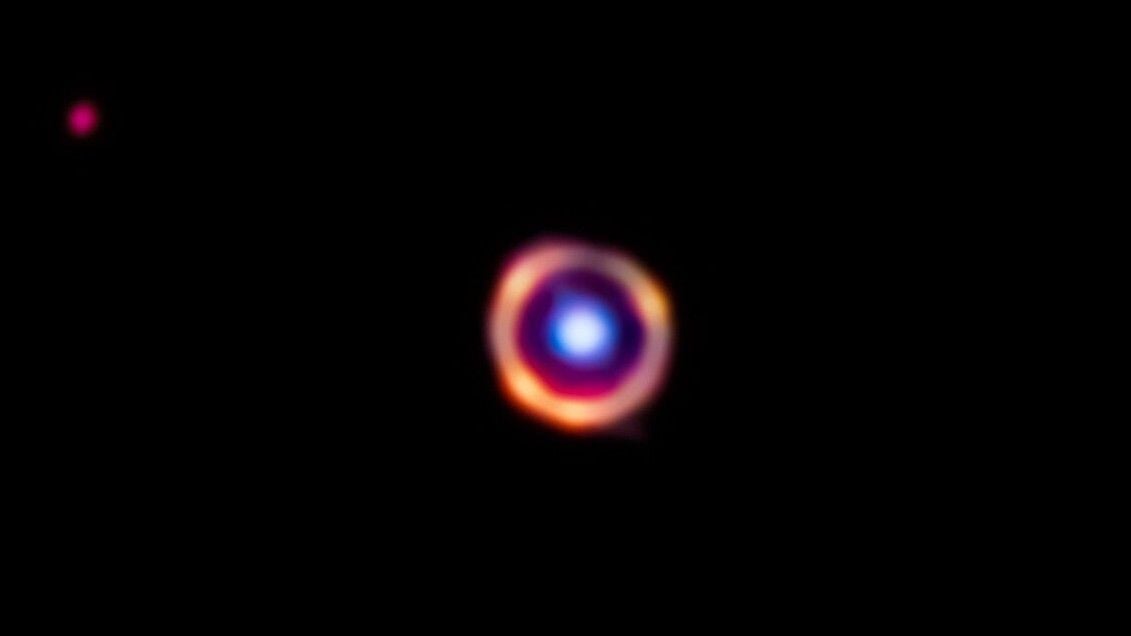
The James Webb Space Telescope has detected a cloud of complex organic molecules called polycyclic aromatic hydrocarbons (PAHs) in a galaxy 12.3 billion light-years away, the farthest from Earth that molecules of this kind have ever been detected. The discovery might help astronomers understand how galaxies develop and how stars are formed. PAHs are believed to help regulate the temperature of gas clouds in stellar nurseries, thereby managing when and where stars develop. The discovery was made possible by gravitational lensing, which magnified the light of the distant galaxy. Further study is needed to understand why and how stars form in regions that lack PAH clouds.
- James Webb Space Telescope discovers oldest organic molecules in the known universe, 12 billion light-years from Earth Livescience.com
- Webb telescope detects organic molecules in distant galaxy CNN
- Strange Phenomenon Predicted by Einstein Reveals Oldest Evidence of Mysterious Space Dust Inverse
- James Webb Space Telescope finds the faintest galaxy ever detected at the dawn of the universe Livescience.com
- Aromatic molecules in a galaxy far, far away | Research Chemistry World
Reading Insights
0
2
2 min
vs 3 min read
81%
544 → 106 words
Want the full story? Read the original article
Read on Livescience.com