
Skin’s cellular map reveals TNF-driven immune–fibroblast networks in SALT-like neighborhoods
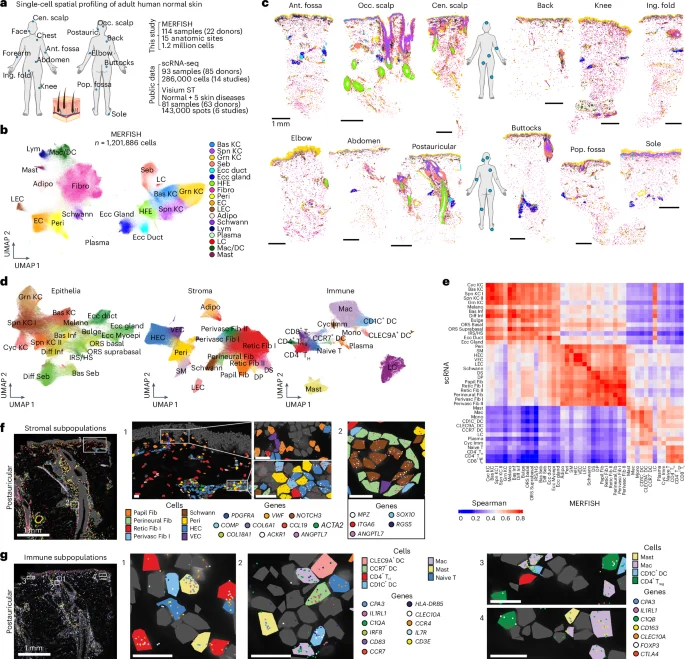
Researchers generated an organ-wide, MERFISH-based single-cell spatial atlas of about 1.2 million cells from normal adult human skin, spanning 15 body sites and 22 donors, resolving 45 cell types and 10 multicellular neighborhoods. They highlight a perivascular neighborhood reminiscent of skin-associated lymphoid tissue (SALT) where TNF coordinates immune–fibroblast crosstalk, with CCL19+ fibroblasts proximal to vessels playing a central role. By integrating MERFISH with scRNA-seq and Visium data, they map site-specific cellular compositions, neighborhood dynamics, and ligand–receptor signaling, and show pan-disease immune alterations in the perivascular niche across skin conditions. An interactive web tool is provided to explore these data, underscoring spatial organization as a key driver of skin biology and disease.
- Single-cell spatial transcriptomic analysis of human skin anatomy Nature
- Mount Sinai Researchers Identify Unique Coordination Among Cell Types That Support Healthy Human Skin | Newswise Newswise
- Spatial Atlas Reveals Multicellular Networks Underpinning Healthy Human Skin Inside Precision Medicine
- A refined blueprint for human skin Nature
Reading Insights
0
4
70 min
vs 71 min read
99%
14,155 → 111 words
Want the full story? Read the original article
Read on Nature