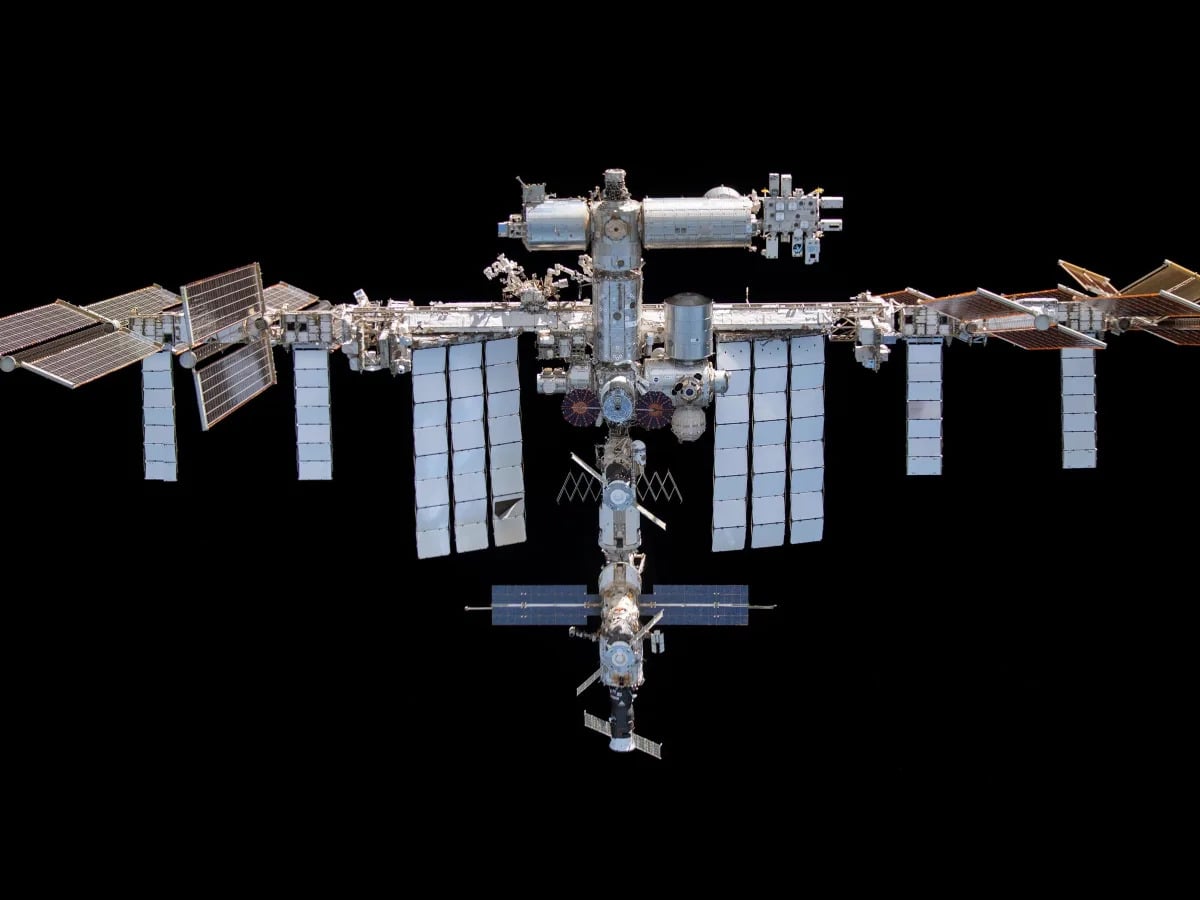
NASA and Roscosmos have delayed the Axiom-4 launch to the ISS due to a persistent air leak in the aging Zvezda module, highlighting ongoing concerns about the station's structural integrity and the challenges of maintaining it after over two decades in orbit.
The International Space Station is facing a critical air leak in the Russian-controlled Zvezda module, escalating tensions between NASA and Roscosmos. The leak, worsening since 2019, poses a significant threat to the station's structural integrity. NASA attributes the issue to material stress and environmental exposure, while Roscosmos blames vibrations and aging infrastructure. Astronauts are operating under strict safety protocols, and NASA is preparing for potential evacuations. The crisis highlights growing strains in international cooperation as the ISS approaches its operational end, with uncertainties about future space collaborations.
The International Space Station, launched in 1998 with a design lifetime of 15 years, is now facing an aging phase with routine air leaks. The recent doubling of air leak rate from the Russian side of the station is being treated as a minor annoyance, with the leak located in the PrK chamber of the Zvezda module. While NASA and Russian engineers are working to locate and patch the leak, it is not currently posing a risk to the crew or the station.
Russia's space agency has confirmed a small but growing air leak from its segment of the International Space Station, with specialists monitoring the situation and assuring that it does not pose a danger to the crew. This is not the first time a leak has been detected on the ISS, with previous instances in 2020 and 2022. The ongoing leaks add to a series of issues, including misfiring Russian rockets and radiator leaks, prompting Russia to plan its own space station after 2024, while NASA aims to continue ISS operations until at least 2030.
Russian space officials have detected a recurring air leak issue in their segment of the International Space Station, with NASA also reporting a small but growing leak in Russia's Zvezda life support module. While Roscosmos stated that the problem currently poses no threat to the crew, it's a concern that resurfaced despite being previously fixed in early 2021. This comes as Russia plans to pull out of the ISS after 2024 and build its own space station, raising questions about the reliability of the aging equipment on board the ISS amidst geopolitical tensions.