Tag

Z 229 15

All articles tagged with #z 229 15

science2 years ago

Hubble captures mysterious celestial objects billions of light years away.

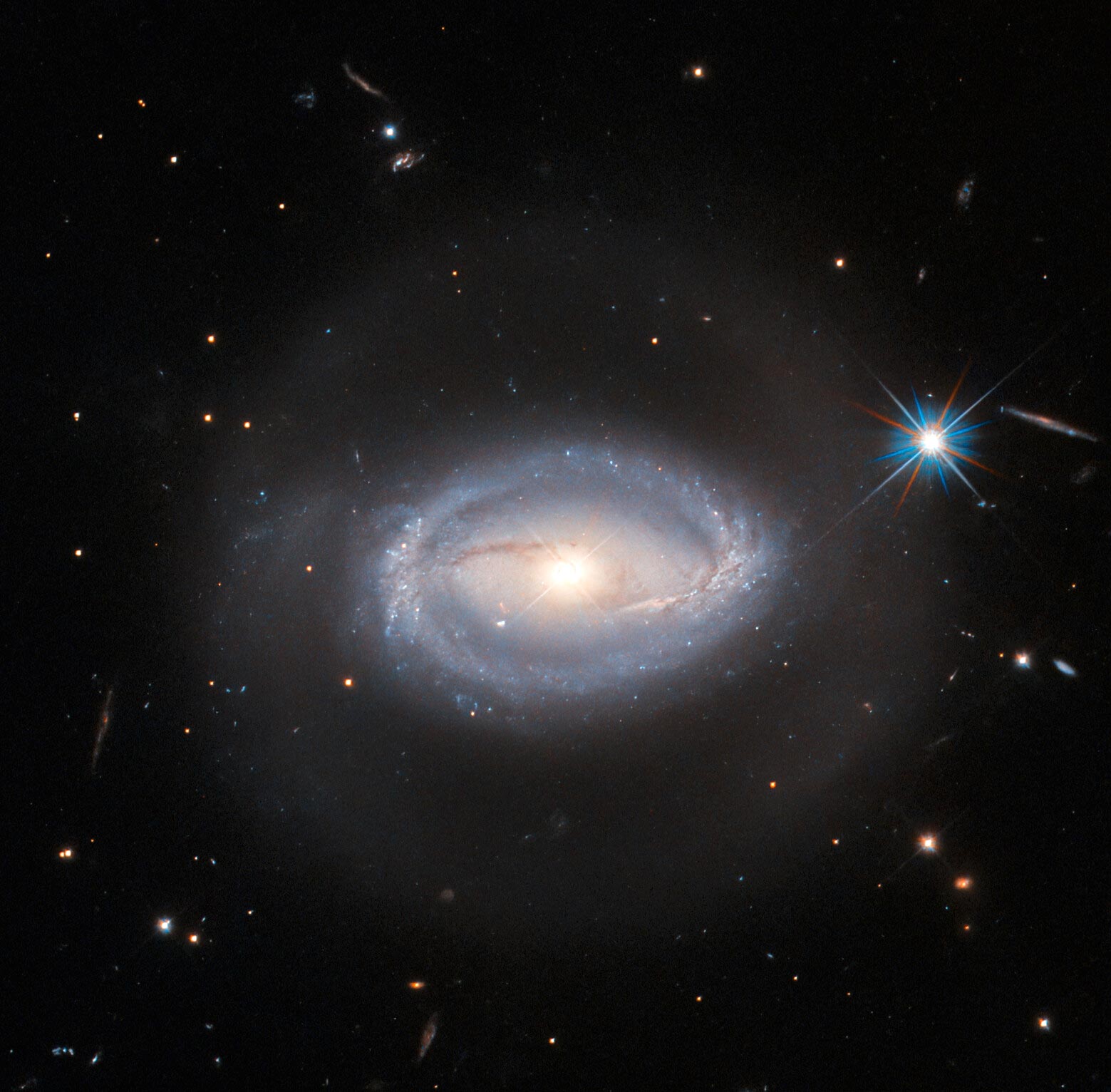
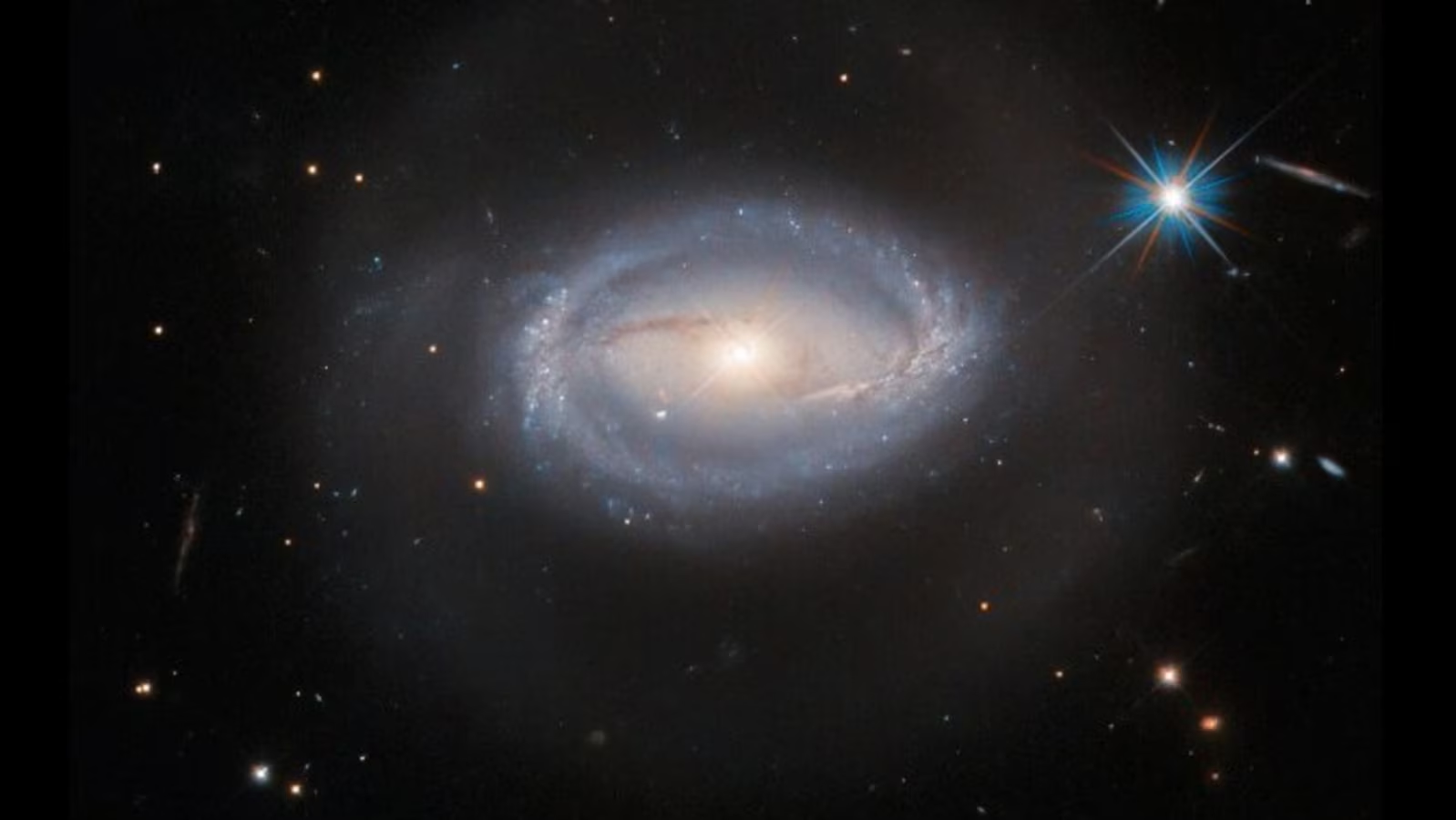
NASA's Hubble Space Telescope has shared an image of Z 229-15, a celestial object located around 390 million light-years from Earth. The image shows a spiral galaxy with two nearly straight arms that come from the core and meet a starry ring around the galaxy's edge. The galaxy is also surrounded by a faint halo of light. Z 229-15 is defined as an active galactic nucleus, a quasar, and a Seyfert galaxy.

astronomy2 years ago

Hubble Telescope Discovers Enigmatic Space Objects

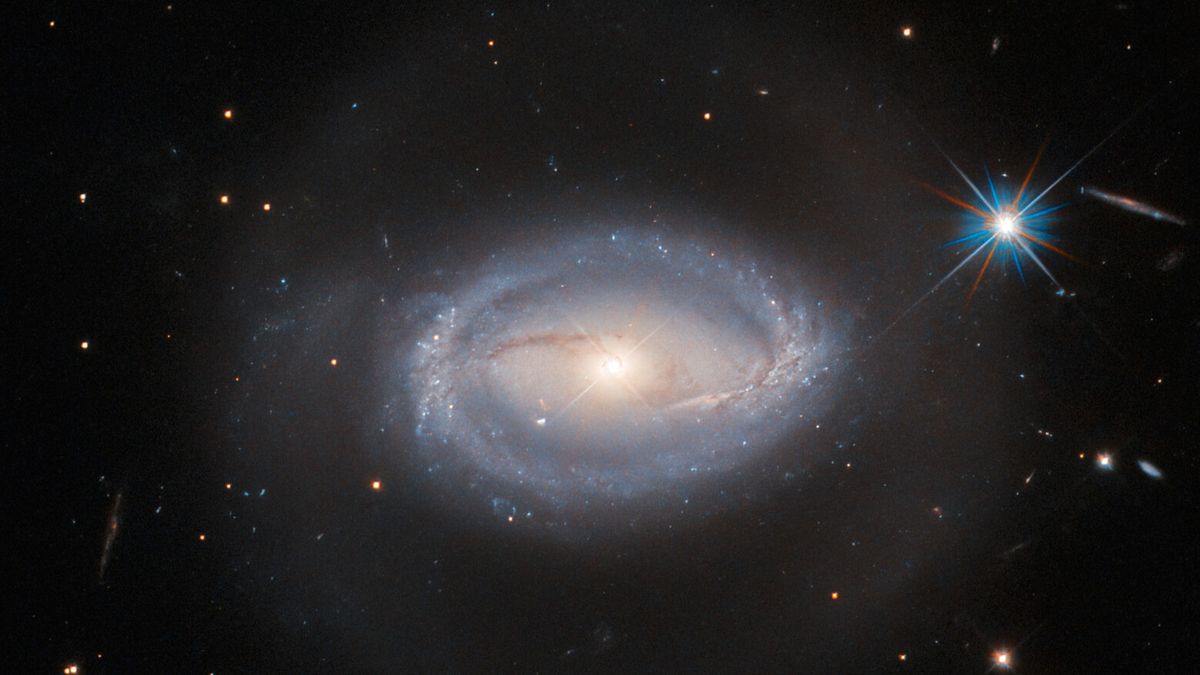
The Hubble telescope captured an image of Z 229-15, a celestial object that can be classified as a quasar, an active galactic nuclear, and a Seyfert galaxy due to an overlap in definitions. Z 229-15 is a galaxy with an AGN at its center, and the quasar involved in it is much dimmer than usual, making the stars within the galaxy visible. The image showcases the spiral appearance of the galaxy and the powerful instruments aboard the Hubble telescope.

science-and-astronomy2 years ago

Mysterious celestial object baffles astronomers with its unique characteristics.

The Hubble Space Telescope has captured an image of Z 229-15, a celestial object that defies classification. Z 229-15 is a galaxy, an active galactic nucleus (AGN), and a quasar, which is a specific subtype of AGN. Most quasars are so bright that they drown out our view of the stars in the galaxy, but Z 229-15 is a Seyfert galaxy, which means it is not as bright and allows us to see stars. Z 229-15 is "Everything, in one place, all at once," according to the European Space Agency.

astronomy2 years ago

Unidentified celestial object spotted by Hubble telescope.

The Hubble Space Telescope has captured an image of Z 229-15, a celestial object that defies classification. It appears to be a spiral galaxy with two spiraling arms of stars emanating from a bright core, but it is also an active galactic nucleus (AGN) containing a supermassive black hole at its core. Z 229-15's AGN is also a quasar, a specific subtype of AGN, and it is a Seyfert galaxy with visible stars. It is located 390 million light-years away from Earth and is "Everything, in one place, all at once," according to the European Space Agency.

astronomy2 years ago

The Ultimate Compilation: Unfathomable Z 229-15.

Z 229-15 is a celestial object that is classified as an active galactic nucleus, a quasar, and a Seyfert galaxy all at once due to significant overlap in their definitions. It is located about 390 million light-years from Earth in the constellation Lyra and was imaged in exquisite detail by the Hubble Space Telescope. AGNs are small regions at the heart of certain galaxies that are far brighter than just the galaxy’s stars would be due to the presence of a supermassive black hole at the galaxy’s core. Quasars are a particular type of AGN that are typically both extremely bright and extremely distant from Earth. Seyfert galaxies are active galaxies that host very bright AGNs (quasars) while the rest of the galaxy is still observable.