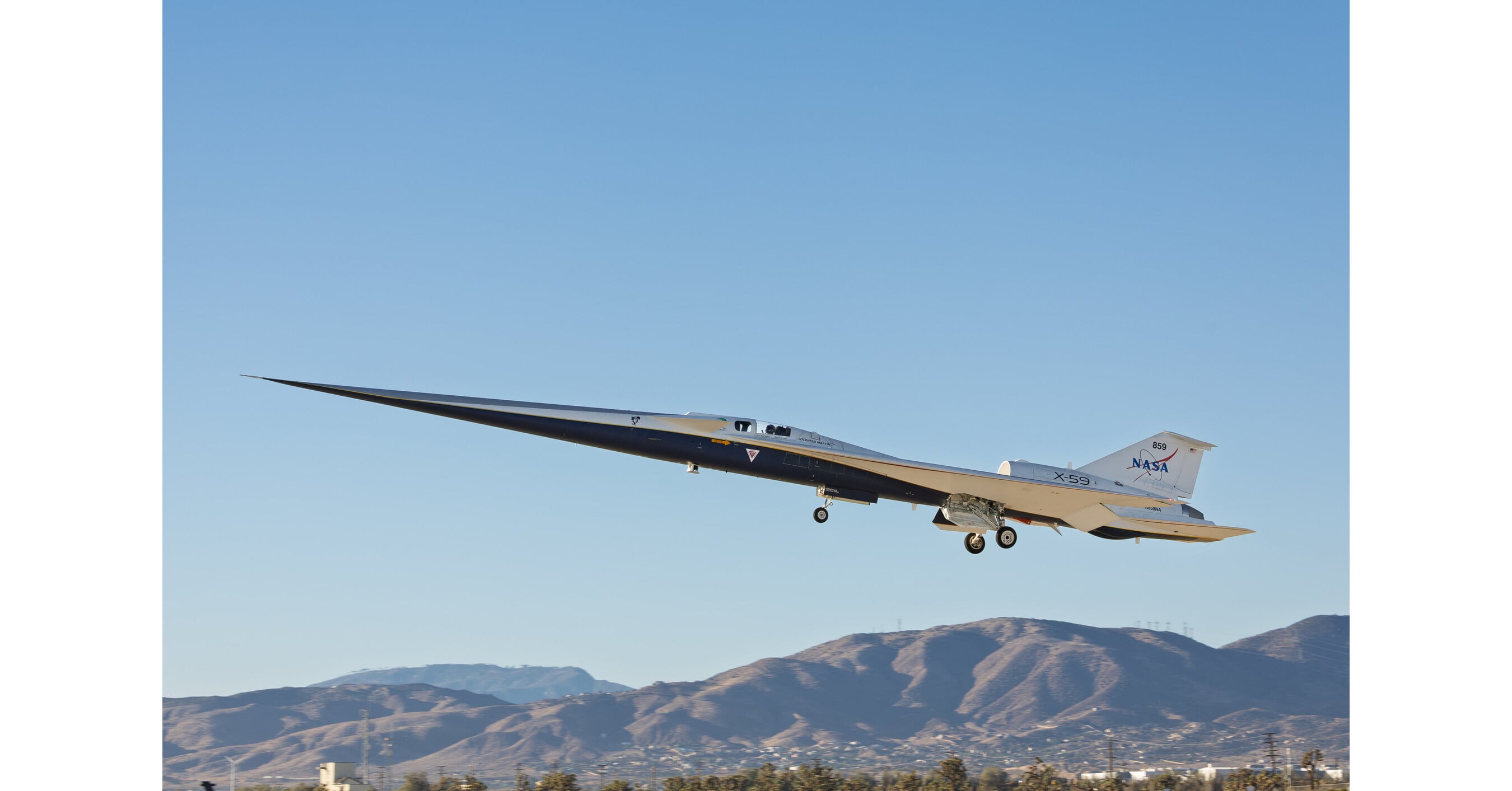
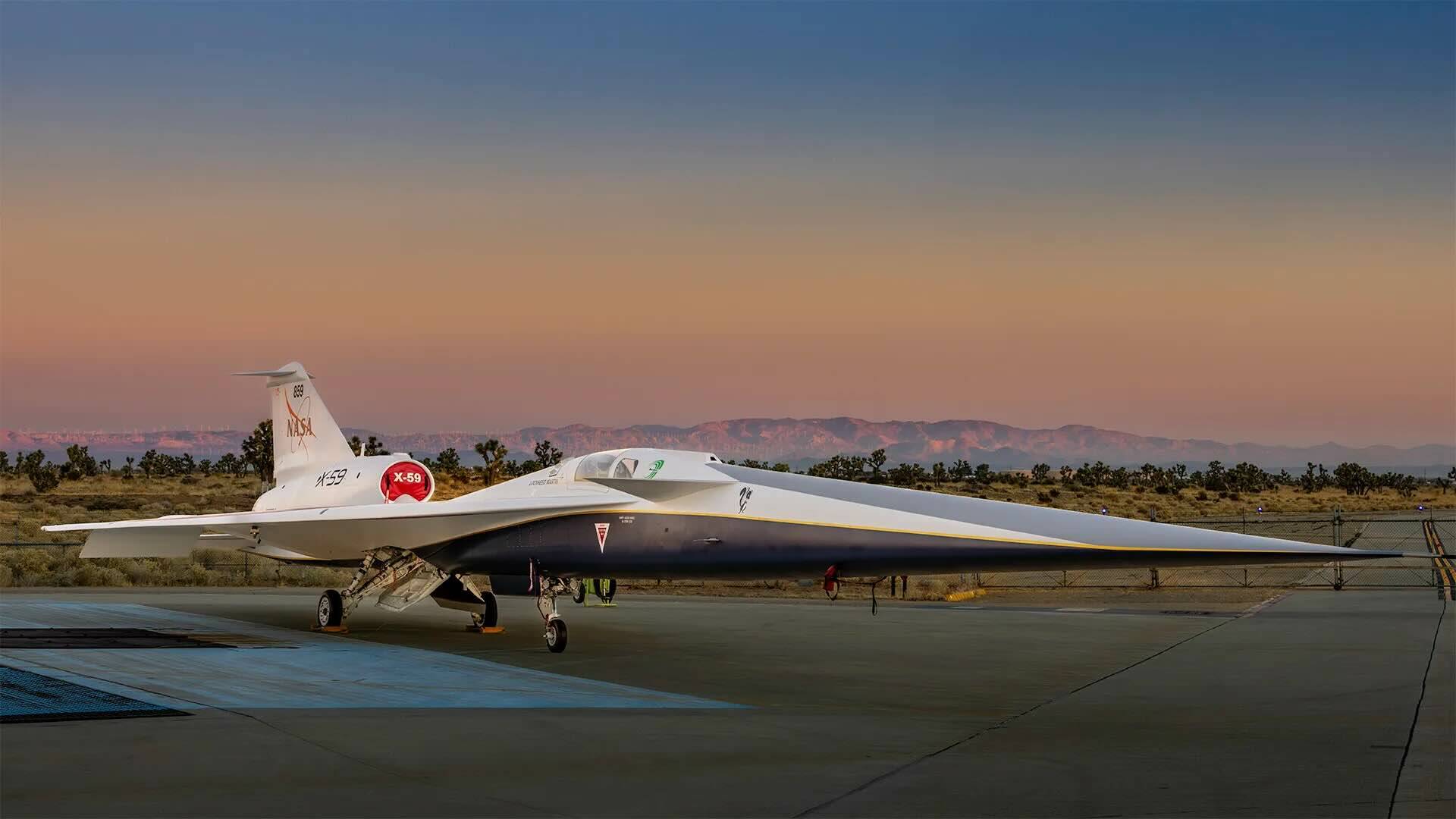
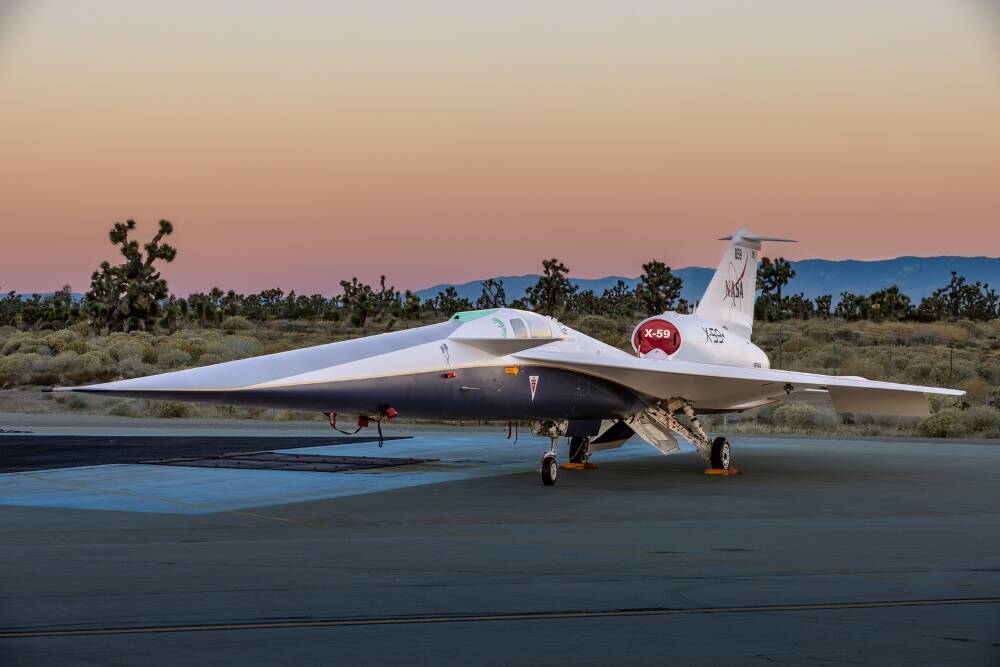
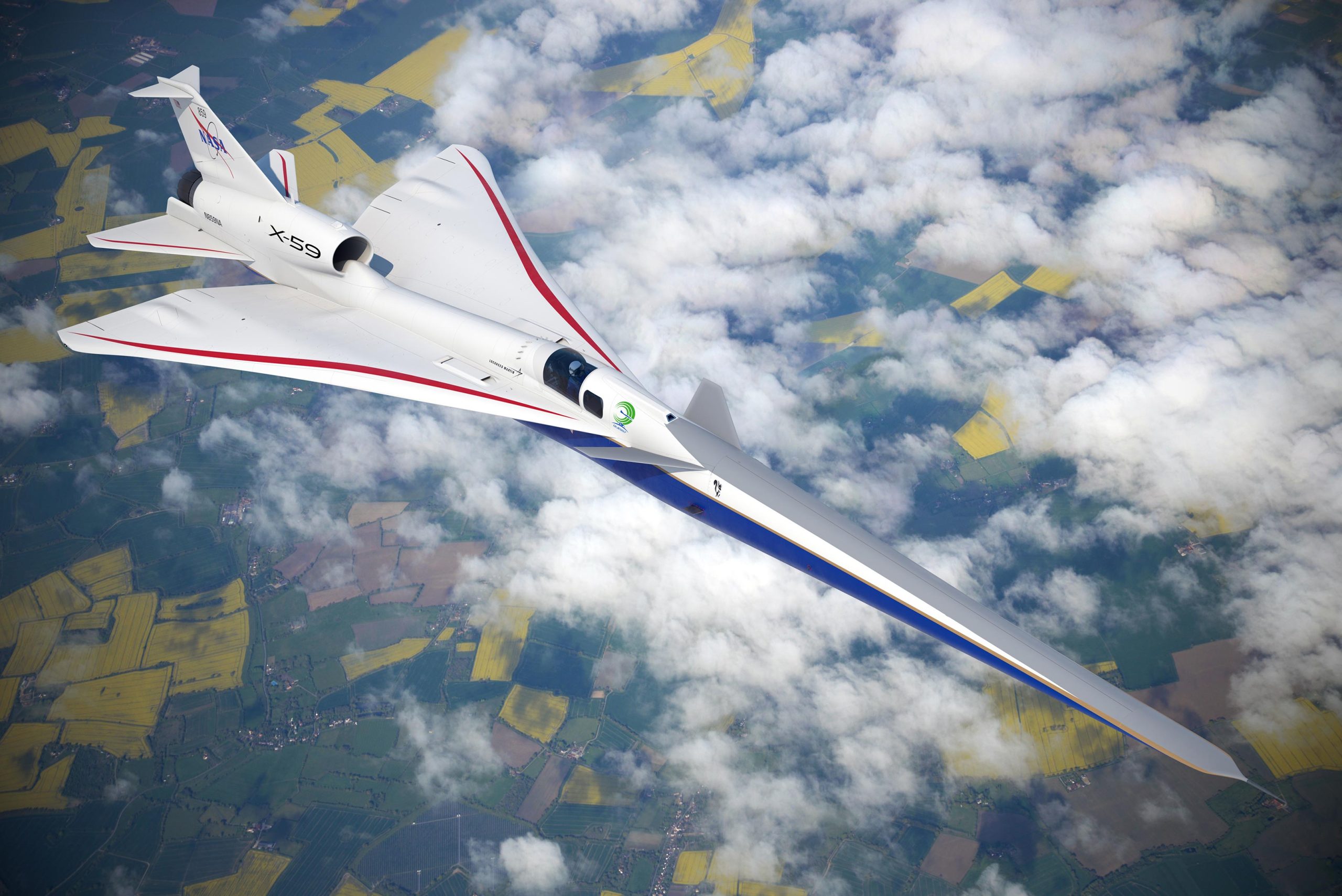
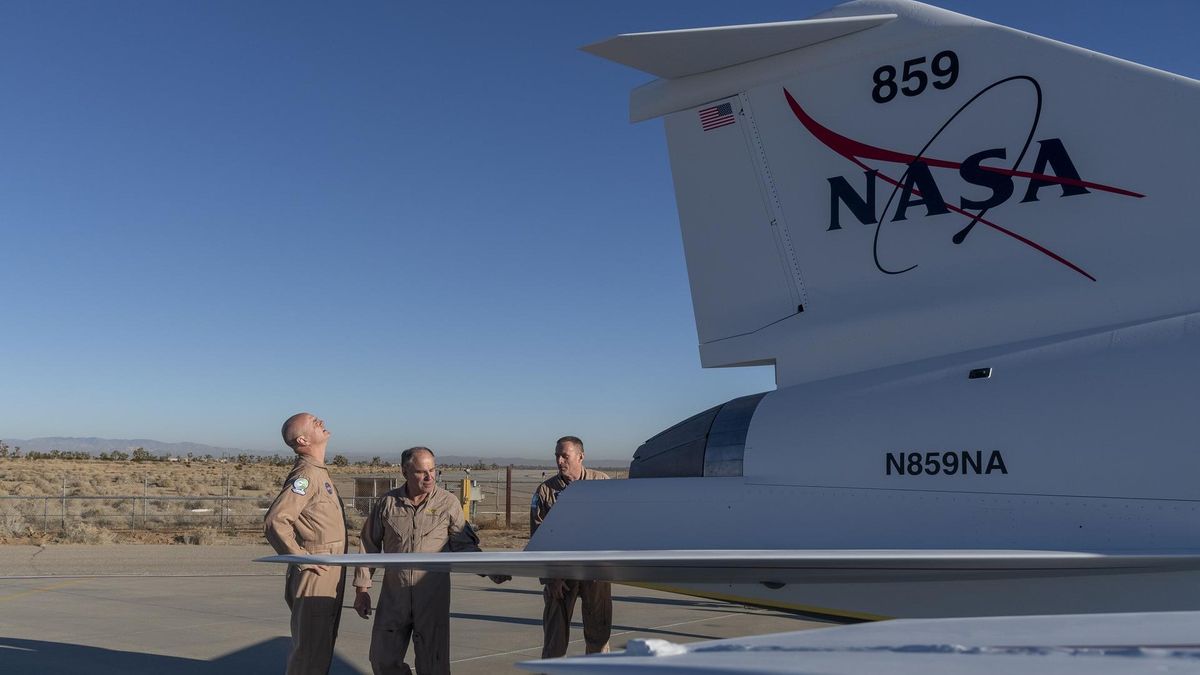
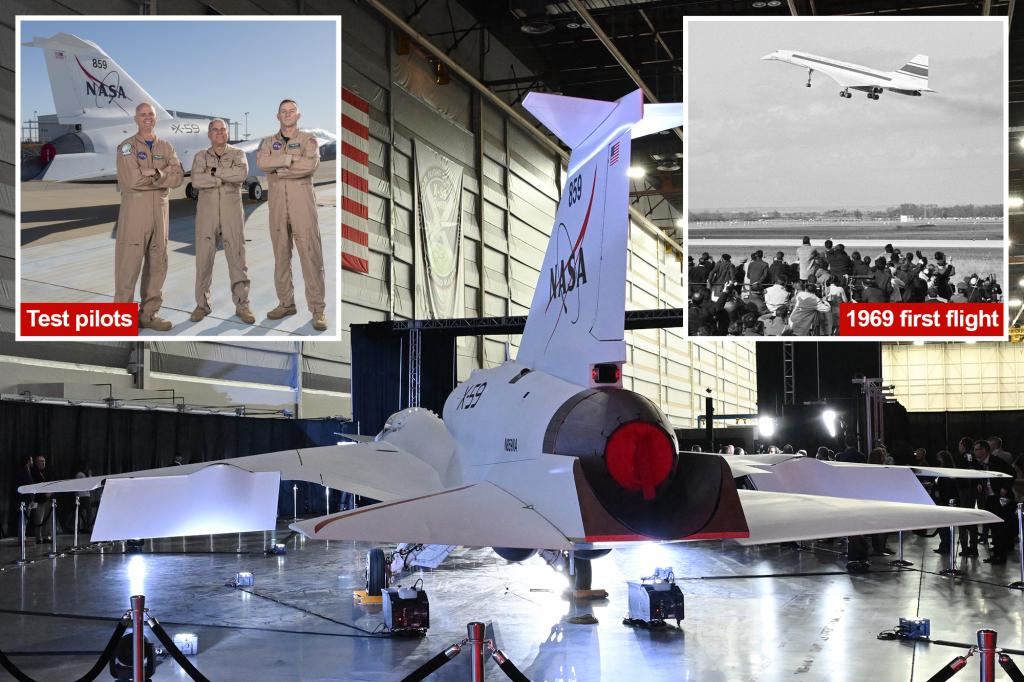
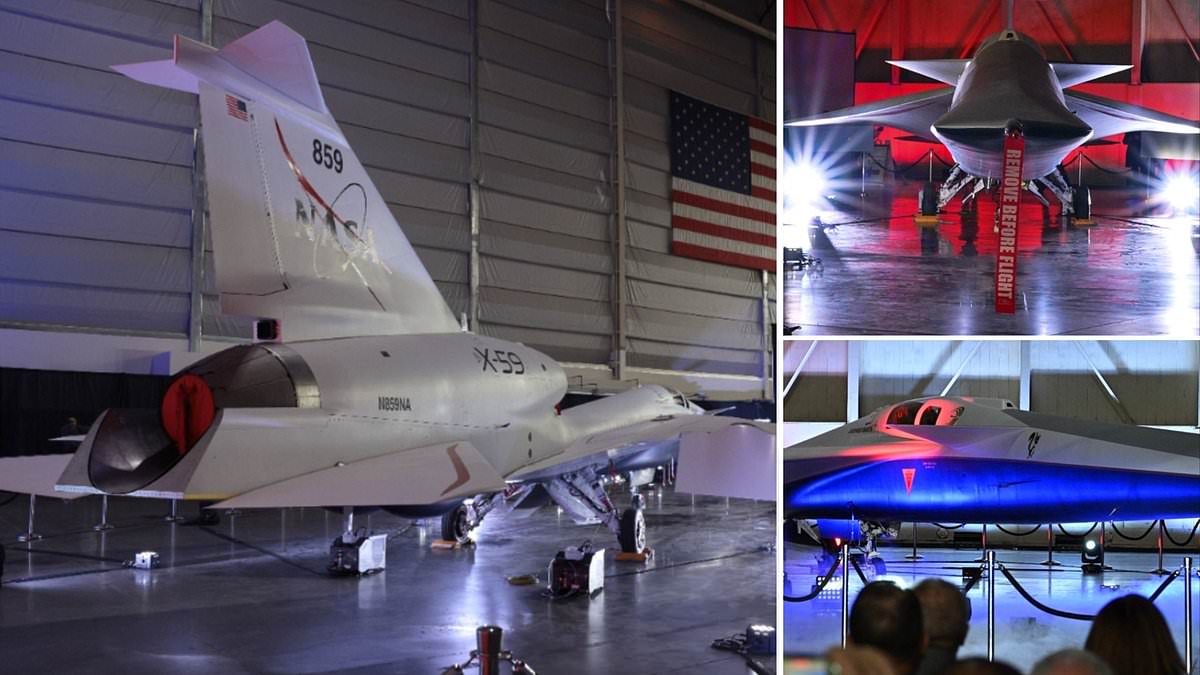
Lockheed Martin's X-59, a quiet supersonic aircraft developed with NASA, successfully completed its first flight, marking a significant step toward enabling faster, quieter commercial supersonic travel by reducing sonic booms and expanding flight over land.
NASA's X-59 quiet supersonic aircraft is preparing for its first flight, with safety as a top priority. The aircraft features advanced systems like extensive data recording, digital fly-by-wire controls, multiple backup systems, and comprehensive safety measures including life support, ejection seat, and emergency restart capabilities. The initial low-altitude test will verify system integration before progressing to higher speeds and altitudes, ensuring a safe and successful flight.
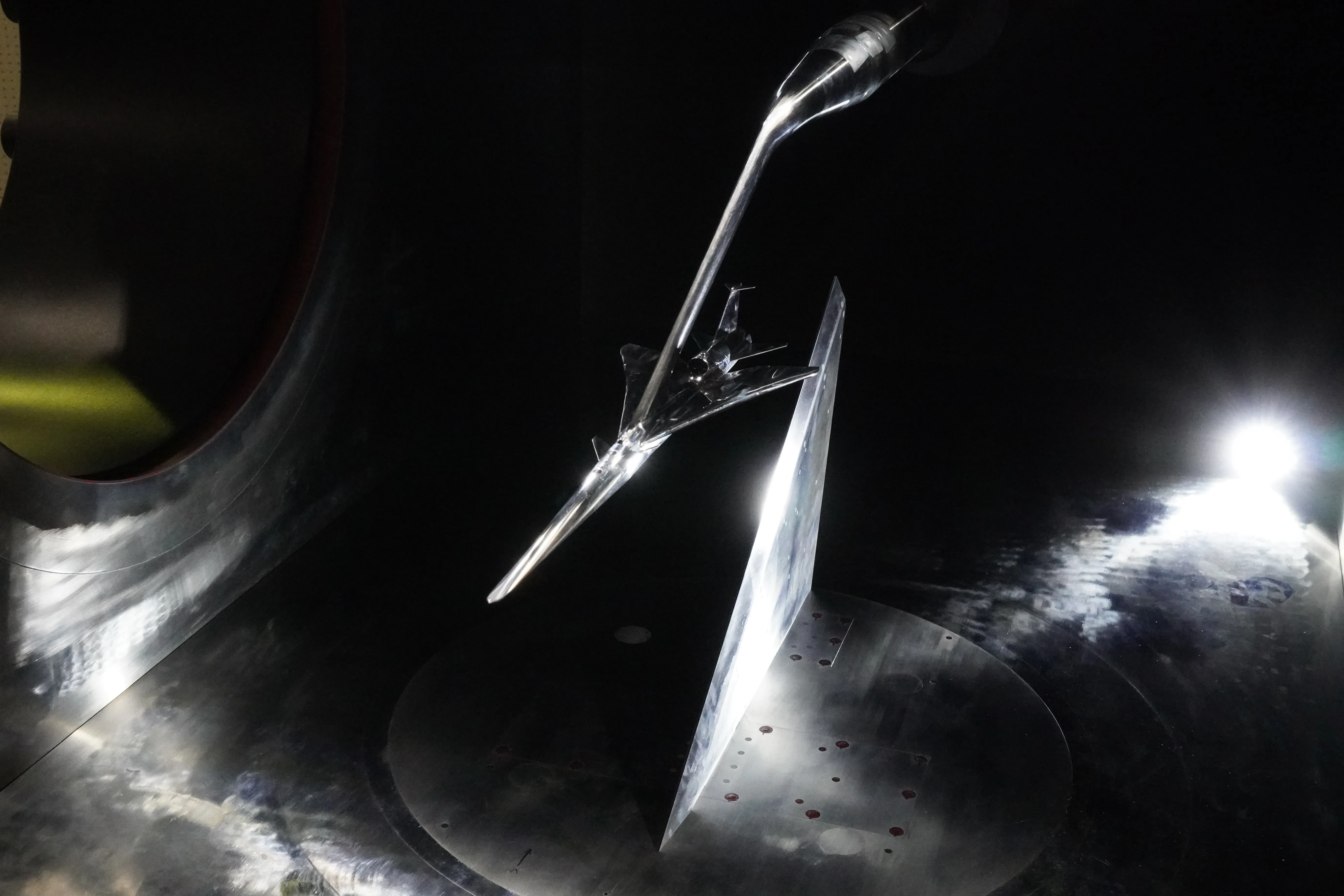
NASA's X-59 Quiet Supersonic Technology aircraft successfully demonstrated in wind tunnel tests that its design can scatter shock waves to produce a muted sonic thump instead of a loud sonic boom, paving the way for quieter supersonic travel and a first flight planned for this year.
NASA and JAXA tested a scale model of the X-59 aircraft in a Japanese wind tunnel to assess noise levels and validate predictions for quieter supersonic flight, a key step toward developing commercial quiet supersonic airliners.
Acting NASA Administrator Janet Petro affirms commitment to the agency's mission, highlights recent achievements including the IXPE's astrophysics milestone, progress on the X-59 supersonic aircraft, successful vibration testing of the Roman Space Telescope, and ongoing scientific work on the ISS, while announcing workforce transition plans and emphasizing focus on international collaboration and technical excellence.
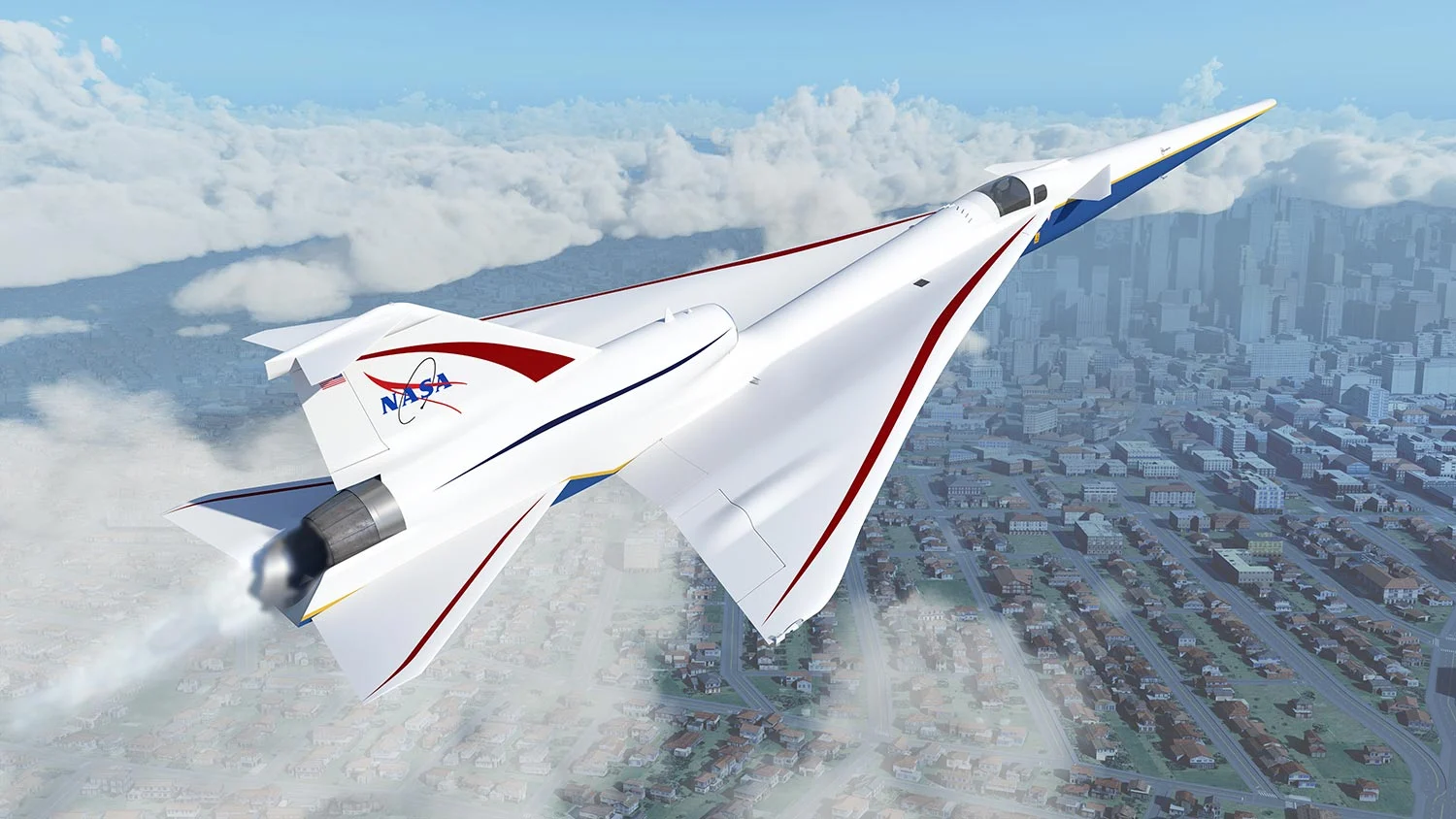
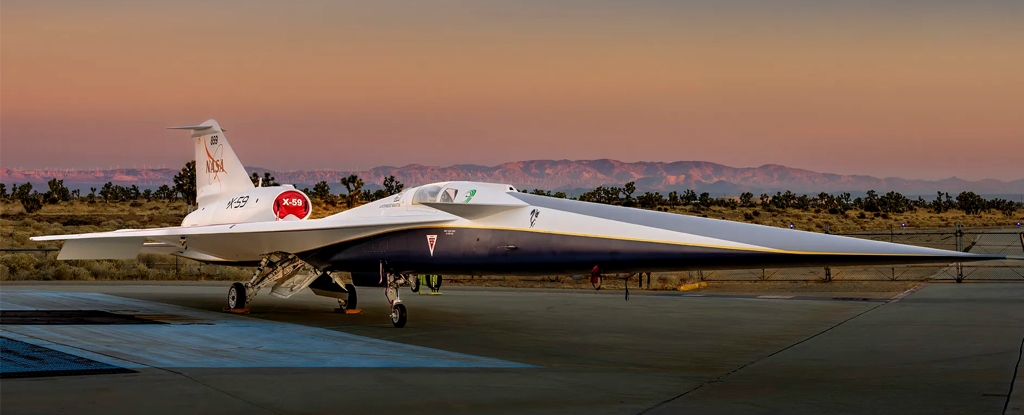
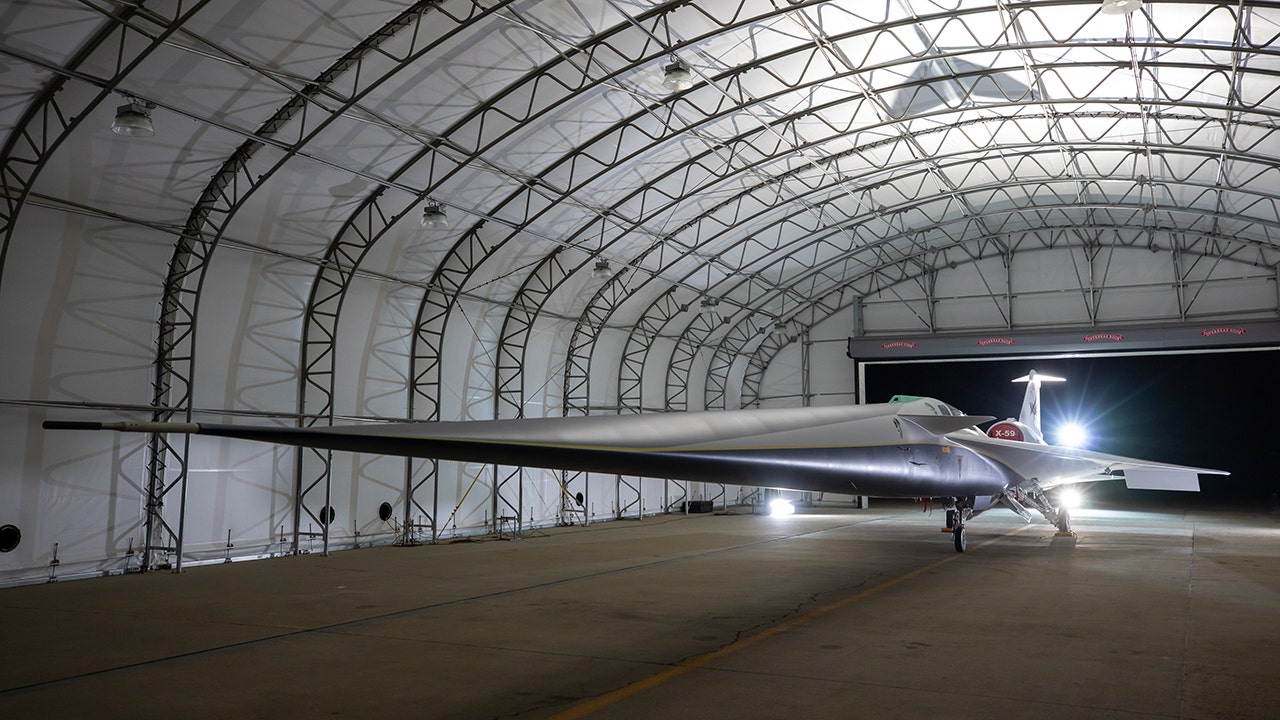
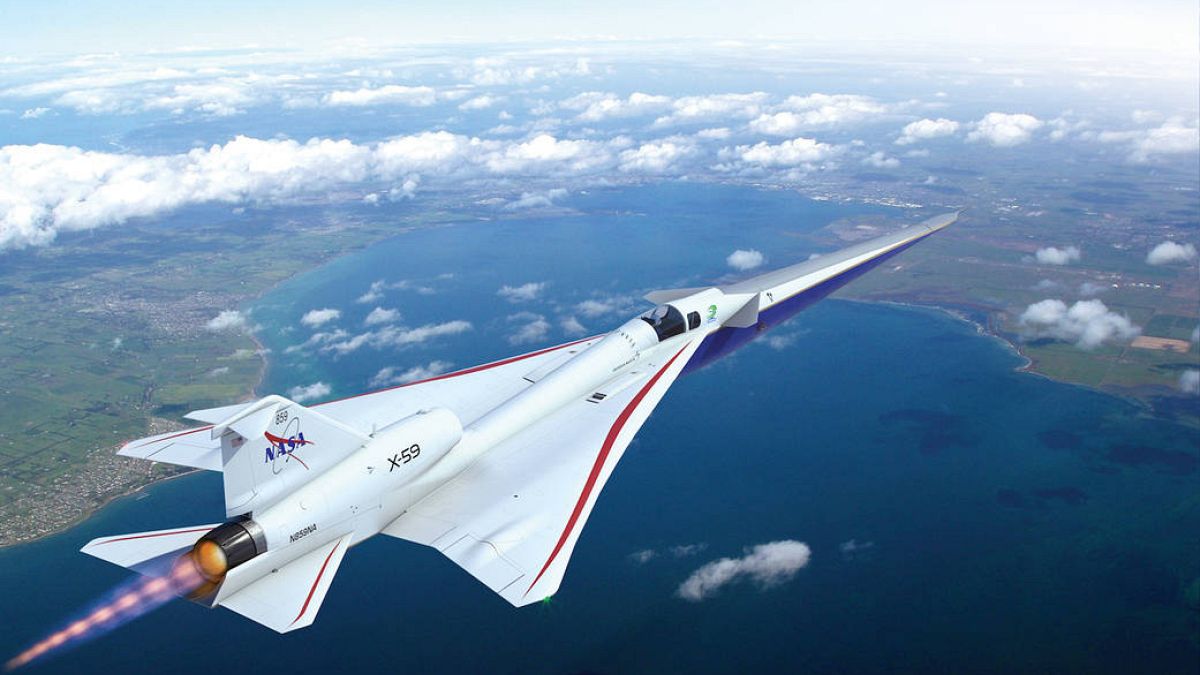
NASA's X-59 aircraft, developed with Lockheed Martin, aims to revolutionize supersonic travel by reducing the disruptive sonic boom to a quieter 'sonic thump.' The aircraft, featuring a unique elongated nose, is designed to manage shockwaves and spread them out, minimizing noise impact on the ground. The X-59 incorporates parts from various aircraft to save costs and relies on advanced computational technology for its design. Scheduled for test flights next year, the project seeks to gather data to potentially influence future commercial supersonic travel regulations.
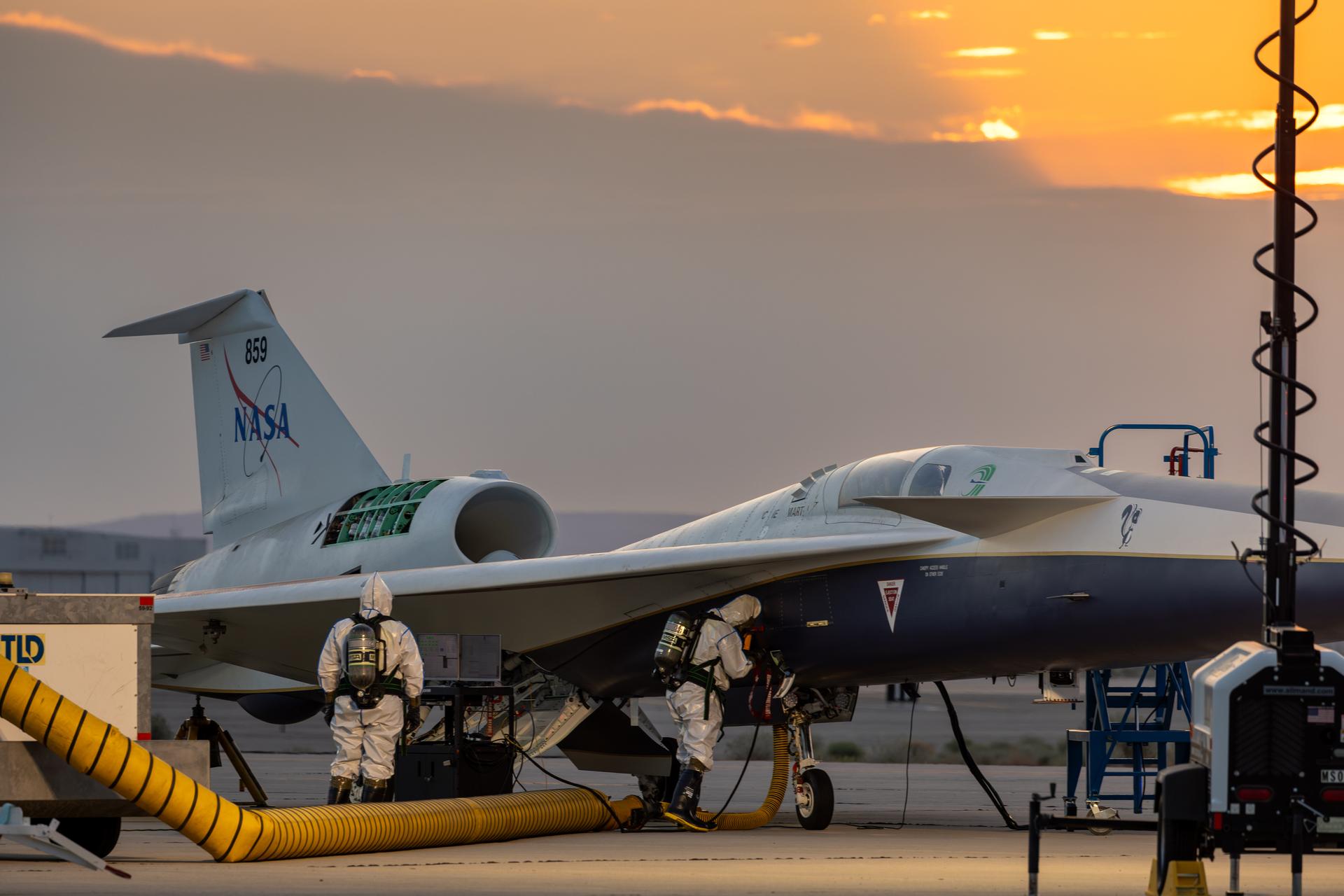
NASA has successfully fired up the engines of its X-59 Quiet Supersonic Technology (Quesst) aircraft, designed to produce a quieter "sonic thump" instead of a traditional sonic boom. This innovation aims to make supersonic flight over land feasible by reducing noise levels to 75 perceived loudness decibels, akin to a car door slam. The X-59, developed with Lockheed Martin, features a unique design with a long nose and external cameras for navigation, and is set to undergo further testing to establish acceptable noise standards for future supersonic travel.
NASA's X-59 quiet supersonic aircraft project has reached a critical milestone with the completion of the Flight Readiness Review, allowing it to progress toward flight testing. The X-59, developed in collaboration with Lockheed Martin, aims to reduce the noise of sonic booms to a quieter "thump," potentially revolutionizing commercial air travel by enabling supersonic flight over land. The project will now move towards the Airworthiness and Flight Safety Review, with significant ground tests and systems integration ahead.
NASA's X-59 supersonic jet has passed its Flight Readiness Review, a crucial step towards its first flight. The review assessed safety measures and potential hazards, providing recommendations for the next phase, the Airworthiness and Flight Safety Review. The X-59, developed with Lockheed Martin, aims to reduce the noise of sonic booms, making supersonic flights over land feasible again. Further ground tests are planned before the jet's maiden flight.
NASA and Lockheed Martin have collaborated to develop the X-59, a quiet supersonic research aircraft designed to minimize the disruptive sonic boom caused by breaking the sound barrier. With a sleek, futuristic design and advanced technology such as the eXternal Vision System, the X-59 aims to revolutionize air travel by enabling faster-than-sound commercial jets. If successful, this experimental aircraft could pave the way for significantly reduced travel times across the globe.
Lockheed Martin officially introduced its experimental X-59 supersonic aircraft with NASA, aiming to produce a quieter sonic thump instead of a sonic boom as it surpasses the speed of sound. The 99-feet-long aircraft, with a 29-foot wing-span, is set to undergo testing before its first flight in 2024, with the goal of gathering data to support new rules for quiet commercial supersonic flight over land. NASA aims to open new commercial markets for U.S. companies and benefit travelers worldwide through this demonstration.
NASA and Lockheed Martin have unveiled the X-59, a "quiet" supersonic aircraft designed to reduce the loud sonic booms of traditional supersonic flights to a gentle "thump." The 30-meter-long aircraft, part of NASA's Quesst mission, features a thin, tapered nose to break up shock waves and minimize noise. If successful, this technology could lead to a reconsideration of the ban on supersonic flights over land, potentially cutting travel time in half for commercial flights.
NASA unveiled the X-59, a new quiet supersonic aircraft designed to enable commercial supersonic travel by reducing the sound of the sonic boom to a mere thump. The experimental aircraft, set to take off for the first time later this year, has a predicted top speed of 1.4 times the speed of sound. NASA's Quesst mission, centered around the X-59, aims to provide information to assist regulators in re-evaluating regulations that forbid commercial supersonic flying over land. After flight testing, NASA will fly the aircraft over selected cities in the US to gather feedback on the sound it produces, with the data to be provided to aviation regulators.
NASA and Lockheed Martin have unveiled the X-59, a new supersonic aircraft dubbed "son of Concorde," capable of flying from New York to London in just 3.5 hours. The 100-foot long, 30-foot wide plane is part of NASA's Quesst mission and is designed to produce a less disruptive sonic boom, potentially revamping commercial air travel. The aircraft's first flight is scheduled for later this year, with the goal of demonstrating the possibility of quiet commercial supersonic travel over land.
NASA has unveiled the X-59, dubbed the 'son of Concorde', a 100-foot-long supersonic aircraft capable of cruising at 937 miles per hour without producing a loud sonic boom. The aircraft's design aims to reduce the noise of sonic booms, with a thin, tapered nose and an 'eXternal Vision System' replacing the forward-facing window in the cockpit. Developed by Lockheed Martin, the X-59 is part of NASA's Quesst mission to gather data for reconsidering rules that ban commercial supersonic flight over land, with test flights scheduled for later this year.