Washington, D.C. addressed its child care worker shortage by implementing a tax hike on high earners to fund the Early Childhood Educator Pay Equity Fund, significantly increasing wages for child care workers. This initiative has led to reduced turnover, improved care quality, and a 23% return on investment. However, challenges remain, such as the exclusion of administrators from wage increases and potential loss of public benefits for some workers. The program's future is uncertain due to budget concerns, despite its success.

The ADP National Employment Report for December revealed a 164,000 job increase in the private sector and a 5.4% rise in annual pay compared to the previous year. The report, which provides a high-frequency view of U.S. private-sector employment based on actual payroll data, indicated that job gains were led by the leisure and hospitality sector, while manufacturing saw losses. The data also showed a deceleration in pay growth, with job-stayers experiencing a 5.4% increase in annual pay. The report is a collaboration between the ADP Research Institute and the Stanford Digital Economy Lab.
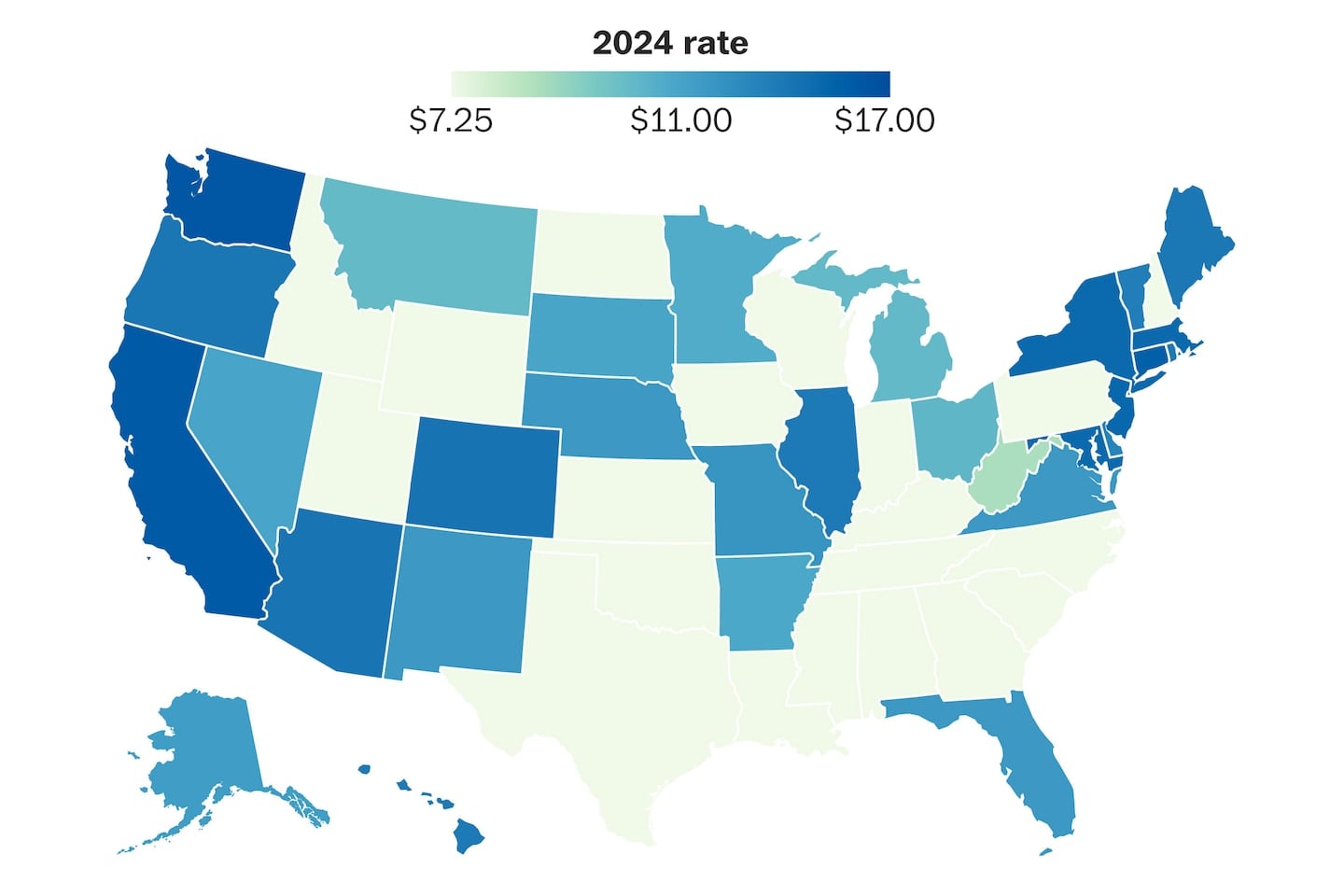
In January 2024, twenty-two states and numerous cities and counties raised their minimum wages, impacting approximately 9.9 million workers, with women and minority groups benefiting the most. Despite the fact that only about 6 percent of the U.S. labor force is directly affected, the increases help establish a wage floor, especially important as the country deals with high living costs. The average hourly wage in the U.S. was $34.10 as of November, but the federal minimum wage remains at $7.25, which is still used by about 20 states. Washington state now has the highest state minimum wage at $16.28 per hour, while Tukwila, Washington, boasts the highest municipal rate at $20.29 per hour. The wage hikes come amidst a backdrop of a competitive job market, recent labor strikes, and ongoing debates about the impact of wage increases on poverty and employment.
A recent survey by Payscale.com highlighted significant wage increases for in-demand jobs in the past year, with customer service assistant managers leading the pack at a 24% pay bump. Other professions such as hairdressers, master plumbers, auto body repair, and job coaches also experienced around 20% wage growth. The data indicates a strong employee market, although job satisfaction and the desire to switch careers vary by profession.
As of January 1, 2024, New York's minimum wage has risen, with New York City workers seeing an increase from $15 to $16, and the rest of the state from $14.20 to $15. This marks the beginning of a series of planned annual increases that will continue until 2026, aiming for a $17 minimum wage in NYC and $16 elsewhere in the state. The increases are part of a strategy developed by Democratic Gov. Kathy Hochul and the state legislature, despite opposition from some business owners and arguments from some Democrats that the increases are insufficient. Future adjustments will be linked to the Consumer Price Index to account for inflation.
Illinois has raised its minimum wage by $1, from $13 to $14 per hour, effective in 2024. Tipped workers will now earn $8.40 per hour, while workers under 18 working less than 650 hours annually will make $12 per hour. This marks the sixth increase since 2019, progressing towards the goal of a $15 minimum wage by 2025, as established by Governor JB Pritzker.
In 2024, nearly half of the U.S. states will increase their minimum wage, with Washington state setting the highest state wage at $16.28 an hour and Washington D.C. leading nationally with $17.05 an hour. Hawaii will see the largest increase, raising its minimum wage to $14 an hour. This change will result in a pay raise for millions of American workers.
Starting January 1st, Minnesota's minimum wage will increase, impacting both employees and employers. The change is part of scheduled wage adjustments to keep up with inflation and cost of living. Employers in the state are preparing for the change, which may involve adjusting their payroll systems, reassessing labor costs, and potentially altering prices or services to maintain profitability. The wage hike aims to help low-income workers but could also challenge small businesses operating on thin margins.